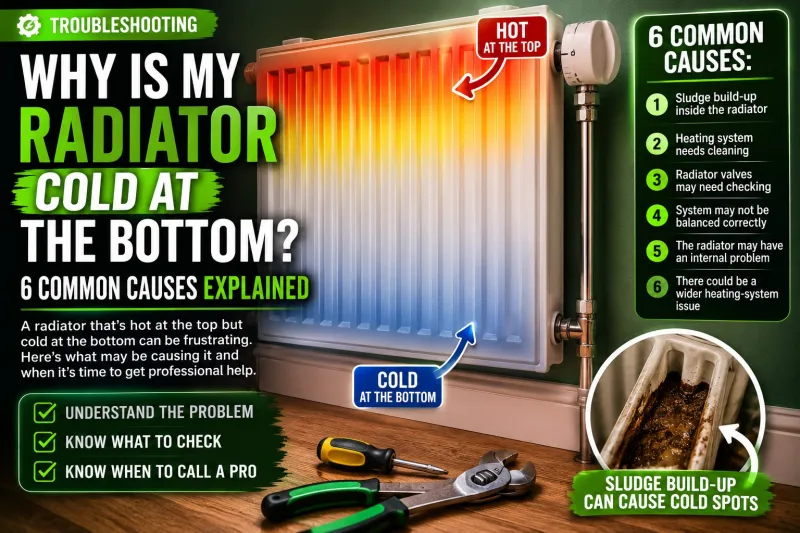
Why Is My Radiator Cold at the Bottom? 6 Common Causes Explained
You turn the heating on. The radiator starts warming up. The top feels hot. But the bottom stays noticeably colder. It's a common problem, and one that can leav...
It's a common problem, and one that can leave homeowners wondering whether the radiator itself is failing or whether there is something wrong with the heating system.
The good news is that a cold radiator doesn't automatically mean you need to replace it.
There are several possible causes, ranging from relatively straightforward issues to problems elsewhere in the heating system.
The important thing is understanding the pattern.
A radiator that's cold at the bottom can point towards a different issue from one that's cold at the top or completely cold.
Here are six common reasons your radiator may not be heating evenly.1. Sludge May Have Built Up Inside the Radiator
One of the most common causes of a radiator being hot at the top but cold towards the bottom is a build-up of sludge and debris inside the heating system.
Over time, particles can circulate through the system and settle in lower areas.
Inside a radiator, this can restrict the flow of hot water and reduce how effectively the lower section heats up.
You may notice:
The top of the radiator feels hot
The bottom remains cool
Some rooms take longer to heat
Other radiators are also performing poorly
The heating system doesn't feel as efficient as it once did
If sludge is affecting the system, simply turning the heating up won't necessarily solve the problem.
The appropriate solution will depend on the condition of the wider heating system and should be assessed accordingly.2. The Heating System May Need Cleaning
A problem affecting one radiator can sometimes be isolated.
But if several radiators are heating unevenly, it may point towards a wider issue within the system.
Heating systems can gradually accumulate debris over time, particularly in older installations.
A professional may recommend an appropriate cleaning process depending on the system and the cause of the problem.
It's important not to assume that every poorly performing radiator automatically requires the same treatment.
The best approach depends on what is actually causing the issue.
A proper assessment can help avoid paying for unnecessary work.3. Your Radiator Valves May Need Checking
Radiator valves control the flow of hot water into and out of the radiator.
If a valve isn't operating correctly, it can affect how well the radiator heats.
A valve problem doesn't always produce exactly the same symptoms as sludge, but it is one of the areas worth considering when a radiator isn't performing as expected.
You may notice that:
One radiator is significantly colder than others
The radiator takes a long time to warm up
Adjusting the valve makes little difference
The radiator heats inconsistently
Before assuming the radiator itself needs replacing, it's worth checking whether the issue could involve the controls or flow through the system.
If you're unsure what you're looking at, getting advice from a qualified heating professional can prevent a small problem from becoming an unnecessary replacement.4. The System May Not Be Balanced Correctly
In a central heating system, hot water needs to be distributed effectively between different radiators.
If the system isn't balanced correctly, some radiators may heat up more quickly or effectively than others.
You might notice that:
Radiators close to the boiler get hot quickly
Other radiators take much longer
Some rooms consistently feel colder
The heating doesn't appear to be distributed evenly around the home
Balancing is different from simply turning radiator valves up and down at random.
The goal is to help the system distribute heat appropriately throughout the property.
If you've noticed an ongoing pattern where certain areas of the home never heat as well as others, the wider system may need attention.5. The Radiator May Have an Internal Problem
In some cases, the problem may be more localised to the radiator itself.
Internal corrosion or a significant build-up of debris can affect how efficiently it performs.
Age can also play a part.
A radiator that has been in place for many years and repeatedly causes problems may eventually need more substantial attention.
But replacement shouldn't automatically be the first assumption.
Before spending money on a new radiator, it's worth understanding whether the problem is actually with the radiator or with the heating system supplying it.
Replacing one component won't necessarily solve an issue that exists elsewhere.6. There Could Be a Wider Heating-System Issue
A radiator problem can sometimes be the first visible sign that something else needs attention.
If you're experiencing multiple issues, such as:
Several radiators heating poorly
Repeated pressure problems
Unusual noises
Inconsistent heating
Regular system faults
then it may be worth looking beyond the individual radiator.
The heating system works as a whole.
Problems involving circulation, pressure or other components can affect how heat is delivered around the property.
If the issue keeps returning after apparently simple fixes, that can be a sign that the underlying cause hasn't been addressed.Cold at the Bottom vs Cold at the Top
The location of the cold area can provide a useful clue.
Cold at the bottom can often be associated with debris or sludge settling inside the radiator.
Cold at the top, however, can be associated with trapped air preventing hot water from reaching the upper section properly.
That doesn't mean you should diagnose every problem yourself based purely on one symptom.
But noticing exactly how a radiator is cold can give you useful information when describing the problem to a professional.
Rather than simply saying:
“My radiator isn't working.”
You may be able to explain:
“The top gets hot, but the bottom stays cold even when the heating has been on for a while.”
That can help create a clearer starting point.Should You Try to Fix It Yourself?
Some basic checks may be appropriate for homeowners who understand their heating system and can do so safely.
But avoid dismantling parts of the system or attempting work you're not confident carrying out.
Heating systems involve hot water, pressure and multiple interconnected components.
An apparently simple issue can sometimes have a less obvious cause.
If you're dealing with a gas boiler or any work involving the gas appliance itself, that work should be carried out by an appropriately qualified and registered professional.
For persistent radiator and central-heating problems, a heating engineer can assess the system and identify what is actually causing the poor performance.When Should You Call a Professional?
Consider getting professional advice if:
The problem keeps returning
Multiple radiators are affected
The system is making unusual noises
You have recurring pressure issues
The heating isn't warming the property properly
You suspect significant internal sludge or corrosion
You've tried basic troubleshooting without success
You're unsure whether the problem is with the radiator, pipework or wider system
The goal isn't necessarily to replace everything.
A good assessment should help identify the actual cause before recommending a solution.Don't Ignore Changes in How Your Heating Performs
A radiator that isn't heating properly may not feel urgent during warmer weather.
But small heating problems have a habit of becoming much more noticeable when you need the system most.
If you've noticed one radiator consistently performing differently from the others, it's worth investigating before the colder months arrive.
The earlier you understand the problem, the more time you have to arrange the appropriate repair rather than dealing with a heating issue during a busy period.
A cold radiator doesn't automatically mean a broken radiator.
The pattern of the problem can often provide the first clue about what's actually going wrong.
0 Comments
No comments yet — be the first to share your thoughts.