Why Does My Toilet Keep Running? 8 Possible Causes and What to Check
You flush the toilet. The cistern begins filling. Normally, the water stops. Except this time it doesn't. You can still hear water several minutes later. Perhap...
Maybe the toilet occasionally starts filling itself even though nobody has used it.
Or perhaps jiggling the flush button seems to make the problem disappear—until the next flush.
A running toilet is easy to ignore because there may be no water spilling across the bathroom floor.
But water is still going somewhere.
And usually, something inside the cistern isn't operating as intended.
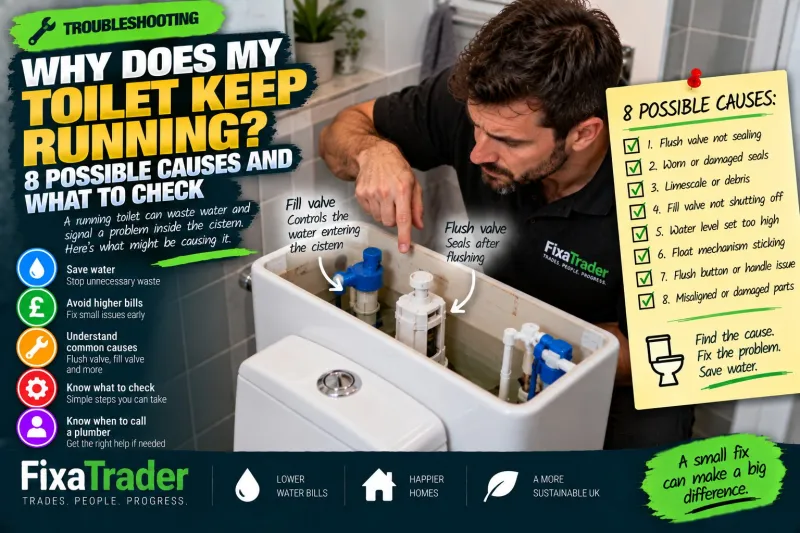
Here are eight possible causes.1. The Flush Valve Isn't Sealing Properly
After you flush, the mechanism inside the cistern needs to close again so the tank can refill.
If the flush valve doesn't seal correctly, water can continue escaping from the cistern into the toilet bowl.
The fill valve then detects that the water level isn't where it should be and continues replacing the escaping water.
You effectively create a cycle:
Water escapes → cistern refills → water escapes → cistern refills.
From outside, all you may notice is the constant sound of running water.
The underlying problem may be that the cistern simply can't hold the water it's being given.2. A Seal Has Worn or Deteriorated
Flush mechanisms rely on seals to prevent water passing when the valve is closed.
Those components don't last forever.
Over time, a seal can become:
Worn.
Hardened.
Damaged.
Distorted.
Or affected by deposits.
Once it no longer creates an effective seal, a small amount of water can continually pass through.
Depending on the cistern design, replacing the appropriate seal may solve the problem without replacing the entire toilet or even the complete flush mechanism.
The important part is identifying the correct component.3. Limescale or Debris Is Preventing a Proper Seal
If you live in a hard-water area, limescale will be familiar.
Deposits can build up around components that need to move or seal correctly.
Small pieces of debris can potentially interfere too.
Something doesn't necessarily need to be dramatically broken.
A component may simply no longer be sitting where it should.
This is one reason a toilet can begin running gradually rather than suddenly failing altogether.4. The Fill Valve Isn't Shutting Off
Not every running toilet is caused by the flush valve.
The fill valve controls the water entering the cistern.
As the cistern reaches the correct level, the valve should stop the incoming water.
If it doesn't, water may continue entering.
Modern toilet cisterns generally have an internal overflow arrangement, meaning excess water can be directed into the toilet rather than necessarily spilling onto the bathroom floor.
So a continuous trickle into the bowl could potentially be related to too much water entering the cistern, rather than water simply leaking out through the flush valve.
That's an important distinction.5. The Water Level Is Set Too High
The fill valve may work, but the water level could be incorrectly adjusted.
If the cistern fills too high, water may reach the overflow before the valve shuts off appropriately.
This can produce a persistent or intermittent flow into the bowl.
If the problem started after somebody adjusted or replaced cistern components, that history can be particularly useful.
Don't simply start turning adjustments randomly.
First establish what type of fill valve is installed and how it is intended to operate.6. The Float Mechanism Is Sticking
Many fill valves use some form of float mechanism to determine when the cistern has reached the required water level.
If that mechanism sticks or cannot move properly, the valve may fail to shut when expected.
Sometimes the issue is obvious once the cistern is safely inspected.
Other times the fill valve itself is worn and replacement is more practical.
Older toilets may also use quite different mechanisms from modern compact cisterns, so don't assume every toilet contains identical components.7. The Flush Button or Handle Isn't Returning Properly
Sometimes the problem begins outside the cistern.
You press the flush button.
It stays slightly depressed.
Or the handle doesn't return fully.
The mechanism connected to it may then prevent the flush valve from closing correctly.
If gently moving the button or handle causes the running water to stop, that's useful information.
It doesn't necessarily prove the button itself is faulty—the issue could involve the connection or mechanism behind it—but you've identified an important clue.
A flush control should operate smoothly without needing a particular wiggle after every use.8. A Component Has Become Misaligned or Damaged
Cistern mechanisms contain moving components.
Parts can wear.
Connections can loosen.
Something may become displaced.
And previous repairs can occasionally leave components incorrectly adjusted.
If the toilet started running immediately after work was carried out inside the cistern, mention that when investigating the problem.
The timing may be relevant.
Likewise, if the toilet has been working reliably for 15 years and suddenly develops a problem, age-related component wear becomes more plausible.How Can You Tell Whether Water Is Entering the Bowl?
A severe leak is obvious.
A small one may not be.
Look carefully at the rear of the toilet bowl after the cistern has finished filling.
Can you see movement or a thin stream of water?
Can you hear a faint trickling sound?
Does the toilet periodically refill itself even though nobody has flushed it?
That last clue is particularly useful.
If the cistern occasionally refills without being used, water may be slowly leaving it somewhere.
The fill valve is then simply replacing what has been lost.Why Does the Toilet Randomly Refill During the Night?
This can be confusing.
Nobody used the bathroom.
Yet suddenly you hear the cistern filling.
The toilet hasn't decided to flush itself.
More likely, the water level inside the cistern has gradually dropped far enough for the fill valve to open again.
The important question becomes:
Why did the water level fall?
A leaking flush valve or seal is one possibility.
Rather than focusing only on the sound of refilling, investigate why replacement water is needed in the first place.Is a Running Toilet an Emergency?
Usually, a small internal trickle isn't the same kind of emergency as water actively leaking through a ceiling.
But it shouldn't be ignored indefinitely.
You're wasting water, and a fault is present.
The situation becomes more urgent if water is escaping outside the toilet or cistern.
Pay particular attention to water around:
The floor.
Supply connection.
Isolation valve.
Cistern.
Pan.
Or nearby pipework.
Water safely passing into the toilet bowl and water leaking onto your bathroom floor are very different situations.
If water is escaping externally, deal with it promptly.Can You Fix It Yourself?
That depends on the fault and your ability.
Some cistern components are designed to be replaceable and relatively accessible.
But toilet mechanisms vary considerably.
Before dismantling anything, know:
How the water supply is isolated.
What mechanism you have.
Which replacement part is required.
And how the cistern should be correctly reassembled and adjusted.
Don't buy a random “universal” component and assume it will automatically fit every installation.
Check compatibility.
And if the toilet is concealed behind furniture, boxing or a wall system, access may be considerably more complicated than lifting a traditional cistern lid.Be Careful With Concealed Cisterns
Modern bathrooms increasingly hide toilet cisterns inside:
Furniture units.
Service voids.
Boxing.
Or wall-hung toilet frames.
They should normally have some means of service access, but how that works depends on the installation.
Don't start removing tiles because you can't immediately see the cistern.
The flush plate or another panel may form part of the intended access arrangement.
If you're unsure, identify the system or get somebody familiar with it to investigate.
Turning a minor valve replacement into damaged bathroom finishes would be an expensive way to solve a small plumbing problem.Don't Keep Using the Isolation Valve as the Repair
If a toilet won't stop running, you may temporarily isolate its water supply where an appropriate functioning isolation valve is available.
That can be useful while waiting for repair.
But repeatedly turning the water on before using the toilet and off afterwards isn't really a long-term solution.
Likewise, hitting the side of the cistern or jiggling the button after every flush is a clue that something needs attention—not a new operating procedure.When Should You Call a Plumber?
Consider professional help if:
You can't identify the cause.
The water won't stop entering the cistern.
Water is leaking outside the toilet.
The isolation valve doesn't work properly.
The toilet has a concealed cistern you're not comfortable accessing.
Replacement components aren't straightforward to identify.
The mechanism has already been repaired but the problem keeps returning.
Or you're simply not confident dismantling plumbing components.
For an experienced plumber, many running-toilet faults may be relatively routine.
And dealing with the problem early can prevent a lot of unnecessary water disappearing down the drain.Listen to What the Toilet Is Doing
A running toilet isn't a single fault.
The useful question is how it's running.
Is water constantly entering the bowl?
Does the cistern never stop filling?
Does it stop when you move the flush button?
Does it refill itself every 20 minutes?
Is water appearing outside the toilet?
Those observations help separate one possible cause from another.
You don't need to know the technical name of every component.
Just pay attention to the pattern.
Because the sound of running water is only the symptom.
The real job is working out why the cistern can't reach a stable state and stay there.
A toilet should flush, refill and then become quiet — if it keeps asking for more water, something inside the system is telling you it hasn't finished the job.
0 Comments
No comments yet — be the first to share your thoughts.