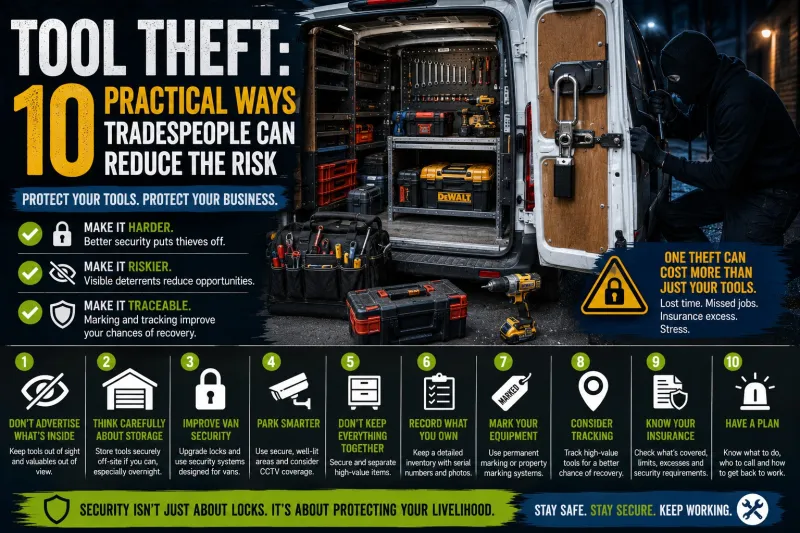
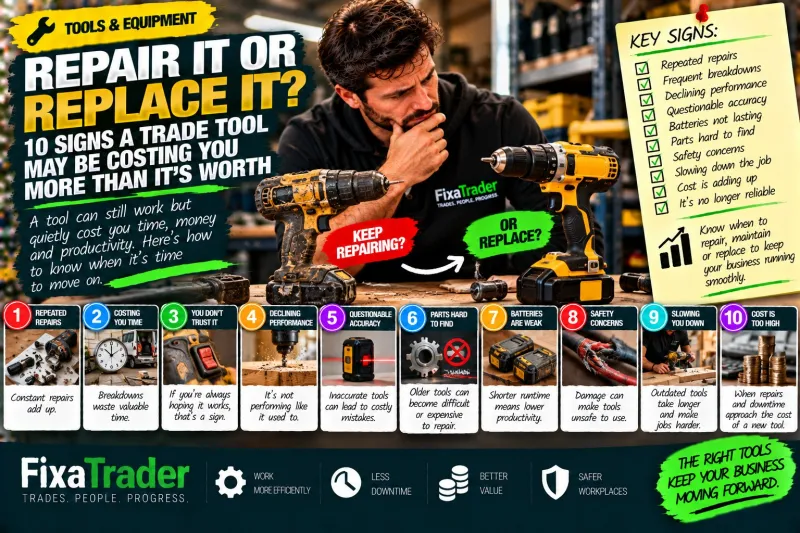
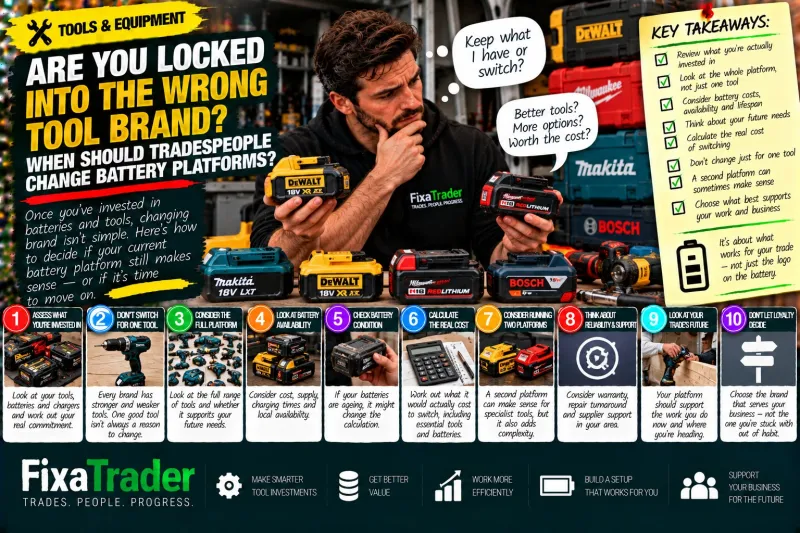
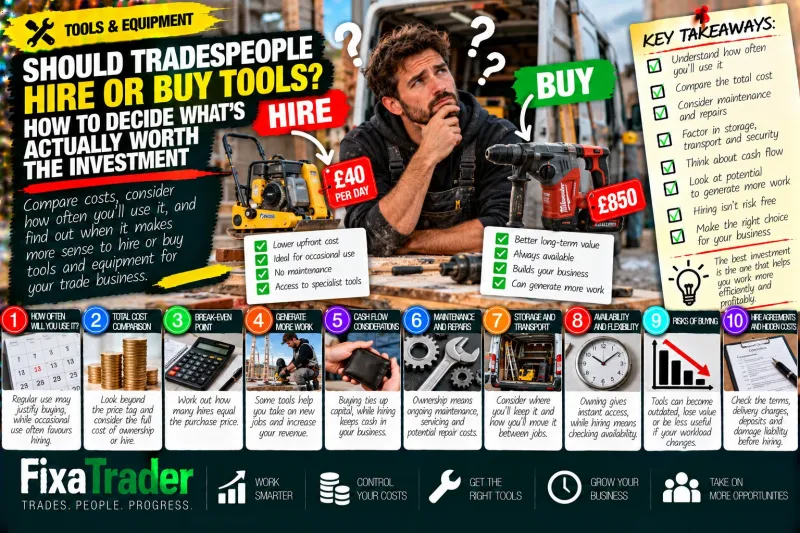
Tool Theft: 10 Practical Ways Tradespeople Can Reduce the Risk of Losing Their Tools
For a tradesperson, having tools stolen isn't the same as losing an ordinary possession. Those tools might be needed at 8am the following morning. Without them,...
For a tradesperson, having tools stolen isn't the same as losing an ordinary possession.
Those tools might be needed at 8am the following morning.
Without them, jobs can be delayed, customers may need rearranging and replacements might have to be purchased before an insurance claim is resolved.
Then there is everything else.
Damage to the van.
Insurance excesses.
Lost working time.
Specialist tools that aren't immediately available locally.
And the frustration of rebuilding a collection that may have taken years to assemble.
There is no single product or security measure capable of guaranteeing that your tools won't be stolen.
The more realistic goal is to make theft more difficult, more time-consuming and less rewarding.
Here are ten practical areas worth considering.1. Don't Advertise What's Inside the Van
A professionally signwritten van can be excellent advertising.
Unfortunately, it can also tell somebody exactly what might be inside it.
“Electrical Contractor”, “Carpentry & Joinery” or “Plumbing & Heating” provides a fairly good indication of the equipment the vehicle could be carrying.
That doesn't mean you shouldn't brand your van.
It means you should think about what can be seen through its windows and what you leave inside overnight.
Avoid leaving tools visibly exposed in the cab.
Receipts, packaging and equipment cases can also reveal more than you might expect.
If someone looks through the window, ideally they shouldn't be able to immediately identify valuable equipment.2. Think Carefully About Overnight Storage
The safest place for expensive tools isn't necessarily the van.
For some tradespeople, unloading everything every evening simply isn't practical.
There may be dozens of tools, large pieces of equipment or nowhere suitable to store them.
But that doesn't mean the decision has to be all or nothing.
Consider whether your most expensive, specialist or essential equipment could be removed.
Ask yourself:
Which tools would cause the biggest problem if they disappeared tonight?
Those might deserve additional protection.
If tools must remain in the vehicle, secure internal storage can add another obstacle beyond the vehicle's doors.3. Improve the Van's Physical Security
Factory locks are only one layer of protection.
Depending on the vehicle and how it is used, additional security could include appropriate aftermarket locks, reinforced locking points, internal storage systems or other vehicle-specific measures.
The right setup will vary considerably.
A van used by a mobile electrician may have different requirements from a vehicle carrying large landscaping equipment.
Before modifying a vehicle, make sure any security equipment is suitable for that particular model and installed correctly.
Poorly fitted security can create its own problems.4. Think About Where You Park
Where a vehicle spends the night can affect its exposure.
Where possible, consider:
Well-lit locations
Areas covered by CCTV
Secure driveways
Garages
Gated compounds
Parking positions that make doors difficult to access
Even the direction you park can sometimes help.
If rear doors are positioned close to a wall or another suitable obstruction, accessing them may become more difficult.
Don't obstruct pavements, emergency access or other vehicles simply for security, of course.
The point is to use the environment intelligently where you can.5. Don't Keep Every Tool Together
Convenience encourages us to organise everything neatly in one place.
From a theft perspective, that can have a downside.
If every expensive tool is stored in one easily removable case, somebody who gets access may be able to take thousands of pounds of equipment very quickly.
Think about how equipment is stored and secured inside the vehicle.
Can larger cases be independently secured?
Are the highest-value items particularly easy to grab?
Could internal storage make removing equipment more difficult?
The aim isn't to make your own working day frustrating.
It's to avoid making somebody else's job unnecessarily easy.6. Record What You Own
Imagine your tools disappeared tonight.
Could you produce an accurate list tomorrow morning?
For many people, the answer is no.
A tool collection grows gradually.
A drill here.
A new tester there.
Another battery.
A specialist tool bought for one particular job.
Years later, there may be thousands of pounds of equipment without a complete record of what is actually owned.
Create an inventory.
Record useful information such as:
Manufacturer
Model
Serial number
Approximate purchase date
Purchase price
Photographs
Receipts or invoices where available
Store that information somewhere separate from the van.
If equipment is stolen, you'll have a much clearer record for the police, insurer and your own business.7. Mark Your Equipment
Tool marking can make equipment easier to identify and potentially harder to sell anonymously.
There are several approaches available, from straightforward permanent identification to dedicated property-marking systems.
Whatever method you use, avoid damaging safety-critical components or interfering with warranties and calibration.
The important principle is traceability.
If two identical drills are sitting next to each other, could you prove which one belongs to you?
A serial-number record combined with appropriate identification gives you a much stronger answer.8. Consider Tracking for High-Value Equipment
Small tracking devices and dedicated equipment trackers can provide another layer of protection for certain tools or cases.
They aren't a guarantee of recovery.
A tracker can be discovered, removed, lose power or fail to provide useful information.
But for particularly expensive equipment, tracking may be worth considering as part of a broader security setup.
If stolen property appears to be traceable, don't attempt to recover it yourself by confronting whoever has it.
Provide the information to the police.
Your tools aren't worth putting yourself in danger for.9. Understand Your Insurance
Don't wait until after a theft to discover what your policy actually covers.
Tool insurance can vary significantly.
Check things such as:
Are tools covered while stored in a vehicle overnight?
Are there security requirements?
Are there limits for individual items?
What is the total cover limit?
What evidence of ownership may be required?
What excess applies?
Are hired tools covered?
Are employees' tools included?
The cheapest policy isn't particularly useful if the circumstances in which you actually store your equipment aren't adequately covered.
Read the terms and ask the insurer or broker if anything is unclear.10. Have a Plan for What Happens If Tools Are Stolen
Security focuses heavily on prevention.
Business resilience asks another question:
What happens the morning after?
Suppose you arrive at your van and discover the tools are gone.
Do you know:
Who to contact?
What information your insurer needs?
Which tools must be replaced immediately?
Which jobs will be affected?
Where you can obtain replacement or hire equipment?
Having a basic contingency plan can reduce the disruption.
You might even identify a small set of essential equipment without which most of your work stops.
Those tools deserve particularly careful protection.Tool Security Is Really Business Security
A van full of tools represents far more than its replacement value.
It represents your ability to work.
That's why the cost of theft can spread far beyond the equipment itself.
Imagine £5,000 worth of tools are stolen.
The eventual cost could also include vehicle repairs, an insurance excess, replacement equipment needed immediately and several days of disrupted work.
Suddenly the impact on the business is considerably larger than the value written on the original receipts.Don't Rely on One Solution
It's tempting to look for the answer to tool theft.
The strongest lock.
The best alarm.
The perfect tracker.
But security usually works better in layers.
A sensible approach might combine:
where the van is parked + vehicle security + internal storage + tool identification + insurance + good records.
One measure can fail.
Several independent measures make the situation harder.Make Your Tools Identifiable Before They're Missing
One of the easiest security jobs to postpone is recording serial numbers.
It isn't urgent.
Until suddenly it is.
You don't need to catalogue the entire van in one evening.
Start with the most expensive equipment.
Photograph it.
Record the serial number.
Find the receipt if you still have it.
Then gradually work through the rest.
Your future self will be very glad you did if something ever happens.Protect the Equipment That Keeps You Working
No tradesperson can completely remove the risk of theft.
And victims shouldn't be treated as though they simply failed to buy enough security products.
The objective is risk reduction.
Make the vehicle harder to access.
Make the tools harder to remove.
Make the equipment easier to identify.
Make sure you're appropriately insured.
And know what you'd do if the worst happened.
Because replacing a drill is one thing.
Replacing the tools you rely on to earn your living is something else entirely.
Protecting your tools means protecting your ability to turn up and work tomorrow.
0 Comments
No comments yet — be the first to share your thoughts.