Cheap Tools vs Expensive Tools: When Is Paying More Actually Worth It?
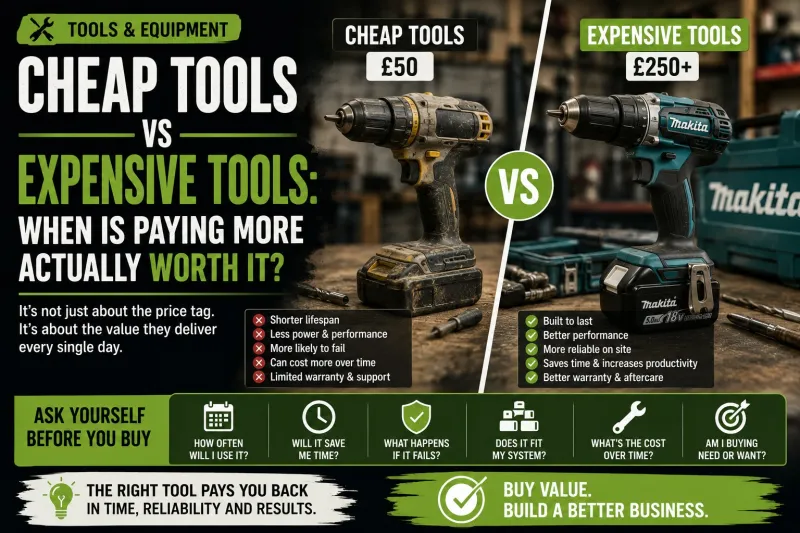
Every tradesperson has probably faced the same decision. You're looking at two tools that appear to do roughly the same job. One costs £50. The other costs £250...
Every tradesperson has probably faced the same decision.
You're looking at two tools that appear to do roughly the same job.
One costs £50.
The other costs £250.
The expensive one promises better performance, longer battery life, greater durability and a more established reputation.
So the obvious question is:
Is it actually worth paying five times as much?
Sometimes, yes.
Sometimes, absolutely not.
The answer depends less on the logo on the tool and more on how often you use it, what happens when it fails and how much of your working day depends on it.
Because when you're buying tools for professional work, the real cost isn't always the number on the price tag.Start With How Often You'll Actually Use It
One of the biggest mistakes when buying tools is treating every purchase the same.
A tool you use for several hours every day is a completely different investment from one that comes out of the van once every few months.
If a cheaper drill is being used occasionally for light work, it may represent excellent value.
If that same drill is being used all day, every day, the calculation changes.
A more expensive tool may offer:
Better durability
More consistent performance
Greater comfort during prolonged use
Faster operation
Longer battery life
Better support or warranty options
The key question isn't simply:
“Which tool is better?”
It's:
“How much value will the better tool create in the way I actually work?”Time Is Part of the Cost
A tool doesn't have to break to cost you money.
It can cost you through lost time.
Perhaps a cheaper tool takes longer to complete the same task.
Maybe its battery needs changing more frequently.
Perhaps it struggles under heavier workloads.
Or maybe it simply isn't as accurate or efficient as the alternative.
Saving £150 on the initial purchase might sound sensible.
But if the cheaper option costs you even a few extra minutes every day, those minutes can add up over months and years.
For a professional tradesperson, time isn't just convenience.
Time affects how much work you can realistically complete.
That doesn't mean every expensive tool automatically pays for itself.
But it does mean the purchase price shouldn't be considered in isolation.The Cost of a Tool Failing on Site
Another important question is:
What happens if this tool stops working halfway through a job?
For some equipment, the answer might be:
Not much.
You can use an alternative tool, finish the work another way or replace it when convenient.
For other equipment, failure could stop the job completely.
That might mean:
Lost working time
A delayed project
An extra journey
Hiring replacement equipment
Letting down a customer
Having to rearrange future work
This is where reliability can become extremely valuable.
A £300 tool that works consistently for years may ultimately be a better investment than repeatedly replacing a £100 alternative.
But again, context matters.
The answer depends on how critical that particular tool is to your work.Don't Pay for Features You Won't Use
The opposite mistake is assuming that more expensive automatically means more useful.
Modern professional tools can come with an enormous range of features.
Bluetooth connectivity.
App controls.
Advanced settings.
Multiple operating modes.
Digital displays.
Specialist accessories.
Some of these may be genuinely useful.
Others may add cost without making any meaningful difference to your working day.
Before upgrading, ask yourself:
Will I actually use this feature?
Not:
“Is it impressive?”
Not:
“Would it be nice to have?”
But:
“Will this make me faster, safer, more accurate or more efficient often enough to justify paying for it?”
A simpler tool that does exactly what you need can be better value than a premium model full of features you never touch.Ergonomics Matter More Than You Might Think
When you're holding a tool for five minutes, comfort may not seem particularly important.
When you're holding it for five hours, it's a different story.
Weight, balance, grip and vibration can all affect how comfortable equipment is during a working day.
This is particularly relevant for tools that are used repeatedly or for extended periods.
A more expensive tool may not necessarily complete the job dramatically faster.
But if it's lighter, better balanced or less tiring to use, that can still have real value.
Comfort can affect:
Fatigue
Accuracy
Productivity
Long-term wear and strain
How practical the tool is for daily professional use
Whenever possible, it can be worth handling a tool before making a significant purchase.
Specifications on a screen don't always tell you how something will feel after several hours of work.Think About Your Existing Tool System
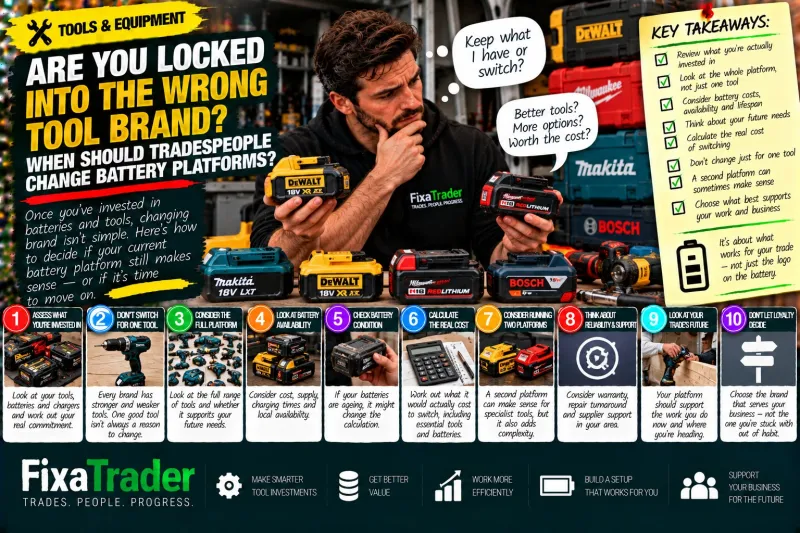
For battery-powered equipment, buying a single tool is often not really a single-tool decision.
You're also buying into a wider battery system.
That can make an apparently cheaper purchase more expensive than it first appears.
Perhaps one drill costs less, but requires you to buy entirely new batteries and chargers.
Another may cost more initially but works with batteries you already own.
The same applies when expanding an existing collection.
A tradesperson may find genuine value in staying within one compatible ecosystem because batteries, chargers and certain accessories can be shared across multiple tools.
That doesn't mean you should stay loyal to one brand regardless of value.
Sometimes another system genuinely offers something better for the work you do.
But before comparing the price of two individual tools, consider the cost of the wider setup.Consider Repairability and Support
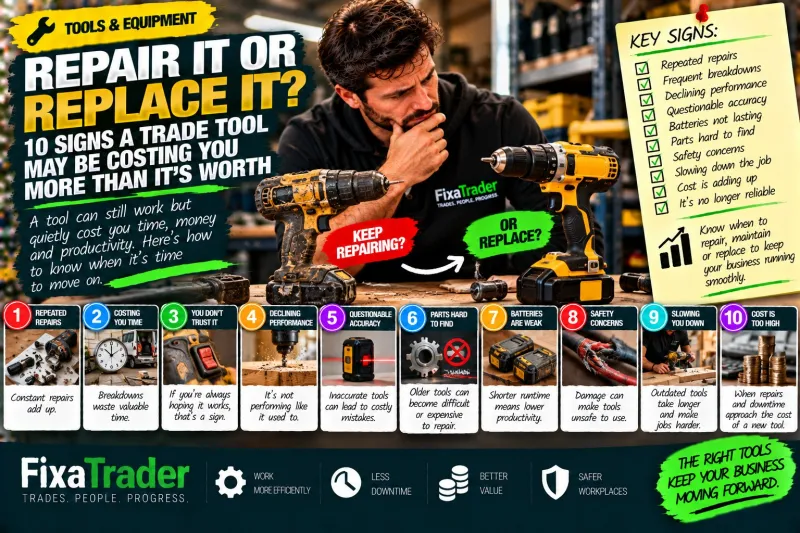
Professional tools are expected to work hard.
Eventually, something may need repairing.
Before buying more expensive equipment, it can be worth considering what happens after the sale.
Are replacement parts available?
Is there an accessible repair service?
What does the warranty actually cover?
How easy is it to get support if something goes wrong?
A lower-priced tool can become expensive if it has to be completely replaced every time a minor component fails.
On the other hand, an expensive tool isn't automatically a good investment if repairs are difficult or disproportionately costly.
The best value can sometimes come from equipment that is well supported throughout its working life.Buy for the Job You Do Now — Not the Business You Imagine
It's easy to buy equipment for the business you hope to have one day.
Perhaps you're planning to take on bigger projects.
Maybe you expect to expand into specialist work.
Or you simply want to be prepared for every possible job.
There is nothing wrong with investing ahead of growth.
But buying expensive equipment years before you genuinely need it can tie up money that could be used elsewhere.
A useful question is:
Do I need this because of the work I'm doing, or because I like the idea of owning it?
Sometimes the answer will still justify the purchase.
But being honest about the difference can prevent expensive tools sitting unused in the workshop.Cheap Doesn't Always Mean Poor Quality
It's also important not to dismiss lower-priced equipment.
There are situations where buying cheaper makes perfect sense.
For example:
A tool you rarely use
Equipment for occasional specialist jobs
A backup tool
Something with a higher risk of being damaged or lost
A basic task that doesn't require premium performance
A tool you're trying before investing in a professional-grade version
In these situations, spending significantly more may provide very little additional value.
The smartest buying decision isn't always buying the best tool available.
Sometimes it's buying the tool that is good enough for the job without paying for performance you don't need.The Most Expensive Tool Isn't Always the One With the Highest Price
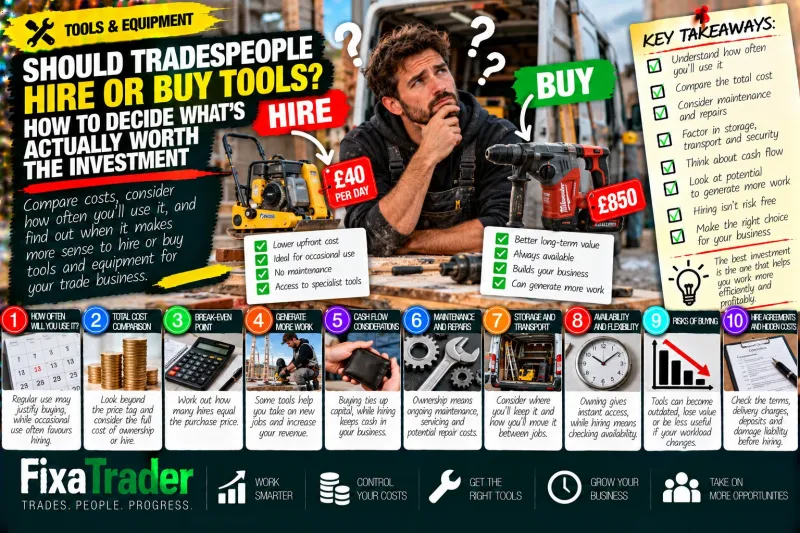
A £500 tool that lasts for years and saves you time may be excellent value.
A £50 tool that repeatedly fails could be expensive.
But a £500 tool that spends most of its life unused can also be a poor investment.
That's why purchase price alone doesn't tell the full story.
The real cost of a tool includes:
How often you use it
How long it lasts
How much time it saves
What happens if it fails
Whether it works with your existing equipment
Maintenance and repair costs
Replacement costs
The value it adds to the work you do
Ask These Questions Before You Buy
Before spending money on a new tool, it can help to ask:
How often will I use it?
Does this tool directly affect how quickly I can complete work?
What happens if it fails on site?
Will I actually use the extra features?
Does it work with my existing batteries or equipment?
Could a cheaper option do the job just as well?
Will the better model realistically last longer or save enough time to justify the difference?
Am I buying for a genuine need or simply because I want the newest version?
The answers won't always point towards the cheapest or the most expensive option.
And that's the point.Buy Value, Not Just a Price Tag
Professional tools are business investments.
The right purchase can save time, improve quality and make everyday work easier.
The wrong one can leave money sitting unused or create unnecessary problems when equipment doesn't perform as expected.
There will always be a temptation to buy the cheapest option and save money immediately.
There will also always be a temptation to buy the premium version because it feels like the safer choice.
Neither approach is automatically right.
The better approach is to understand what the tool needs to do for your business.
The question isn't whether expensive tools are better.
It's whether they're better enough to justify what you'll pay for them.
And sometimes, the best tool isn't the cheapest or the most expensive one.
It's the one that earns its place in your toolkit every time you use it.
0 Comments
No comments yet — be the first to share your thoughts.