Should Tradespeople Hire or Buy Tools? How to Decide What's Actually Worth the Investment
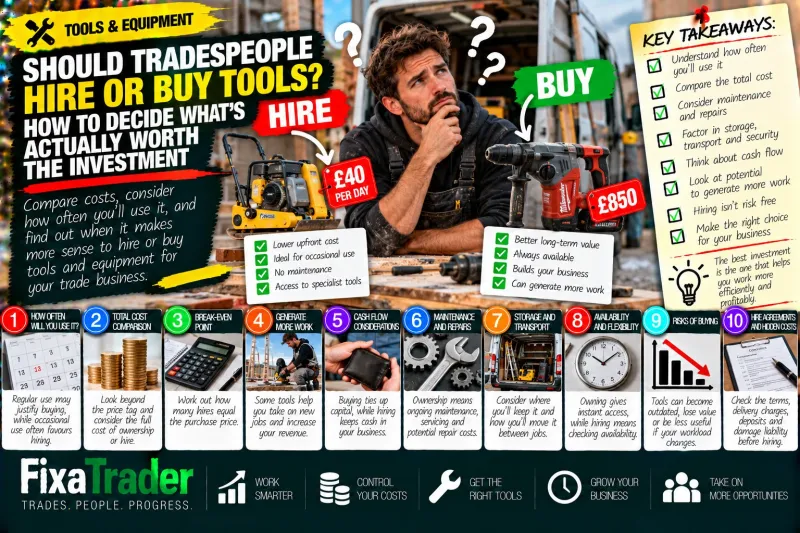
Every tradesperson eventually faces the same decision. You need a particular tool or piece of equipment for an upcoming job. You could buy it. You could hire it...
Every tradesperson eventually faces the same decision.
You need a particular tool or piece of equipment for an upcoming job.
You could buy it.
You could hire it.
Or you could find another way to complete the work.
At first, the choice seems straightforward.
If you use something regularly, buy it.
If you only need it once, hire it.
But in practice, the calculation is rarely that simple.
A tool that costs £1,500 might pay for itself after several jobs.
A machine that appears inexpensive to hire could become costly when delivery, collection and additional days are included.
And purchasing specialist equipment doesn't automatically mean you'll generate enough work to justify owning it.
The important question isn't whether buying or hiring is cheaper today. It's which option makes the most commercial sense for the work your business actually carries out.
Here are ten things worth considering before making the investment.1. Start With How Often You'll Actually Use It
Frequency of use is one of the most important factors.
If you're an electrician using a particular testing instrument regularly, ownership may be essential to how you operate.
If you're a landscaper who needs a specialist machine for one unusual project, hiring could be more practical.
But don't base the decision entirely on how often you hope to use something.
Look at your actual workload.
Consider:
How many jobs required the equipment during the past year?
How many confirmed upcoming jobs will need it?
Is demand consistent or seasonal?
Could you complete the work using equipment you already own?
Is the equipment essential or simply more convenient?
A purchase justified by confirmed work is generally easier to assess than one based on speculative future demand.2. Compare the Total Cost, Not Just the Purchase Price
Buying a tool involves more than the amount shown on the retailer's website.
Depending on the equipment, ownership costs may include:
Initial purchase price.
Batteries, chargers or accessories.
Maintenance and servicing.
Repairs and replacement parts.
Calibration or inspection where required.
Storage and security.
Insurance.
Transport.
Depreciation.
Hiring has additional costs too.
These may include delivery, collection, deposits, consumables, cleaning charges and fees for returning equipment late.
The cheapest-looking option isn't always the cheapest overall.
Ask for the complete hire price and compare it with the realistic cost of ownership over the period you're considering.3. Work Out Your Break-Even Point
A simple calculation can help you understand how many hires would equal the purchase price.
Imagine you're considering a specialist tool.
Example:
Purchase price: £1,200.
Hire cost: £80 per day.
Expected use: 20 days per year.
At first glance, hiring for 20 days would cost £1,600.
Buying for £1,200 might appear to save £400.
But that's before considering maintenance, storage, repairs and other ownership costs.
You should also account for the tool's expected useful life and any remaining resale value.
If you only use it five days a year, hiring could be more attractive.
If you use it regularly across several years, ownership may offer better value.
The break-even point is a starting point for the decision, not the complete answer.4. Think About Whether the Equipment Will Generate Additional Work
Some purchases do more than reduce hire costs.
They allow you to offer services you couldn't previously provide.
For example, a specialist machine might enable a contractor to take on a particular type of installation or preparation work.
That could create new revenue opportunities.
However, the important distinction is between being able to offer a service and having customers willing to pay for it.
Before investing, ask:
Is there genuine demand for the service?
Do I have the necessary training and competence?
What would customers realistically pay?
How many jobs would I need to recover the investment?
Are there additional insurance or operating requirements?
Sometimes it's better to hire initially, establish whether the service is commercially worthwhile and consider purchasing later.5. Consider the Impact on Cash Flow
A profitable business can still experience cash flow problems.
Imagine you have £4,000 available in your business account.
You spend £2,500 on equipment.
The purchase may be commercially sensible over several years, but you've immediately reduced the cash available for materials, fuel, insurance and other commitments.
Hiring may cost more over time while preserving cash in the short term.
That flexibility can be valuable, particularly for smaller businesses managing unpredictable workloads.
However, repeated hire charges can also reduce profitability if they're not accounted for properly.
The decision should consider both long-term value and the business's immediate financial position.
A purchase can be good value without being affordable at the moment you need to make it.6. Don't Forget About Maintenance and Repairs
Ownership gives you control over equipment availability.
But it also means taking responsibility for keeping that equipment in suitable condition.
Some tools require relatively little maintenance.
Others need regular servicing, inspections, calibration or specialist repairs.
For example, certain lifting equipment, electrical testing instruments and powered machinery may have particular maintenance or inspection requirements.
The applicable duties depend on the equipment and how it's used.
Hiring can sometimes reduce the burden of managing maintenance because the hire provider is responsible for supplying equipment in an appropriate condition.
However, the user still has responsibilities relating to safe use, checks, training and suitability.
Hiring equipment doesn't transfer every safety responsibility to the hire company.
Before choosing either option, understand what's required to operate and maintain the equipment properly.7. Consider Storage, Transport and Security
Large equipment creates practical problems that smaller hand tools don't.
Where will you keep it?
Can you transport it safely?
Will it fit in your existing vehicle?
Does it require additional security?
Could it become a target for theft?
A machine that seems affordable to purchase may require extra storage or transport arrangements.
Those costs can change the calculation considerably.
Hiring equipment when needed may avoid some of these issues.
On the other hand, repeatedly arranging delivery and collection can introduce delays and additional charges.
Think about the full process of getting the equipment to and from the job, not simply using it once it arrives.8. How Important Is Immediate Availability?
Sometimes owning equipment provides an advantage that doesn't appear directly in the financial calculation.
You can use it whenever you need it.
There's no need to check hire availability.
No collection arrangements.
And no risk of discovering that the machine you need has already been booked.
For tradespeople handling urgent or unpredictable work, immediate access can be particularly valuable.
But availability only matters if the equipment is genuinely needed often enough.
If you use a specialist machine twice a year and can book it in advance, ownership may offer little practical benefit.
If it regularly prevents delays or allows you to respond quickly to profitable work, buying could be more attractive.9. Understand the Risks of Buying Specialist Equipment
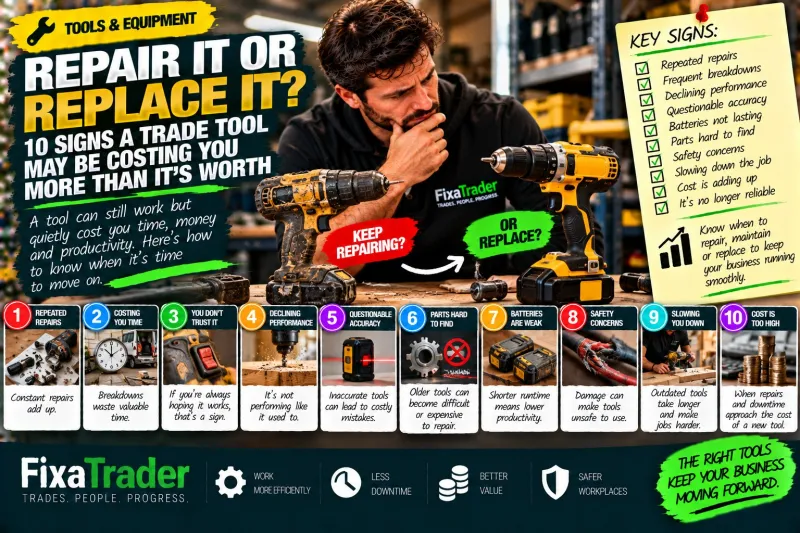
Some equipment becomes outdated, loses value or requires expensive repairs.
A tool that works perfectly today may become less useful if your business changes direction.
You might stop offering a particular service.
A manufacturer could discontinue parts.
Or a newer model might offer features that customers or projects increasingly require.
This doesn't mean tradespeople should avoid investing in equipment.
It means specialist purchases deserve careful consideration.
Hiring can provide flexibility while you establish demand or test whether a particular machine suits your work.
For expensive purchases, consider the availability of replacement parts, warranty terms, service support and resale demand.10. Make Sure You Understand the Hire Agreement
Hiring isn't automatically risk-free.
Before collecting equipment, read the terms.
Check:
The hire period and return deadline.
Delivery and collection arrangements.
Damage and theft responsibilities.
Any insurance or damage-waiver arrangements.
Cleaning and fuel charges.
Charges for additional days.
Requirements for competent operation.
What happens if the equipment develops a fault.
Some hire agreements can create substantial liabilities if equipment is lost, damaged or returned late.
Make sure you understand the financial exposure before accepting the equipment.
If the hire company offers a damage waiver, check what it actually covers and what exclusions apply.
Never assume that a damage waiver removes every possible charge.When Does Buying Usually Make More Sense?
Buying may be attractive when equipment is used regularly and forms part of your core service.
It can also make sense when immediate availability is important or repeated hire charges are becoming substantial.
Ownership may be worth considering when:
You have consistent demand for the equipment.
The total cost compares favourably with repeated hiring.
You can afford the purchase without weakening cash reserves.
Storage and transport are manageable.
Maintenance requirements are understood.
The equipment is likely to remain useful for several years.
The decision should still reflect the individual product and business circumstances.When Does Hiring Usually Make More Sense?
Hiring may be preferable for occasional, seasonal or highly specialised work.
It can also help businesses avoid major upfront expenditure.
Hiring may be worth considering when:
You need equipment for one particular project.
Demand for the service is uncertain.
The machine is expensive to maintain or store.
You want to test equipment before purchasing.
Transporting or storing it would be difficult.
You need access to specialist equipment without committing to ownership.
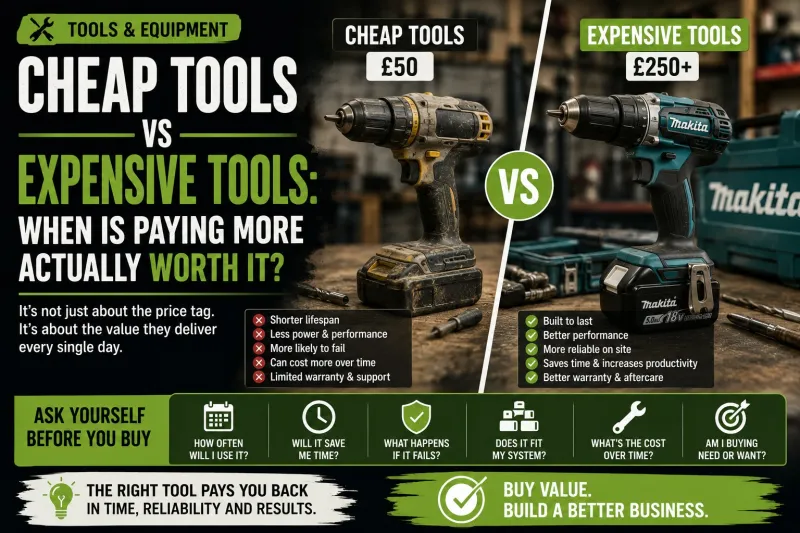
Hiring can also be useful when your existing equipment is temporarily unavailable.What About Buying Second-Hand Tools?
Buying used equipment creates another option.
It may offer a lower upfront cost than purchasing new while still providing the benefits of ownership.
However, the condition and history of the equipment matter.
Consider whether it has been properly maintained.
Check for visible damage, missing safety features and excessive wear.
For equipment requiring inspections or calibration, establish what records are available and what further checks may be necessary.
Be cautious about purchasing expensive machinery without understanding its condition.
A cheaper second-hand purchase can become costly if repairs are needed immediately.
And for safety-critical equipment, professional inspection or verification may be appropriate before use.Should You Charge Customers for Equipment Hire?
If a job requires hired equipment, the cost should be considered when preparing the quotation.
Depending on your pricing approach, you might include it within the overall job price or show it as a separate item.
Either method can work.
The important thing is clarity.
Customers should understand what they're paying for and whether the price is fixed or subject to agreed variations.
Avoid surprising customers with equipment charges that weren't discussed beforehand.
Also consider whether delivery, collection or additional hire days could affect your costs.
Where these risks are foreseeable, account for them appropriately when quoting.What About Finance and Leasing?
For more expensive equipment, purchasing outright and short-term hiring aren't the only possibilities.
Some suppliers offer finance, leasing or longer-term rental arrangements.
These can spread costs over time, but they also introduce contractual commitments.
Before agreeing, examine:
The total amount payable.
Interest and other charges.
Deposit requirements.
Contract length.
Maintenance responsibilities.
Early termination conditions.
Whether you own the equipment at the end.
Spreading payments doesn't necessarily make equipment cheaper.
It changes when and how you pay.
For significant commitments, consider obtaining independent financial advice and checking the tax treatment with your accountant.A Practical Way to Make the Decision
Before buying your next expensive tool, work through five questions.
1. How often will I use it?
Base the answer on actual and reasonably expected work.
2. What is the complete cost of each option?
Include purchase, hire, maintenance, transport and other relevant expenses.
Think about resale value, ongoing commitments and flexibility.
If the answers favour buying, the investment may be justified.
If uncertainty remains, hiring could provide a lower-commitment way to complete the work.The Best Investment Isn't Always the Tool You Own
Tradespeople often take pride in their tools.
And rightly so.
Reliable equipment is essential to delivering professional work.
But owning more equipment doesn't automatically mean running a more profitable business.
Sometimes buying makes sense because a tool is used constantly and saves money over time.
Sometimes hiring is better because it provides access to specialist equipment without tying up capital.
And sometimes the most sensible decision is to wait until demand justifies the purchase.
The aim isn't to build the largest possible collection of tools.
It's to have reliable access to the equipment your business needs, at a cost that makes commercial sense.
A good tool investment should help you complete better work, operate more efficiently or improve profitability — not simply give you another expensive piece of equipment to store.
0 Comments
No comments yet — be the first to share your thoughts.