Are You Overloading Your Sockets? 10 Electrical Habits That Could Be Putting Your Home at Risk
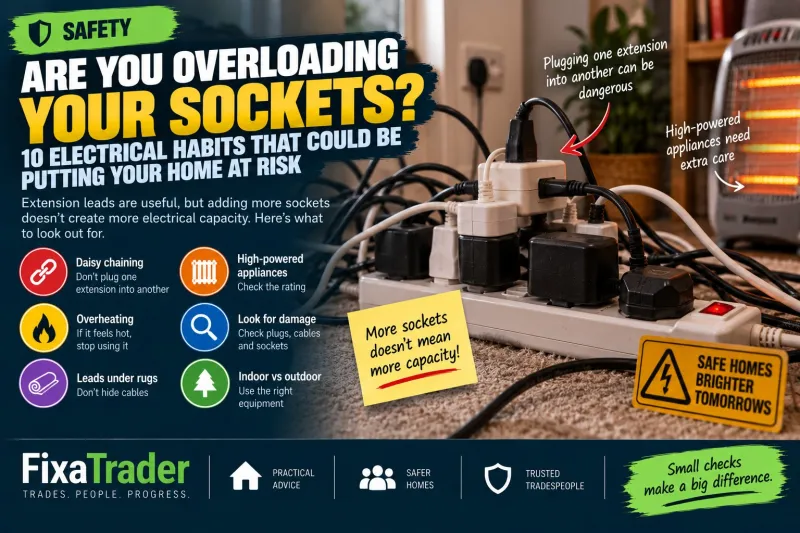
Look behind the television. Under the home-office desk. Beside the bed. Around the kitchen. There's a good chance you'll find an extension lead somewhere. Moder...
There's a good chance you'll find an extension lead somewhere.
Modern homes contain an enormous number of electrical devices, and older properties in particular may not have sockets exactly where today's households need them.
Extension leads are therefore useful.
The problem is that a four-way extension lead can make it look as though you suddenly have four times as much electricity available.
You don't.
How equipment is connected, how much power it draws and the condition of plugs, sockets and leads all matter.
Here are ten habits worth looking out for.1. Plugging One Extension Lead Into Another
You need another socket.
So you plug a second extension lead into the first.
Then perhaps another adaptor goes into that.
It solves the immediate problem, but it can create a setup that is much easier to overload or damage.
The number of available outlets isn't a measure of how much load the original socket or extension arrangement can safely support.
If you permanently need far more outlets in one part of a room, that may be a sign that your electrical setup needs a more appropriate long-term solution.2. Assuming Every Appliance Uses Roughly the Same Amount of Power
They don't.
A phone charger and a portable electric heater are very different loads.
So are a table lamp and a kettle.
High-powered appliances can consume a significant amount of electricity, which is why simply counting the number of plugs isn't enough.
An extension with three low-powered devices attached is not necessarily equivalent to one supplying several high-powered appliances.
Pay attention to the ratings of the extension lead and equipment you're connecting to it.3. Running High-Powered Appliances Through an Extension Without Checking
Portable heaters deserve particular attention.
So do other appliances with relatively high power demands.
It's easy to think:
“There's an empty socket on the extension, so I can plug it in.”
But an empty outlet doesn't automatically mean the extension can safely accommodate the additional load.
Check the manufacturer's instructions and electrical ratings rather than assuming.
Where possible, high-powered appliances should be connected in accordance with the manufacturer's guidance rather than through improvised chains of adaptors and extensions.4. Leaving Cable Reels Coiled While They're Being Heavily Used
Extension reels are convenient in garages, gardens and during DIY work.
But if a cable reel is being used with a substantial load, leaving the cable tightly wound can prevent heat from dissipating effectively.
Follow the reel manufacturer's instructions.
Many specify different maximum loads depending on whether the cable is wound or fully unwound.
That small label on the reel is worth reading.5. Ignoring a Plug or Socket That Feels Unusually Hot
Electrical equipment can become warm in normal use.
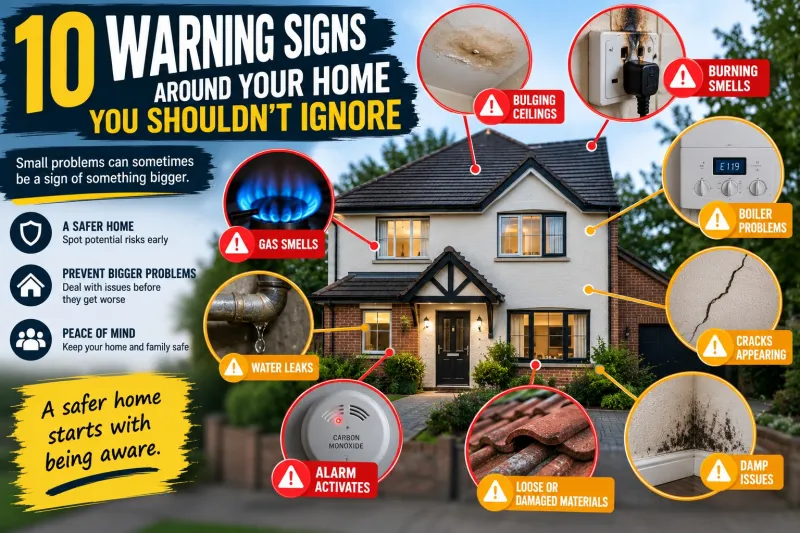
But a plug, socket or adaptor becoming unusually hot, showing discoloration or producing a burning smell should not simply be ignored.
Those symptoms can indicate a problem such as a poor connection, damaged equipment or excessive heating.
Stop using equipment that appears unsafe and have the cause properly investigated.
Don't wait for visible melting before deciding something is wrong.6. Continuing to Use Damaged Extension Leads
Extension leads tend to have difficult lives.
They get:
Dragged across floors.
Caught beneath furniture.
Stored badly.
Bent around corners.
Stepped on.
Run through doorways.
Used during decorating.
Thrown into garages and vans.
Over time, plugs, sockets and cables can become damaged.
Look for split insulation, exposed conductors, damaged plugs, loose sockets, scorch marks or other obvious deterioration.
Electrical equipment doesn't become safer because it still happens to work.7. Running Leads Under Rugs or Carpets
A cable across the middle of a room is annoying.
Covering it with a rug might seem like an easy solution.
But hiding electrical leads can create other problems.
Damage becomes harder to see.
The cable may be crushed by furniture or foot traffic.
Heat may not dissipate as intended.
And the rug itself doesn't transform a temporary extension cable into permanent wiring.
If you regularly need power on the opposite side of a room, consider whether the underlying issue is simply that you don't have sockets where you actually need them.8. Using Indoor Equipment Outside
An extension lead being electrical doesn't mean it's suitable for every environment.
Equipment intended for dry indoor use shouldn't automatically be taken into the garden because the cable happens to reach.
Outdoor electrical equipment needs to be appropriate for the conditions and used in accordance with its instructions.
Water and electricity are an obvious combination to treat seriously.
If you're uncertain whether equipment is suitable for outdoor use, check its rating and manufacturer's guidance rather than guessing.9. Ignoring Scorch Marks, Crackling or Loose Sockets
Some electrical warning signs deserve prompt attention.
For example:
Scorching or discoloration
A burning smell
Crackling or buzzing
A plug fitting unusually loosely
Visible damage
Repeated electrical faults associated with the same outlet
Don't repeatedly test a suspicious socket by plugging things back into it.
Stop using it and arrange for it to be assessed where appropriate.
A cosmetic mark around a socket can sometimes reveal something more important happening behind it.10. Treating Extension Leads as Permanent Wiring
An extension lead is useful when you temporarily need power somewhere it isn't conveniently available.
But walk around some homes and you'll find extensions that haven't moved in years.
They're behind furniture.
Running between rooms.
Powering entire entertainment setups.
Supplying home offices.
Connecting multiple adaptors.
At some point, the question becomes:
Do you actually need more appropriately positioned sockets?
If a room permanently depends on multiple extensions, having the installation assessed may provide a safer and more convenient long-term solution.Adding More Outlets Doesn't Increase the Rating
This is the central idea.
Imagine one extension lead has four sockets.
Another has eight.
The eight-way version doesn't necessarily mean you can safely connect twice the electrical load.
Every extension lead and adaptor has a rating.
The connected equipment must remain within the applicable limits.
That's why counting plugs isn't enough.
You need to consider what those plugs are actually powering.What About USB Chargers?
Modern extensions increasingly include USB or USB-C charging ports.
These can be convenient for phones, tablets and other devices.
The same basic principle applies:
Use reputable equipment appropriate for the intended purpose and follow its ratings and instructions.
If a charger or extension becomes damaged, excessively hot, behaves unusually or shows signs of deterioration, don't continue using it simply because it still charges your phone.
Cheap Doesn't Automatically Mean Dangerous — But Quality Matters
Price alone doesn't tell you whether an electrical product is safe.
An inexpensive extension from a reputable source may be perfectly suitable for its intended use.
An expensive product can still be damaged or misused.
What matters more is buying equipment that meets appropriate requirements, using trustworthy suppliers, checking the manufacturer's information and using the product as intended.
Be particularly cautious about electrical products where the manufacturer, specifications or safety information are unclear.Check Around Children's Bedrooms Too
Bedrooms can gradually accumulate electrical equipment:
Televisions.
Games consoles.
Computers.
Chargers.
Lamps.
Heaters.
Hair appliances.
Smart speakers.
Extension leads may end up hidden behind beds or furniture where nobody regularly checks them.
It's worth occasionally looking at what's actually plugged in and the condition of the equipment.
The same applies to student rooms, home offices and other areas where many devices gather around relatively few wall sockets.The Home Office Is Another Common Hotspot
Working from home can transform a spare bedroom into an electronics hub.
Laptop.
Monitors.
Dock.
Printer.
Speakers.
Phone charger.
Desk lamp.
Router equipment.
Perhaps a heater during winter.
Most individual office electronics may not be especially demanding, but the whole setup should still be considered rather than continually adding adaptors whenever another outlet is required.
Good cable management isn't only about making a desk look tidy.
It also makes damaged or overloaded arrangements easier to spot.What Can You Safely Check Yourself?
You don't need to dismantle electrical equipment to perform useful visual checks.
Look for:
Damaged cables
Cracked plugs or adaptors
Scorch marks
Loose components
Signs of overheating
Extension leads connected into other extension leads
Cables trapped under furniture
Leads being used in unsuitable environments
Permanent dependence on temporary extensions
You can also check the manufacturer's ratings on extension leads and appliances.
None of that requires opening sockets or interfering with fixed wiring.Don't DIY Your Way Into Fixed Electrical Work
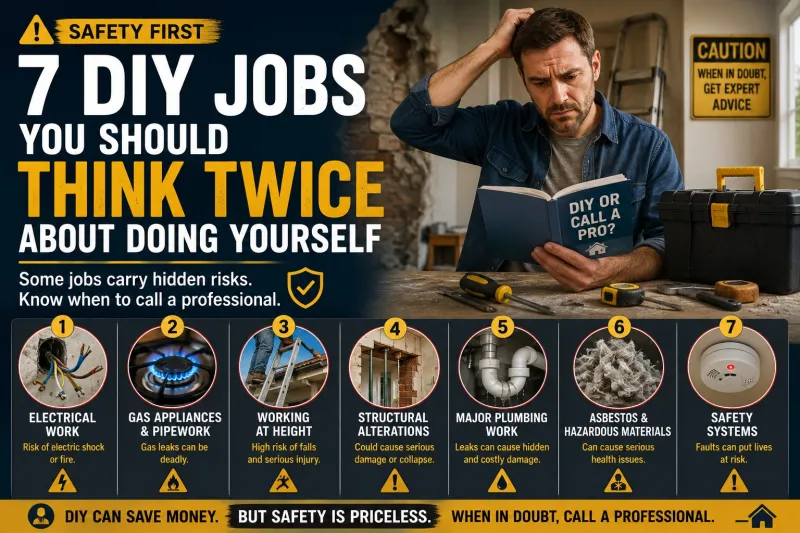
Recognising that you need another socket doesn't mean you should install one yourself without understanding the requirements.
Electrical installation work can involve safety and regulatory considerations.
If fixed electrical work is required, use somebody competent to carry it out and ensure any applicable requirements are followed.
For work in England, certain electrical installation work in dwellings falls within Part P of the Building Regulations — something we've covered separately in our guide to Part P.When Should You Stop Using Something Immediately?
If electrical equipment is:
Burning.
Smoking.
Sparking unexpectedly.
Melting.
Giving off a strong burning smell.
Or showing another obvious sign of an immediate electrical hazard,
stop using it if it is safe to do so and isolate the supply appropriately without putting yourself at risk.
For non-emergency concerns such as damaged sockets, recurring overheating or unexplained electrical behaviour, arrange for a competent electrician to investigate rather than repeatedly using the equipment to see whether the problem returns.Small Habits Matter
Most people don't deliberately create unsafe electrical setups.
They happen gradually.
You buy another device.
Add an adaptor.
Move the desk.
Plug in an extension.
Add another charger.
Move a heater into the room during winter.
Six months later, a temporary solution has quietly become part of the house.
That's why a quick check every so often is worthwhile.
Look behind the furniture.
Check the extension leads.
See what is actually plugged into them.
And pay attention to anything that looks, smells or feels wrong.
An extra socket on an extension lead gives you another place to plug something in — it doesn't give your electrical system unlimited capacity.
0 Comments
No comments yet — be the first to share your thoughts.