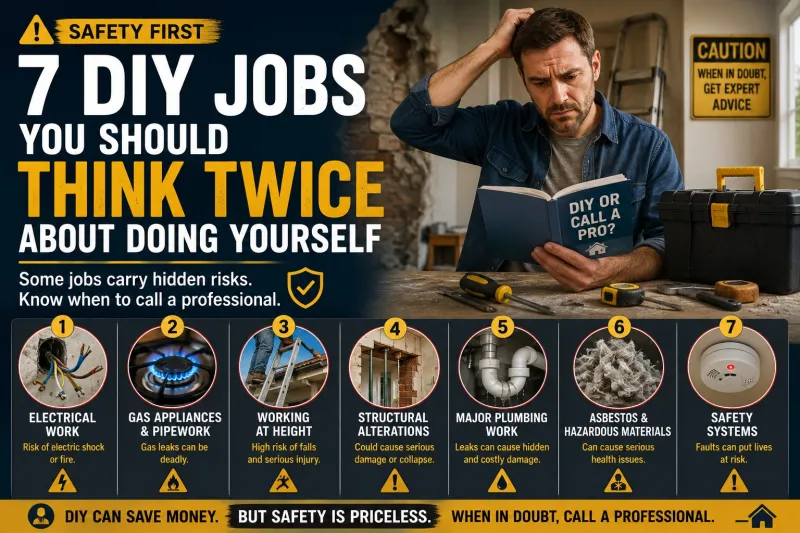
7 DIY Jobs You Should Think Twice About Doing Yourself
DIY is part of owning a home. Painting a room, putting up shelves, repairing a loose cupboard door or refreshing the garden can all be satisfying projects that...
Painting a room, putting up shelves, repairing a loose cupboard door or refreshing the garden can all be satisfying projects that many homeowners are comfortable taking on themselves.
But not every job is simply a question of whether you have the right tools.
Some work involves risks that can affect your safety, the safety of other people, or the condition of your home long after the job appears to be finished.
The challenge is knowing where to draw the line.
A good rule of thumb is this: if a mistake could cause a fire, flood, gas-related danger, serious injury, structural damage or a hidden problem that only becomes apparent later, it's worth thinking carefully before doing the work yourself.
Here are seven types of jobs where professional help may be the safer choice.1. Electrical Work
Electrical work is one of the clearest examples.
Changing a light bulb is one thing. More substantial work involving wiring, circuits, consumer units or electrical connections is something else entirely.
The danger isn't always obvious at the time.
An installation can appear to work normally while still containing a fault that creates a risk later.
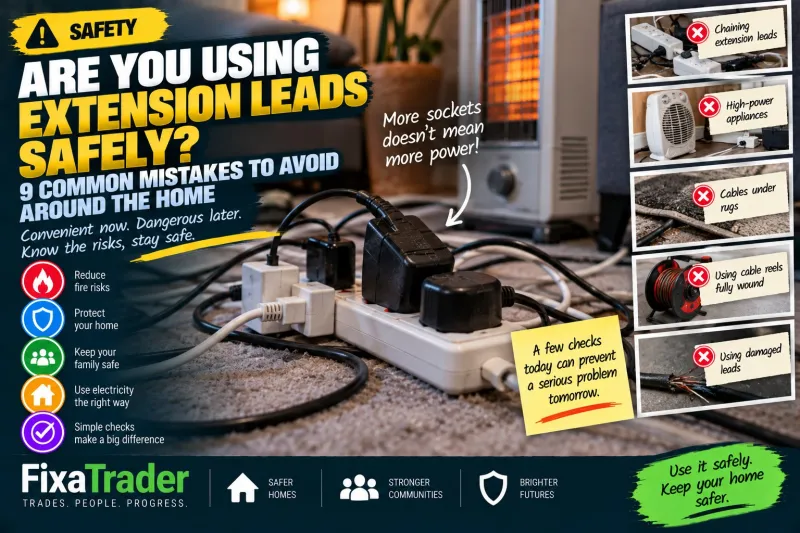
Electrical problems can potentially lead to electric shock, overheating or fire, particularly where work has been carried out incorrectly or unsuitable components have been used.
There are also rules and requirements that may apply to certain types of electrical work.
If you're unsure whether work can safely and legally be carried out yourself, don't rely on a quick video tutorial as your only source of information.
Getting advice from a suitably qualified professional can be a much better starting point.2. Gas Appliances and Pipework
Gas work is not an area for experimentation.
If your home has a gas boiler, cooker, fire or other gas appliance, work involving the gas supply or appliance itself should be treated seriously.
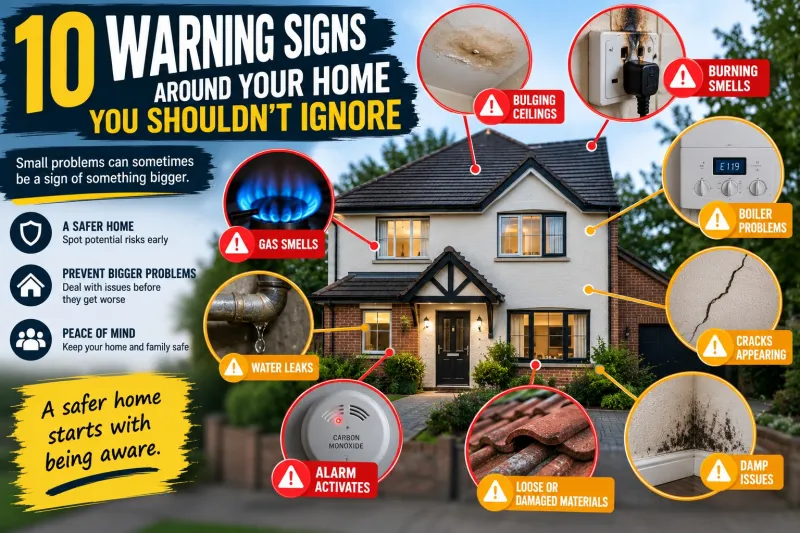
The risks can include gas leaks, fire, explosion and carbon monoxide exposure.
A problem may also be difficult for an untrained person to identify.
Something that appears to be working correctly isn't necessarily safe.
If you suspect a fault with a gas appliance, particularly if you smell gas or believe there may be an immediate gas-related danger, follow the appropriate emergency guidance rather than attempting a repair yourself.
For routine installation, servicing or repair work, use a professional who is appropriately qualified and registered for the work being carried out.3. Working at Height
A job can seem straightforward until you have to get on a ladder.
Cleaning gutters.
Inspecting roof damage.
Repairing fascia boards.
Replacing roof tiles.
Painting upper-storey windows.
The work itself might not appear particularly complicated.
The height is the problem.
Falls remain one of the most serious risks associated with working at height, and conditions can change quickly if a surface is wet, equipment is unstable or the weather turns.
Roof work can be particularly dangerous because homeowners may be tempted to climb up simply to "have a quick look".
If you're concerned about a roof or another high-level part of your property, start by assessing what you can safely see from ground level.
If a closer inspection is needed, calling someone with the appropriate experience and equipment is often the safer option.4. Structural Alterations
Knocking down a wall can dramatically change a room.
That doesn't mean every wall can simply be removed.
Some parts of a property may play a structural role, and removing or altering them without understanding the construction can cause serious problems.
The same applies to certain changes involving floors, roofs, chimneys and other structural elements.
A structural issue isn't always immediately visible.
Damage may develop gradually, which can make an initially cheap DIY project considerably more expensive to put right later.
Before making significant alterations to the structure of a home, get appropriate professional advice.
Understanding what you're dealing with before work begins is far better than discovering the problem afterwards.5. Major Plumbing Work
There is a big difference between replacing a washer and altering plumbing throughout a property.
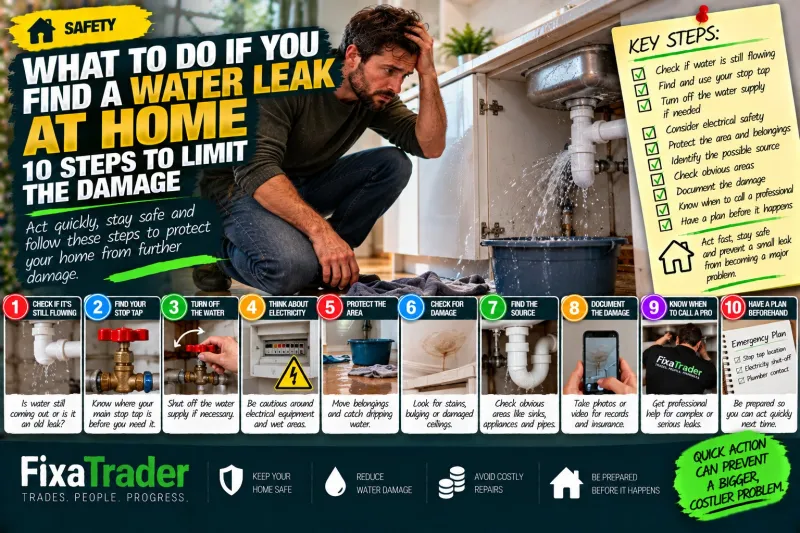
More substantial plumbing work can involve water pressure, drainage, hidden pipework and connections that may be difficult to access once the job is finished.
A small mistake can also become a large leak.
And unfortunately, water doesn't always appear immediately.
A poorly fitted connection hidden behind a wall, under a floor or inside a ceiling can leak slowly for weeks before the damage becomes obvious.
By that point, the repair may involve far more than fixing the original pipe.
If the work is complicated, involves significant changes to the system or would be difficult to inspect once completed, professional help can provide valuable reassurance.6. Anything Involving Asbestos or Other Hazardous Materials
Older properties can contain materials that shouldn't simply be drilled, cut, sanded or removed without first understanding what they are.
If you encounter an unfamiliar material and have concerns about whether it could present a health risk, don't assume it is safe because it has been in the property for decades.
Disturbing certain materials can create a greater risk than leaving them alone.
The safest next step may be to seek appropriate advice or arrange for the material to be properly identified before carrying out work nearby.
This is one situation where guessing can be particularly unwise.7. Jobs That Affect Safety Systems
Some parts of a home exist primarily to keep people safe.
That includes things such as fire-related safety measures, certain ventilation systems, alarms and other protective installations.
Changing or repairing these systems without understanding how they work can create a false sense of security.
The system may look fine.
It may even appear to operate.
But that doesn't necessarily mean it will perform properly when it actually matters.
If a job affects a safety-critical part of your property, professional installation, inspection or advice may be worth considerably more than the money saved by doing it yourself.DIY Isn't the Enemy
None of this means homeowners should stop doing DIY altogether.
There are plenty of jobs that can be completed safely with sensible preparation, the right tools and an understanding of what you're doing.
DIY can save money.
It can help you maintain your home.
And it can be genuinely rewarding.
The important thing is recognising that not every job carries the same consequences if something goes wrong.
Painting a wall badly is frustrating.
Damaging a gas appliance is potentially dangerous.
Hanging a shelf slightly crooked can be fixed.
Making an incorrect structural alteration can be far more complicated.
The difference isn't how difficult the job looks.
It's the potential consequence of a mistake.Ask Yourself These Questions First
Before starting a bigger DIY project, take a moment to ask:
Could I seriously injure myself doing this?
Could a mistake create a fire, electrical or gas risk?
Could I cause hidden damage to the property?
Does the work affect the structure of the building?
Could this involve regulations or specialist requirements?
Would I know how to check that the finished work is actually safe?
Could fixing a mistake cost significantly more than hiring a professional in the first place?
If several of those answers make you hesitate, that hesitation may be telling you something useful.Knowing When to Call Someone Is Part of Looking After Your Home
There is no prize for doing every job yourself.
In fact, one of the most sensible decisions a homeowner can make is recognising when a project is outside their experience.
Professionals don't just bring labour.
They bring training, experience, specialist equipment and an understanding of problems that may not be obvious to someone seeing the job for the first time.
That doesn't mean you need to call a tradesperson for every loose screw or dripping tap.
It means making a sensible distinction between a manageable DIY project and work where the risks justify professional involvement.
The smartest DIY decision isn't always knowing how to do the job.
Sometimes it's knowing when not to.
0 Comments
No comments yet — be the first to share your thoughts.