How to Choose a New Front Door: 10 Things to Consider Before You Buy
Your front door is one of the most frequently used parts of your home. You open it every morning. Close it every evening. Rely on it to keep out the weather. An...
Your front door is one of the most frequently used parts of your home.
You open it every morning.
Close it every evening.
Rely on it to keep out the weather.
And expect it to provide a secure entrance to your property.
Yet when homeowners start shopping for a replacement, the conversation often begins with two things:
What does it look like, and how much does it cost?
Both matter.
But a front door also needs to suit the building, fit correctly, operate reliably and perform well for years.
A door that looks fantastic in a showroom may be disappointing if it lets in draughts, requires constant adjustment or has unsuitable security hardware.
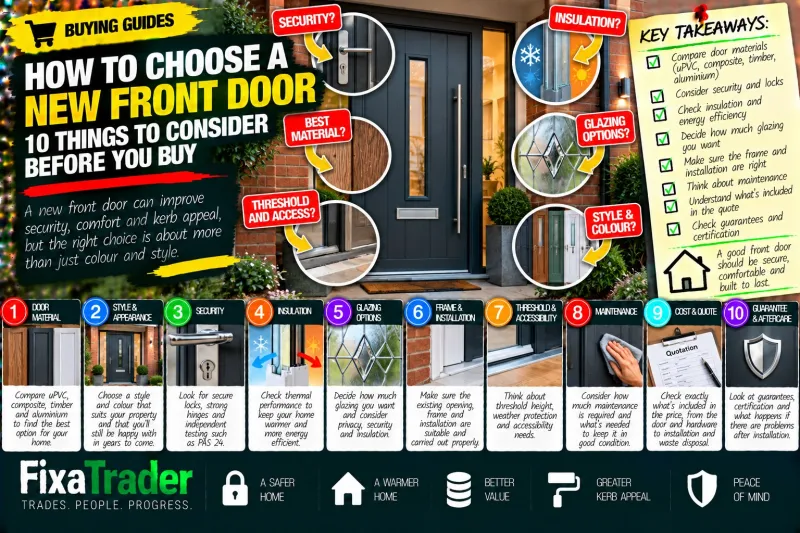
Here are ten things worth considering before choosing your next front door.1. Choose the Right Door Material
One of the first decisions is what the door should be made from.
Common options include uPVC, composite, timber and aluminium.
Each has advantages and limitations.
uPVC doors are widely used because they're relatively low-maintenance and available in different styles. Their quality and performance vary considerably between products.
Composite doors typically combine several materials in their construction. They can offer good insulation, security and durability, depending on the design and specification.
Timber doors provide a traditional appearance and can be particularly suitable for period properties. However, they generally require appropriate maintenance to protect against moisture and weathering.
Aluminium doors can provide a contemporary appearance and relatively slim profiles, although thermal performance depends on the construction and design.
There isn't one material that's automatically best for every home.
Think about your budget, the property's appearance, maintenance expectations and the performance of the complete doorset.2. Look Beyond the Colour and Style
Your front door makes a significant contribution to the appearance of the property.
A modern anthracite door might look excellent on one house and completely out of place on another.
Likewise, a traditional panelled timber door may complement an older property but not suit a contemporary extension.
Consider:
The age and architectural style of the building.
Existing window frames.
Brickwork or external finishes.
The entrance surround.
Glazing and decorative panels.
Door furniture, including handles and letterplates.
Try to view examples of the door installed on real properties rather than relying entirely on a small product photograph.
And remember that fashionable colours can change.
A front door is a relatively long-term purchase, so choose something you'll still be comfortable with in several years.3. Understand What Makes a Door Secure
Security should be a major consideration.
But don't judge it solely by how substantial the door feels.
A thick-looking door isn't necessarily secure if the frame, locking system or installation is weak.
Look at the complete arrangement.
That includes:
The door leaf.
Frame.
Hinges.
Locking mechanism.
Cylinder.
Glazing.
And how everything is installed.
Some products are independently tested to recognised security standards.
For example, PAS 24 is a commonly referenced enhanced-security standard for doorsets in the UK.
However, check what the supplier is actually claiming.
A door advertised with a particular lock isn't necessarily the same as a complete doorset tested to a security standard.
Ask for evidence of the relevant product specification rather than relying on marketing phrases such as high security.4. Pay Attention to Insulation and Energy Efficiency
A front door can influence how comfortable your hallway feels.
Poorly performing doors may contribute to heat loss, cold surfaces and draughts.
When comparing products, ask about their thermal performance.
You may see a U-value, which indicates how readily heat passes through a building element.
Generally, a lower U-value indicates better thermal insulation.
But remember that the performance of the installed door matters.
A well-insulated door fitted badly can still allow uncomfortable draughts around the frame.
Also consider glazing.
Decorative glass panels can look attractive and provide natural light, but their specification affects the overall thermal performance.
Don't assume that every composite door is automatically better insulated than every uPVC or timber alternative.
Compare actual product specifications.5. Decide How Much Glazing You Want
Glazing can transform a front entrance.
A solid door provides a different appearance and level of privacy from one with a large glazed panel.
Glass can make a dark hallway feel brighter.
But it also affects privacy, security, appearance and potentially thermal performance.
Consider whether you want:
Clear glass.
Obscured glass.
Decorative glazing.
Small glazed sections.
Or a completely solid design.
If your front door faces directly onto a pavement or neighbouring property, privacy may be particularly important.
Ask about the glazing specification, including appropriate safety glazing and security performance.
A decorative glass panel should still be suitable for its location and purpose.6. Check the Frame and Existing Opening
A replacement front door isn't always a straightforward matter of removing one door and installing another.
The condition of the existing opening matters.
A survey may identify:
An uneven opening.
A damaged frame.
Deteriorating surrounding materials.
An unsuitable threshold.
Previous installation problems.
Or dimensions that differ from standard products.
Don't assume the cheapest advertised door price includes everything needed to complete the installation.
Ask whether the quotation covers a new frame and threshold, where required.
Also establish whether any surrounding repairs or making-good work are included.
A proper survey before manufacture or ordering can help prevent expensive surprises.7. Consider the Threshold and Accessibility
The threshold is the lower part of the doorway that you step over.
It may not be the most exciting part of choosing a door, but it can have a significant effect on everyday use.
A high threshold may be inconvenient for:
Wheelchairs.
Pushchairs.
People with reduced mobility.
Or anyone regularly moving heavy items through the entrance.
Lower-threshold options may be available, depending on the door system and property.
However, the threshold also needs to manage weather and water appropriately.
Don't assume that simply removing or reducing a threshold will provide a suitable solution.
Discuss accessibility, weather protection and the existing floor levels with the installer.
If accessibility is a priority, raise it before choosing the door rather than treating it as an adjustment afterwards.8. Think About Maintenance Before Buying
Some doors require more ongoing attention than others.
Timber may need periodic inspection and refinishing depending on its exposure, coating and condition.
uPVC and composite products generally require less decorative maintenance, although cleaning, hardware care and occasional adjustment may still be necessary.
Aluminium doors also require suitable cleaning and maintenance.
Whatever the material, the locks, hinges, seals and drainage details need appropriate care.
Ask the supplier:
What maintenance is recommended?
Are specialist cleaning products required?
How should the hinges and locks be maintained?
What could invalidate the warranty?
And how easily can damaged components be replaced?
A door that is inexpensive initially may not be the best value if it requires more maintenance than you're prepared to provide.9. Understand What the Installation Includes
Two quotations for apparently similar doors can vary considerably.
The difference may not be the door itself.
One installer might include:
Removal of the existing door and frame.
Supply of the new doorset.
Installation.
New hardware.
Internal finishing.
External sealing.
Waste disposal.
And appropriate documentation.
Another quotation may exclude several of those items.
Before comparing prices, establish exactly what each contractor is offering.
Ask whether the price includes any necessary finishing around the opening.
Also clarify what happens if previously concealed damage is discovered during removal.
A cheaper quotation isn't necessarily worse, but it needs to be compared on the same scope.10. Check Guarantees, Certification and Aftercare
A front door is something you'll use repeatedly, often several times every day.
That makes aftercare important.
Before ordering, establish what guarantees are provided.
There may be separate terms covering:
The door.
Glazing.
Hardware.
Locks.
Surface finishes.
And installation workmanship.
Ask what happens if the door drops, begins catching or develops a problem after installation.
Who should you contact?
Is adjustment included?
What are the exclusions?
For replacement external doors, relevant building regulations and certification arrangements may also apply.
In England, for example, replacement work may be covered through an appropriate competent person scheme or building control route, depending on the circumstances.
Make sure you understand which compliance documents should be supplied.Composite vs uPVC vs Timber vs Aluminium: Which Is Better?
The right material depends on what you value most.
Material | Potential strengths | Considerations uPVC | Low maintenance, broad availability, often budget-friendly | Quality and design vary Composite | Range of styles, good performance options, relatively low maintenance | Construction and specifications vary Timber | Traditional appearance, repairable and refinishable in many cases | Usually needs more maintenance Aluminium | Contemporary appearance, durable finishes, slim-profile options | Cost and thermal design need consideration
Don't choose solely on the material name.
A high-quality, correctly installed product can be a better purchase than a poorly specified alternative made from a material with a more premium reputation.Should You Replace the Entire Door or Just Repair It?
Not every troublesome front door needs replacing.
Perhaps the hinges require adjustment.
The lock is worn.
A seal has deteriorated.
Or the door has become slightly misaligned.
Depending on its condition, repair may be a sensible option.
However, replacement becomes more attractive where the door or frame is significantly deteriorated, performance is poor or repeated repairs are no longer economical.
Ask an appropriate professional to assess whether the problem lies with the door, frame, hardware or installation.
You may discover that a relatively modest repair restores reliable operation.
Equally, spending repeatedly on an unsuitable or badly deteriorated door may not represent good value.Don't Forget the Letterplate and Door Furniture
Small details can affect both appearance and performance.
Think about:
Handles.
Knockers.
House numbers.
Letterplates.
Door viewers.
And additional security accessories.
A poorly fitting letterplate can contribute to draughts.
Hardware should be compatible with the door and its security requirements.
Consider whether the finish will suit the property and withstand normal use.
Also ask whether replacement parts will be readily available if something wears out later.Be Careful With Extremely Cheap Door Offers
A headline price can be attractive.
But establish what's included before assuming you've found a bargain.
Is the advertised price for the door alone?
Does it include the frame?
Are locks and handles included?
What about glazing upgrades?
Installation?
VAT?
Removal and disposal?
Finishing?
Certification?
A product advertised at a low starting price may cost considerably more once you've selected the specification and installation you actually need.
Get a clear written quotation before committing.What Should You Ask Before Ordering?
A few well-chosen questions can prevent disappointment later.
Ask the supplier or installer:
What is the complete doorset specification?
What security testing or certification applies?
What is its thermal performance?
Will the existing frame be replaced?
What finishing work is included?
How long will manufacture and installation take?
What guarantees and aftercare are provided?
What building regulations documentation will I receive?
The answers should help you compare products based on more than appearance.A Good Front Door Should Work as Well as It Looks
Replacing a front door can make a noticeable difference to your home.
It can improve the entrance, increase comfort and provide an opportunity to upgrade security.
But the best result comes from choosing the complete installation carefully.
Start with the material and style.
Then consider the glazing, locks, insulation, threshold and frame.
Understand the quotation.
Check the guarantees.
And make sure the installation will be carried out appropriately.
A front door isn't simply a decorative panel fitted into an opening.
It's a working part of the building that needs to withstand everyday use, changing weather and years of opening and closing.
Choose a front door for the way it looks today — but judge its value by how securely, comfortably and reliably it serves your home for years to come.
0 Comments
No comments yet — be the first to share your thoughts.