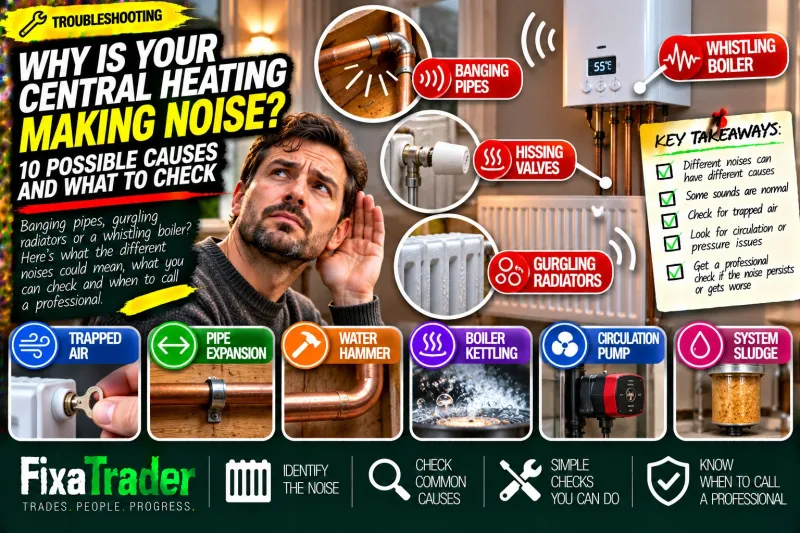
Why Is Your Central Heating Making Noise? 10 Possible Causes and What to Check
You turn the heating on. A few minutes later, you hear a knocking sound coming from somewhere beneath the floor. Then a radiator starts gurgling. Perhaps your b...
A few minutes later, you hear a knocking sound coming from somewhere beneath the floor.
Then a radiator starts gurgling.
Perhaps your boiler makes a high-pitched noise when the heating has been running for a while.
Is something about to break?
Not necessarily.
Central heating systems contain several components that expand, contract, circulate water and respond to changing temperatures.
Some noise is a normal part of operation.
However, unusual, persistent or increasingly loud sounds can indicate that something needs attention.
The difficulty is that different problems can produce similar noises.
A banging sound might come from pipe movement, a circulation issue or another fault entirely.
And the location where you hear the noise isn't always where the problem originates.
The key is to understand when the noise happens, where it seems to come from and whether your heating is behaving differently from normal.
Here are ten possible causes of central heating noises and what homeowners should know about them.1. Trapped Air in Radiators
One of the more familiar heating noises is gurgling.
You might hear water bubbling or moving unevenly inside a radiator.
This can happen when air becomes trapped within the heating system.
Air pockets can interfere with normal water circulation.
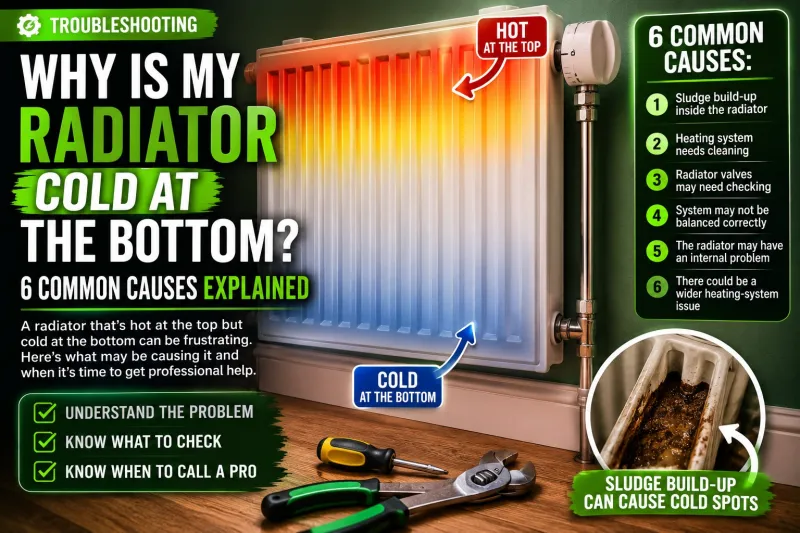
You may also notice that a radiator is cooler at the top than at the bottom.
Common signs include:
Gurgling or bubbling noises.
A radiator that heats unevenly.
Cold areas near the top.
Reduced heating performance.
Bleeding a radiator can sometimes release trapped air.
However, the correct procedure depends on your heating system.
On a sealed system, releasing air may reduce the system pressure, which may then need to be restored according to the manufacturer's instructions.
If you're unsure how to do this safely, ask a heating professional.
If air repeatedly returns after bleeding, the underlying cause should be investigated rather than continually releasing it.2. Pipes Expanding and Contracting
Heating pipes change temperature as hot water moves through them.
As the metal warms, it expands slightly.
When it cools, it contracts.
This movement can produce ticking, clicking or occasional knocking sounds.
You may notice the noise shortly after the heating switches on or when the system begins cooling down.
In some properties, pipes pass through tight openings in floorboards, joists or walls.
Movement against surrounding materials can make the noise more noticeable.
Possible signs include:
Clicking shortly after heating starts.
Ticking from floors or walls.
Noises that gradually stop as temperatures stabilise.
Heating that otherwise operates normally.
Small amounts of thermal movement are common.
However, loud or persistent knocking may justify further investigation.
A heating engineer or suitably competent plumber can assess whether pipework needs additional support, clearance or other adjustments.3. Water Hammer and Sudden Pressure Changes
Water hammer is a pressure surge that can occur when flowing water is stopped or redirected suddenly.
It can create a sharp banging or knocking sound.
Although commonly associated with domestic water supplies, pressure-related noises can also occur in certain heating arrangements.
The exact cause depends on the system.
A sudden noise when a valve closes may suggest a different issue from repeated banging while the boiler is running.
Potential contributing factors can include valve operation, water flow and pipe support.
Pay attention to when the sound occurs.
Does it happen when a tap closes?
When a heating valve operates?
Or while the radiators are warming up?
This information can help a professional distinguish between plumbing and heating-related causes.
Repeated loud banging shouldn't automatically be dismissed as normal pipe movement.4. Boiler Kettling
Some homeowners describe their boiler as sounding like a kettle.
The noise may resemble whistling, rumbling or a boiling sound.
This is often referred to as kettling.
It can be associated with localised overheating or circulation problems within the heating system.
Potential contributing factors include restrictions in water flow, deposits or faults affecting relevant components.
However, not every whistling or rumbling boiler is experiencing kettling.
The cause requires proper diagnosis.
If your boiler develops persistent boiling, rumbling or unusually loud whistling noises, arrange an inspection by an appropriately qualified heating engineer.
For gas boilers, work involving gas appliances must be carried out by a suitably competent Gas Safe registered engineer.
Do not remove the boiler casing or attempt internal repairs yourself.
A noisy boiler may still provide heating, but that doesn't mean the underlying problem should be ignored.5. Problems With the Circulation Pump
The circulation pump helps move heated water around the central heating system.
If it isn't operating correctly, you may notice unusual sounds.
These could include humming, vibrating, rattling or other mechanical noises.
However, some pump noise is normal.
The important question is whether the sound has changed.
For example, a pump that previously operated quietly but has become noticeably louder may require attention.
Possible causes can include wear, air, unsuitable operating conditions or other circulation issues.
Other symptoms might include:
Radiators heating inconsistently.
Poor circulation.
Unusual vibration.
Heating performance changing.
Noise concentrated near the pump or boiler.
The correct diagnosis depends on the pump and system design.
Don't assume that replacing the pump is necessary simply because you can hear it operating.6. Sludge or Debris in the Heating System
Over time, corrosion products and other debris can accumulate within some central heating systems.
This material is often referred to as heating sludge.
It can interfere with circulation and contribute to uneven heating.
In some circumstances, restrictions or poor circulation may also contribute to unusual noises.
However, sludge doesn't produce one unique sound that proves its presence.
Possible associated symptoms include:
Radiators cold at the bottom.
Slow heating.
Uneven radiator temperatures.
Repeated circulation problems.
Reduced heating performance.
A heating professional can assess the system and determine whether cleaning, filtration or other work is appropriate.
Not every system requires a power flush.
And a power flush isn't automatically the correct solution to every noisy radiator or boiler.
The cause should be established before paying for an expensive system-cleaning procedure.7. Radiator Valves Making Noise
Radiator valves regulate water flow through individual radiators.
Some systems use thermostatic radiator valves, commonly called TRVs.
These adjust flow in response to room temperature.
Under certain conditions, valves may produce whistling, hissing or vibrating noises.
For example, excessive differential pressure across a valve can contribute to noise.
Incorrect flow direction may also be relevant for certain valve designs.
The actual cause depends on the installation.
You might notice:
Whistling from one radiator.
Noise changing when the valve setting changes.
A vibrating or humming sound near the valve.
Noise occurring when other radiators switch off.
Don't force a stiff valve or dismantle it while the system is operating.
If the noise is persistent, a heating professional can assess valve operation, flow and system balancing.
A noisy radiator valve doesn't automatically mean the entire radiator needs replacing.8. Incorrect System Balancing
Central heating systems need appropriate water distribution.
If too much flow passes through certain radiators while others receive insufficient flow, heating performance can become uneven.
This may be associated with noise in some installations.
Balancing involves adjusting the system so radiators receive suitable flow.
It's different from simply turning every radiator valve fully open.
Signs that may justify checking the system include:
Some radiators heating much faster than others.
Rooms that struggle to reach temperature.
Noisy valves or pipework.
Heating performance changing after alterations.
However, uneven heating can also result from trapped air, sludge, valve faults or other issues.
System balancing may help when poor flow distribution is the problem, but it shouldn't be treated as a universal cure for heating noises.9. Loose Pipework or Inadequate Support
Pipes need appropriate support.
If pipework is loose or poorly secured, normal water movement, vibration or thermal expansion may produce rattling and knocking.
The sound may come from beneath floorboards, inside walls or near the boiler.
In some cases, a pipe may contact surrounding timber or another hard surface.
Potential clues include:
Rattling from a particular floor area.
Noise that changes as the heating warms.
Vibration around accessible pipework.
Repeated knocking in the same location.
Locating the cause can be difficult because sound travels through building materials.
Avoid lifting floors or opening walls without considering electrical cables, other services and possible hazardous materials.
A competent professional can assess whether the noise is caused by pipe support, movement or another issue.10. Boiler Components Developing a Fault
Not every heating noise originates from the pipes or radiators.
Boilers contain several mechanical and electrical components.
Depending on the boiler type, these may include fans, pumps, valves and other operating mechanisms.
Some sounds are normal during ignition, operation and shutdown.
However, a new grinding, rattling, screeching or unusually loud mechanical noise may indicate a developing problem.
Warning signs include:
Noise becoming progressively louder.
Repeated boiler lockouts.
Heating or hot water becoming unreliable.
Error codes appearing.
Unusual vibration.
Changes in normal operation.
The correct response is professional diagnosis.
Don't attempt to access internal boiler components yourself.
A boiler that still works may nevertheless need attention if its normal operating sound has changed significantly.What Do Different Central Heating Noises Mean?
The type of noise can provide useful clues, although it cannot confirm a diagnosis on its own.
Gurgling or bubbling
May be associated with trapped air or circulation issues.
Clicking or ticking
Often occurs as pipes and components expand or contract with temperature changes.
Banging or knocking
May involve pipe movement, pressure changes, valves or other system problems.
Whistling or hissing
Can occur around valves or where water flow is restricted.
Rumbling or kettle-like sounds
May indicate localised overheating or circulation problems requiring boiler assessment.
Grinding or screeching
Can suggest a mechanical problem, particularly when the sound is new or persistent.
The sound is only one part of the diagnosis. Timing, location and changes in heating performance are equally important.Is It Normal for Central Heating to Make Noise When It Starts?
Some noise during startup is common.
For example, pipes may click as they warm.
You might also hear pumps operating or valves changing position.
The important distinction is between familiar operating sounds and unusual behaviour.
A quiet clicking noise that has always occurred may be less concerning than a sudden loud banging noise that begins without explanation.
Ask yourself:
Has the sound always been present?
Is it becoming louder?
Does it happen every time the heating starts?
Are the radiators heating normally?
Has the boiler displayed any faults?
If the noise is new, severe or accompanied by other symptoms, arrange appropriate professional advice.Why Does the Heating Make Noise at Night?
Heating noises can seem more noticeable at night because the house is quieter.
Temperature changes may also cause pipes to expand and contract as heating cycles on and off.
In some homes, thermostats or programmed heating schedules cause the system to operate during the night.
The sound may therefore be linked to normal heating cycles.
However, persistent banging, gurgling or unusual boiler noises shouldn't automatically be dismissed because they occur overnight.
Try to establish whether the sound corresponds with the heating switching on, switching off or maintaining temperature.
That information may help identify the cause.Can Low Boiler Pressure Cause Heating Noises?
Low pressure can affect the operation of some sealed central heating systems.
However, low pressure doesn't produce one distinctive sound.
It may be associated with circulation problems or boiler faults, depending on the installation.
If your boiler has a pressure gauge, you can compare the reading with the manufacturer's recommended operating range.
The appropriate pressure depends on the system and whether it is hot or cold.
Don't repeatedly add water without understanding why pressure is falling.
Frequent pressure loss can indicate a leak or another fault.
If your heating is noisy and the pressure repeatedly drops, arrange a professional assessment rather than continually topping up the system.Should You Bleed Your Radiators If They're Making Noise?
Bleeding may help if trapped air is the cause.
For example, a gurgling radiator that remains cold at the top may contain air.
However, bleeding isn't appropriate for every heating noise.
It won't fix a worn pump, defective valve or incorrectly supported pipe.
On sealed systems, bleeding also affects pressure.
If you aren't confident with the correct procedure, seek guidance from a competent professional.
Bleed radiators to address a suspected air problem, not simply because the heating is making an unfamiliar sound.When Should You Turn Off the Heating and Call a Professional?
Some situations require more urgent attention.
For example:
Water is leaking from the boiler or heating system.
The boiler repeatedly locks out.
There is a loud, persistent or worsening mechanical noise.
The system is overheating.
Electrical equipment is affected by leaking water.
You suspect a gas leak.
A carbon monoxide alarm activates.
If you smell gas or suspect a gas escape, follow the emergency gas safety guidance.
In Great Britain, the National Gas Emergency Service can be contacted on 0800 111 999.
If a carbon monoxide alarm activates, follow the alarm manufacturer's instructions, get people into fresh air and seek emergency assistance as appropriate.
Carbon monoxide cannot be reliably detected by smell.
Never ignore a gas or carbon monoxide warning because the heating appears to be operating normally.How Much Does It Cost to Fix Noisy Central Heating?
The cost depends on the underlying cause.
Some issues may be resolved through relatively straightforward adjustments.
Others may require replacement components, system cleaning or more extensive work.
Potential factors include:
The time required to diagnose the fault.
Accessibility of pipework.
Whether parts are needed.
Boiler make and model.
System condition.
Whether emergency attendance is necessary.
The extent of any associated repairs.
Ask for an explanation of the suspected cause before agreeing to substantial work.
Where possible, obtain a written quotation that identifies the proposed repair.
The cheapest initial repair isn't necessarily the best value if it doesn't address the actual problem.Five Things to Check Before Calling a Heating Engineer
You don't need to dismantle your heating system to gather useful information.
Start with these five observations:
Where is the noise coming from? Is it near the boiler, a radiator or beneath the floor?
When does it happen? During startup, continuous heating or shutdown?
What does it sound like? Gurgling, clicking, banging, whistling or grinding?
Is the heating working normally? Check whether rooms and radiators are heating as expected.
Has anything recently changed? Consider repairs, new radiators, pressure changes or altered settings.
This information can help a heating professional investigate more efficiently.
If safe, a short recording of the sound may also be useful.The Bottom Line: Don't Ignore a New Heating Noise, but Don't Assume the Worst
Central heating systems aren't completely silent.
Pipes expand, pumps circulate water and valves respond to changes in temperature.
Some clicking and other operating sounds can be normal.
But persistent gurgling, loud banging, unusual boiler noises and worsening vibrations can indicate problems that deserve attention.
The cause might be trapped air, pipe movement, a valve issue or something more significant.
The important thing is not to guess.
Pay attention to when the noise occurs.
Check whether the heating is operating normally.
And seek professional help when the symptoms suggest a fault.
A noisy heating system doesn't always mean an expensive repair, but understanding the warning signs can help you deal with problems before they become more serious.Useful UK Guidance