How to Prevent Frozen Pipes This Winter: 10 Things Every Homeowner Should Check
Winter can put your home's plumbing under considerable pressure. As temperatures fall, water inside exposed or poorly protected pipes can begin to freeze. When...
Winter can put your home's plumbing under considerable pressure.
As temperatures fall, water inside exposed or poorly protected pipes can begin to freeze.
When water freezes, it expands.
This can create pressure within the plumbing system, potentially causing pipes, fittings or joints to fail.
Sometimes the damage becomes obvious immediately.
In other cases, the pipe remains frozen until temperatures rise, when escaping water reveals the problem.
A burst pipe can damage ceilings, flooring, electrical installations and personal belongings.
And the cost of repairing the pipe itself may be relatively small compared with the damage caused by escaping water.
The good news is that many freezing risks can be reduced through straightforward preparation.
The best time to protect your pipes isn't when the taps stop working. It's before the first prolonged spell of freezing weather.
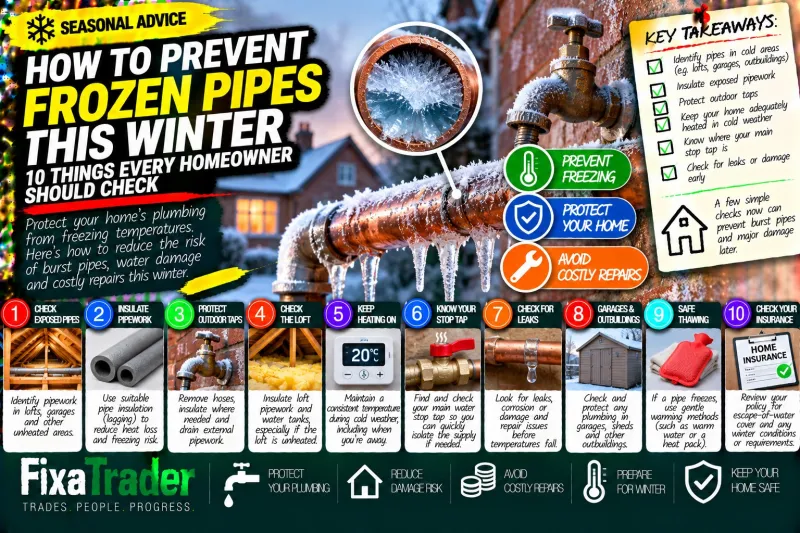
Here are ten things every homeowner should check.1. Identify Pipes in Unheated Areas
Not every pipe in your home faces the same freezing risk.
Pipework inside heated living spaces is generally better protected than pipes exposed to cold air.
However, some plumbing runs through areas that receive little or no heating.
Common examples include:
Loft spaces.
Garages.
Unheated utility rooms.
Outbuildings.
Underfloor voids.
External walls and service cupboards.
Pipework near poorly sealed openings.
These areas can become particularly cold during prolonged freezing weather.
Start by identifying where your home's water pipes are located.
You don't need to dismantle walls or floors.
Focus on accessible areas where pipework is visible.
Knowing which pipes are exposed to cold conditions is the first step towards protecting them.2. Insulate Exposed Water Pipes
Pipe insulation, often called pipe lagging, helps reduce heat loss and slow the rate at which water inside a pipe cools.
It is particularly useful in unheated areas.
Preformed insulation is available in different sizes and materials.
The correct product should suit the pipe diameter, location and intended use.
Pay attention to fittings, bends and junctions, as gaps in insulation can reduce its effectiveness.
However, insulation doesn't generate heat.
During sufficiently prolonged freezing conditions, an insulated pipe can still freeze.
Pipe insulation reduces risk, but it isn't an absolute guarantee against freezing.
For particularly exposed locations, additional protective measures or changes to the pipe arrangement may be necessary.3. Check Outdoor Taps and External Pipework
Outdoor taps are especially vulnerable because they are exposed directly to winter temperatures.
Water remaining inside the tap or connected pipework can freeze.
If your installation has an internal isolation valve for the outside tap, consider whether the supply can be isolated and drained before freezing weather.
The correct procedure depends on the plumbing arrangement.
Some external taps are designed with frost-resistant features, but they still need to be installed and used according to the manufacturer's instructions.
Before winter:
Inspect the outside tap for leaks.
Check whether the supply can be isolated.
Remove connected hoses.
Drain exposed pipework where appropriate.
Consider suitable insulation or protection.
Leaving a hose attached can sometimes prevent water draining properly from a frost-resistant tap.
An outdoor tap that works perfectly in autumn can become a problem during the first extended freeze.4. Protect Pipework in the Loft
Loft spaces can become extremely cold during winter.
This is particularly relevant in homes where insulation has been improved at ceiling level.
Good loft insulation helps keep heat inside the living accommodation.
But it can also mean less warmth reaches the loft itself.
As a result, pipework and water storage components above the insulation may experience colder conditions.
Check accessible loft pipework for suitable insulation.
If your home has a cold-water storage cistern, its insulation and surrounding arrangement may also need attention.
Do not block necessary ventilation or cover electrical equipment inappropriately.
Avoid disturbing loft insulation or other materials that could contain hazards.
If you're unsure how loft pipework should be protected, ask a competent plumber to assess it before winter.5. Keep Your Home Adequately Heated During Cold Weather
A property that remains unheated during freezing conditions can become vulnerable to frozen pipes.
This is especially important if you're away from home.
Some heating systems include frost-protection functions.
However, these features may only protect certain parts of the system.
For example, a boiler's internal frost-protection function doesn't necessarily prevent water pipes elsewhere in the property from freezing.
The effectiveness of any protection depends on the system, controls and installation.
Before leaving your home during winter:
Check the heating is operating correctly.
Understand your frost-protection settings.
Consider the temperature in vulnerable rooms.
Review any relevant home insurance conditions.
Arrange suitable monitoring if the property will be empty for an extended period.
There isn't one thermostat setting that guarantees every pipe will remain safe.
Protecting plumbing during winter requires considering the whole property, not simply whether the boiler has a frost setting.6. Find Your Main Water Stop Tap
If a pipe bursts, knowing how to isolate the water supply can make a substantial difference.
In many UK homes, the internal stop tap is located beneath the kitchen sink.
However, it may be elsewhere, such as a utility room, cupboard or near the point where the supply enters the property.
Locate yours before an emergency.
Make sure it's accessible.
If appropriate, check that it operates correctly without forcing it.
A seized or damaged stop tap may need professional attention.
Other isolation valves may control individual appliances or sections of plumbing.
Everyone in the household who may need to respond to a leak should know where the main stop tap is located.
A few seconds spent isolating the water supply can help limit damage.7. Look for Draughts Around Pipework
Cold air entering through gaps can increase freezing risk.
For example, pipework running near an unsealed opening in an external wall may be exposed to cold draughts.
This can make a localised section of pipe particularly vulnerable.
Inspect accessible areas where pipes pass through walls, floors or other openings.
Look for obvious gaps and damaged seals.
However, don't seal openings that are required for ventilation, combustion air or other safety purposes.
Some gaps may also form part of the building's designed ventilation arrangements.
The aim is to reduce unnecessary cold-air exposure without compromising ventilation or building safety.8. Pay Attention to Garages and Outbuildings
Garages, sheds and detached buildings may have plumbing that is rarely used during winter.
These installations can be vulnerable because they often lack consistent heating.
Potential examples include:
Garage sinks.
Washing machine supplies.
Garden irrigation connections.
Outdoor kitchens.
Workshop plumbing.
Water supplies to detached buildings.
If the plumbing won't be used during winter, consider whether it can be safely isolated and drained.
Some systems require specialist winterisation procedures.
For example, certain irrigation installations may need appropriate draining or other manufacturer-specified measures.
Don't assume that a pipe is protected simply because it's inside a building. An unheated garage can still reach freezing temperatures.9. Check for Existing Leaks and Damaged Pipework
Winter can expose weaknesses in plumbing that already has problems.
A leaking fitting, damaged pipe or poorly supported connection may be more vulnerable to failure.
Before temperatures fall, inspect accessible pipework for:
Dripping joints.
Corrosion.
Damp patches.
Damaged insulation.
Unsupported pipe sections.
Signs of previous freezing.
Unusual movement or deterioration.
Not every mark or stain indicates an active leak.
But visible problems deserve investigation.
Repairing a small defect before winter may help prevent a larger problem later.
Cold weather isn't always the original cause of plumbing failure. Sometimes it exposes a weakness that was already there.10. Prepare for What Happens When Pipes Thaw
Frozen pipes don't always burst visibly while they are frozen.
A damaged section may remain blocked by ice.
When the ice melts, water can begin escaping through the failure.
This is why thawing requires caution.
If you suspect a pipe has frozen, check for signs of damage and know how to isolate the water supply.
Do not use naked flames, blowtorches or other extreme heat sources to thaw pipework.
These methods can cause fire, damage materials or create other hazards.
If the pipe is inaccessible, visibly damaged or near electrical equipment, seek professional assistance.
A frozen pipe may become a much bigger problem during thawing, so don't assume the danger has passed when temperatures rise.How Can You Tell If a Pipe Has Frozen?
One common sign is a sudden reduction or loss of water flow from a particular tap.
For example, the kitchen tap may work normally while an upstairs basin produces little or no water.
Other possible signs include:
A tap producing no water despite the supply being on.
An exposed pipe feeling unusually cold.
Visible frost on accessible pipework.
Unusual noises from the plumbing.
A section of pipe that appears swollen or damaged.
These symptoms don't prove freezing.
Low water pressure, closed valves, supply interruptions and other faults can produce similar effects.
If several properties in your area have lost water, the issue may involve the wider supply network.
If freezing is suspected, avoid repeatedly forcing fittings or attempting aggressive DIY thawing methods.What Should You Do If You Discover a Frozen Pipe?
Start by assessing the situation safely.
If you suspect damage, isolate the water supply where appropriate.
Open a relevant tap if safe to do so, following suitable guidance for the system.
For accessible, undamaged pipework, gentle warming may sometimes be appropriate.
However, avoid direct flames, boiling water and high-temperature equipment.
Do not attempt to thaw pipes close to electrical hazards or in inaccessible locations.
If the pipe has split, is leaking or cannot be safely assessed, contact a plumber.
The priority is to prevent water damage and avoid turning a frozen pipe into a more dangerous situation.What Should You Do If a Pipe Bursts?
If a pipe bursts, act quickly but safely.
1. Turn off the water supply
Use the main stop tap or an appropriate isolation valve.
2. Consider electrical safety
If water is reaching sockets, lights, consumer units or electrical equipment, keep away from the affected area.
Do not touch electrical equipment in wet conditions.
Seek urgent professional assistance.
3. Limit the spread of water
Where safe, use containers, towels or other suitable materials to reduce damage.
4. Contact a plumber
Arrange for the damaged pipework to be assessed and repaired.
5. Document the damage
Take photographs when safe to do so.
6. Contact your insurer
If you may need to make a claim, notify your buildings or contents insurer promptly and follow the policy requirements.
Keep records of emergency work and associated costs.
A fast response can help reduce the damage even when the pipe itself cannot be repaired immediately.Does Home Insurance Cover Frozen or Burst Pipes?
Many UK home insurance policies provide some protection for escape-of-water damage.
However, cover varies.
The policy may distinguish between damage caused by escaping water and the cost of repairing the pipe itself.
There may also be exclusions, excesses and conditions relating to unoccupied properties or heating arrangements.
For example, an insurer may require particular precautions when a home is left empty for an extended period during winter.
Don't assume that every burst pipe is automatically covered.
Review your policy wording before cold weather arrives.
If you're uncertain, contact your insurer for clarification.
Understanding your insurance conditions before an incident is far easier than discovering a restriction after a claim.Should You Turn Off the Water When Going Away in Winter?
This depends on the property and its plumbing arrangements.
Isolating the mains water supply can help reduce the amount of water escaping if a pipe fails.
However, some heating and plumbing systems have particular requirements.
You should understand how the system operates before isolating supplies or draining pipework.
For longer absences, it may be worth asking a plumber or heating professional about suitable winter precautions.
Your insurance policy may also specify what you need to do.
Don't assume that turning off the main stop tap automatically protects every part of the property's heating and plumbing system.Can Pipes Freeze Even If the Heating Is On?
Yes.
A heated home can still contain vulnerable pipework.
For example, pipes in an unheated loft or external wall may not receive enough warmth from the living areas.
Cold draughts can also create localised freezing conditions.
A heating system may keep bedrooms and living rooms comfortable while leaving concealed plumbing exposed.
That's why insulation, pipe location and the condition of the building matter.
Keeping the heating on can reduce risk, but it doesn't replace the need to protect exposed pipes.How Much Does It Cost to Repair a Burst Pipe?
The cost depends on the location and extent of the damage.
Repairing an accessible section of pipe may be relatively straightforward.
However, concealed leaks can require opening walls, floors or ceilings.
Additional costs may include:
Emergency attendance.
Locating the damaged section.
Replacing pipework and fittings.
Drying affected areas.
Electrical inspections where necessary.
Repairing plaster, flooring or decoration.
Replacing damaged belongings.
Water damage can continue after the immediate leak has been stopped if affected materials aren't dried appropriately.
The cost of preventing frozen pipes is often modest compared with the potential expense of repairing widespread escape-of-water damage.Five Checks to Make Before the First Freeze
Before freezing weather arrives, take a few minutes to review your home's plumbing.
Exposed pipes: Are accessible pipes in unheated areas appropriately insulated?
Outdoor taps: Have hoses been removed and vulnerable supplies protected?
Heating: Do you understand the frost-protection arrangements?
Stop tap: Can you locate and operate the main water isolation valve?
Insurance: Have you checked any winter or unoccupied-property conditions?
These checks won't eliminate every risk, but they can help you identify problems before cold weather makes them worse.The Bottom Line: A Little Preparation Can Prevent Major Water Damage
Frozen pipes are a familiar winter risk in UK homes.
The most vulnerable locations are often those homeowners rarely think about: lofts, garages, external walls and outbuildings.
Protecting these areas involves more than simply turning up the heating.
Identify exposed pipework.
Use suitable insulation.
Protect outdoor taps.
Check for existing damage.
And make sure you know how to isolate the water supply if something goes wrong.
If a pipe freezes, avoid dangerous thawing methods and seek professional help when necessary.
The best way to deal with a burst pipe is to reduce the chances of one happening in the first place.Useful UK Guidance