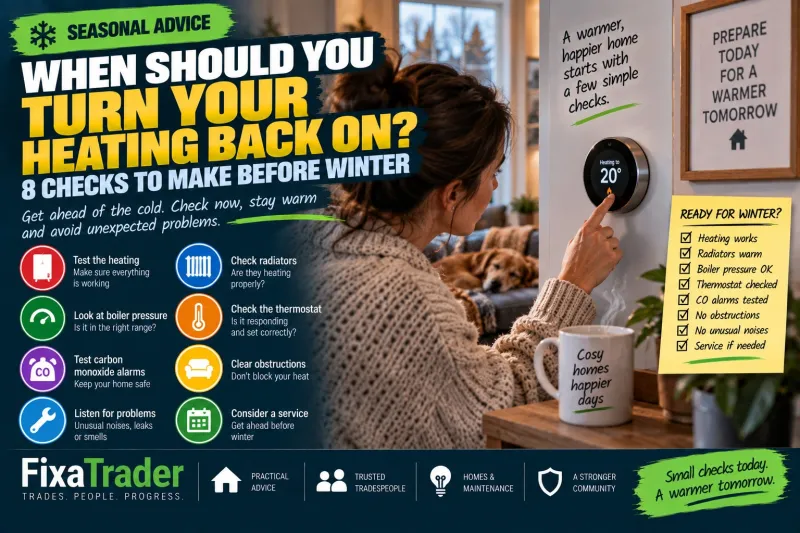
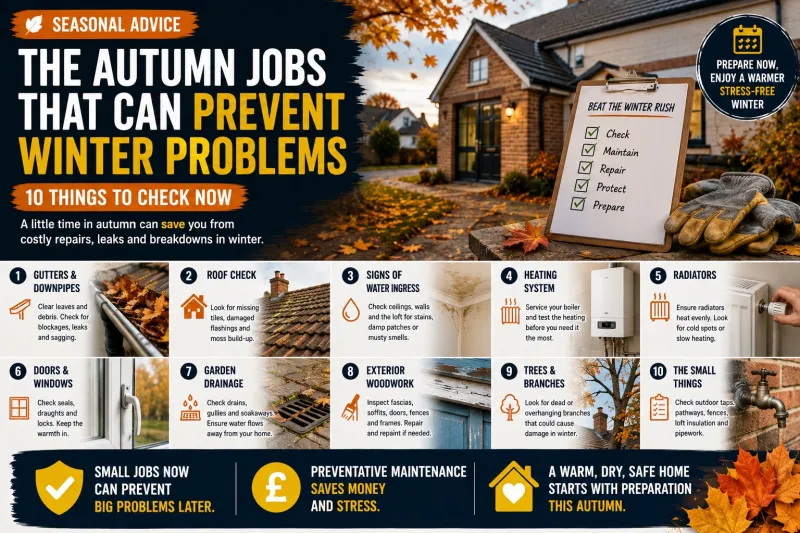
When Should You Turn Your Heating Back On? 8 Checks to Make Before Winter
There comes a point every autumn when opening another window is no longer the problem. The house feels cold. The evenings are darker. And someone finally asks:...
There comes a point every autumn when opening another window is no longer the problem.
The house feels cold.
The evenings are darker.
And someone finally asks:
“Should we put the heating on?”
There's no universal date when every household should switch its heating back on. Different homes retain heat differently, weather varies across the country and people have different comfort needs.
But after a heating system has spent months doing relatively little, it's sensible to check that everything is working before you genuinely depend on it.
Here are eight things worth checking as temperatures begin to fall.1. Test the Heating Before You Actually Need It
Don't wait for the coldest evening of the year to discover the boiler isn't firing or half the radiators aren't warming up.
Run the heating ahead of the colder weather.
Give the system enough time to operate normally and walk around the property.
Are the radiators warming?
Does the thermostat appear to be controlling the heating?
Are there unusual noises?
Has anything started leaking?
Does the boiler display a fault?
A problem discovered on a mild September or October afternoon is generally much less disruptive than the same problem discovered during a freezing night.2. Check Whether Every Radiator Is Heating Properly
Once the system has warmed up, compare the radiators.
You're looking for obvious differences.
One radiator completely cold while the others are hot may indicate a local problem.
A radiator that's noticeably cold at the top may contain trapped air.
A radiator that's warm at the top but remains much cooler towards the bottom can point towards a different issue, potentially involving restricted circulation or deposits within the system.
We've covered radiator troubleshooting separately, but the important thing here is to spot the problem early.
Don't simply turn the thermostat higher to compensate for a radiator that isn't working properly.3. Look at the Boiler Pressure — If Your System Has a Pressure Gauge
Many sealed heating systems have a pressure gauge or digital pressure reading.
Check what yours is showing when the system is cold and compare it with the manufacturer's instructions for your particular boiler.
There isn't one figure that should be blindly applied to every system.
If the pressure is unusually low, repeatedly drops after being restored, or becomes excessively high when the heating operates, the system may need attention.
Constantly topping up a system that keeps losing pressure isn't the same as solving whatever is causing the pressure loss.4. Make Sure the Thermostat Is Actually Doing Its Job
Sometimes the heating system works perfectly well.
The control doesn't.
If you use a room thermostat, check that it appears to be responding when you change the requested temperature.
If it's wireless, consider whether its batteries need replacing.
Check programmed schedules too.
Perhaps last winter's settings are still stored.
Or somebody changed them during spring.
Smart-heating systems may also have schedules, holiday modes or settings you've forgotten about.
Before assuming the boiler is faulty, make sure you're actually asking it to heat the house.5. Check Your Carbon Monoxide Alarms
If your home contains fuel-burning appliances, carbon monoxide safety deserves attention throughout the year, not just when winter arrives.
Check that alarms are present where required or recommended for your circumstances, correctly located and within their usable life.
Test them according to the manufacturer's instructions.
Don't assume an alarm is fine simply because it hasn't made a noise.
And remember that a carbon monoxide alarm is an additional safety measure — not a substitute for appropriate appliance maintenance and servicing.
If a carbon monoxide alarm activates, treat it seriously and follow the alarm manufacturer's and relevant emergency safety guidance.6. Don't Block the Heat You're Paying For
Over summer, furniture moves.
Rooms get rearranged.
Laundry racks appear.
Curtains change.
Then the heating comes back on and a radiator is hidden behind a sofa.
Walk around the rooms and look at what's directly around your heat emitters.
Large pieces of furniture immediately in front of radiators can interfere with how effectively heat reaches the rest of the room.
Long curtains may also cover them.
This doesn't mean every radiator needs a huge empty zone around it.
Just avoid unnecessarily trapping the heat you're paying to produce.7. Pay Attention to New Noises and Smells
Some sounds from heating systems are normal.
And when radiators first warm after a long period, accumulated dust can sometimes produce a temporary smell.
What matters is anything new, persistent or clearly abnormal.
For example:
Repeated banging.
Unusual gurgling.
A boiler making noises you've never heard before.
Visible leakage.
A persistent burning smell.
A gas smell.
Or recurring fault codes.
Don't try to diagnose potentially dangerous problems by dismantling the boiler yourself.
For gas appliances, work that falls within gas work requirements should be carried out by an appropriately registered engineer. You can verify engineers through the Gas Safe Register.
If you smell gas, follow the appropriate gas-emergency guidance rather than continuing to test the heating.8. Think About When the System Was Last Serviced
Turning the heating on isn't the same as servicing it.
If your boiler or other heating equipment is due for routine servicing, autumn is an obvious time to think about it.
A proper service can involve checks that homeowners can't perform simply by looking at the appliance.
It also creates an opportunity to raise things you've noticed:
Pressure loss.
Odd noises.
Intermittent faults.
Radiators behaving differently.
Changes in hot-water performance.
Or anything else that has developed since the previous service.
Don't wait until something completely stops working before mentioning smaller symptoms.Should You Bleed Your Radiators Every Autumn?
Not automatically.
Radiators don't need bleeding simply because the calendar says September.
If a radiator has trapped air — commonly indicated by it remaining cold towards the top while warming lower down — bleeding may be appropriate for systems where the homeowner can safely follow the correct procedure.
But repeatedly needing to bleed radiators may indicate an underlying issue worth investigating.
And on a sealed system, bleeding a radiator can affect system pressure, so understand the appropriate procedure for your heating system rather than treating it as an annual ritual.What Temperature Should You Set the Thermostat To?
There isn't one perfect thermostat setting for every person and property.
Comfort depends on the building, the heating system, room use and the people living there.
Age and health can also affect appropriate indoor temperatures.
Rather than chasing a universal number from the internet, use the heating controls sensibly for the people in your household and seek appropriate guidance where somebody may be particularly vulnerable to cold.
The bigger opportunity in many homes is avoiding unnecessary heating when nobody needs it while still maintaining a comfortable and healthy indoor environment.Don't Forget the Heating Schedule
If your system allows scheduling, autumn is a good time to review it.
Your routine may have changed since last winter.
Perhaps someone now works from home.
Children's schedules have changed.
You're leaving earlier.
Coming home later.
Or certain rooms are used differently.
A heating schedule created three years ago isn't automatically still the right schedule today.
The objective isn't simply to run the heating for fewer hours.
It's to heat the home when and where it is actually needed.Autumn Is a Better Time to Discover Problems Than Winter
Heating engineers naturally become busy when cold weather arrives.
That's also exactly when households become least able to tolerate a heating failure.
Testing early gives you options.
If one radiator isn't working properly in September, it's inconvenient.
If the entire system fails during a freezing week in January, it can become urgent.
The equipment hasn't necessarily become more serious.
The circumstances have.A Quick Pre-Winter Heating Check
Before colder weather settles in, make sure you've:
Tested the heating
Checked that radiators warm normally
Looked at system pressure where applicable
Tested the thermostat and controls
Checked carbon monoxide alarms where relevant
Cleared obvious obstructions around radiators
Paid attention to unusual leaks, noises, smells or faults
Considered whether servicing or professional attention is due
It doesn't need to become a major annual project.
Twenty minutes walking around the property while the heating operates can reveal quite a lot.Don't Wait for the First Freezing Night
Nobody needs to switch their heating on simply because somebody on social media has declared that it's officially “heating season”.
Turn it on when your household needs it.
But test it before that point.
The best time to discover a small heating problem is while the weather is still mild enough that you can comfortably decide what to do next.
Your heating system's first job of autumn shouldn't be proving whether it still works — find that out before winter asks the question for you.
0 Comments
No comments yet — be the first to share your thoughts.