The Home Maintenance Jobs Most People Don't Think About Until Something Goes Wrong
Most homeowners are pretty good at dealing with problems they can see. A leaking tap gets fixed. A broken fence gets replaced. A boiler that stops working gets...
Most homeowners are pretty good at dealing with problems they can see.
A leaking tap gets fixed. A broken fence gets replaced. A boiler that stops working gets a phone call.
The harder problems are often the ones that don't announce themselves.
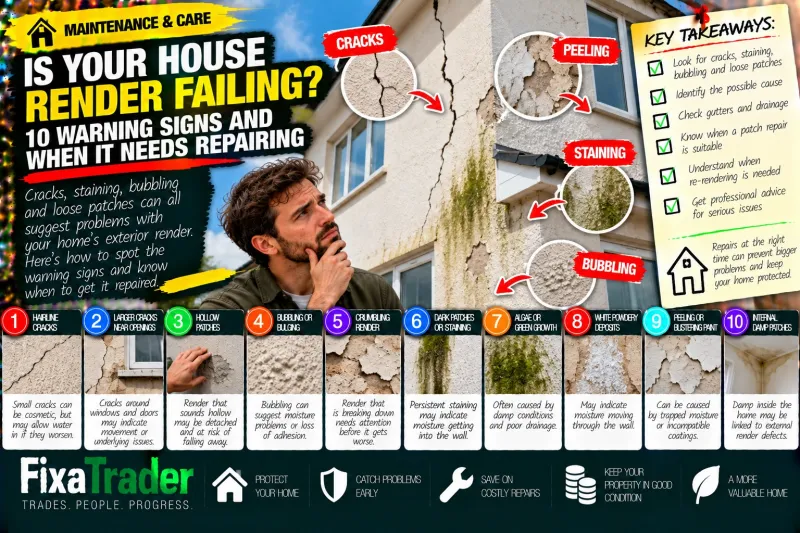
A blocked gutter can gradually contribute to damp. A small crack in exterior sealant can allow water to get where it shouldn't. Overgrown trees can affect roofs, drainage and boundaries. A chimney can deteriorate for years before a homeowner notices anything is wrong.
Home maintenance isn't always about fixing something that's broken.
Often, it's about spotting the small problems before they become big ones.
Here are some of the jobs that are easy to overlook.1. Roof Maintenance
Most people don't think about their roof until they discover a leak.
By that point, the problem may have already caused damage underneath.
Roof maintenance doesn't necessarily mean arranging a major inspection every year. It can simply mean keeping an eye out for missing or damaged tiles, deteriorating flashing, blocked roof valleys, moss build-up and other visible problems.
After periods of strong wind or severe weather, it's particularly worth checking whether anything has been damaged.
A small issue identified early can be considerably easier to deal with than water damage that has been developing unnoticed.
And if you're not comfortable accessing a roof yourself, don't take unnecessary risks. A professional can assess areas that aren't safely accessible from the ground.2. Guttering and Downpipes
Guttering is easy to ignore because it sits above eye level.
But its job is important: moving rainwater away from the building.
Leaves, moss and other debris can gradually restrict the flow of water. Gutters can also become damaged, misaligned or develop leaks around joints.
If water is overflowing against walls or repeatedly pooling around the base of a property, it's worth investigating rather than simply waiting for the next heavy downpour.
Keeping gutters and downpipes clear can be one of the simpler forms of preventative maintenance around a home.3. Sealant Around the Home
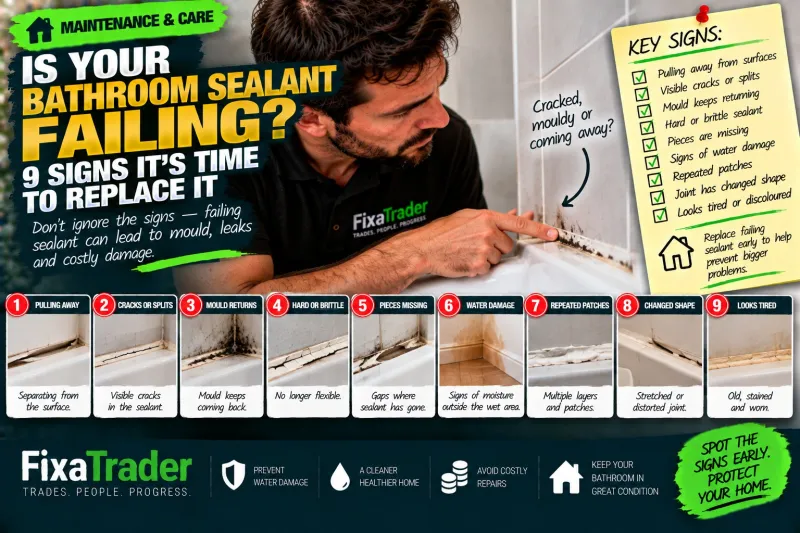
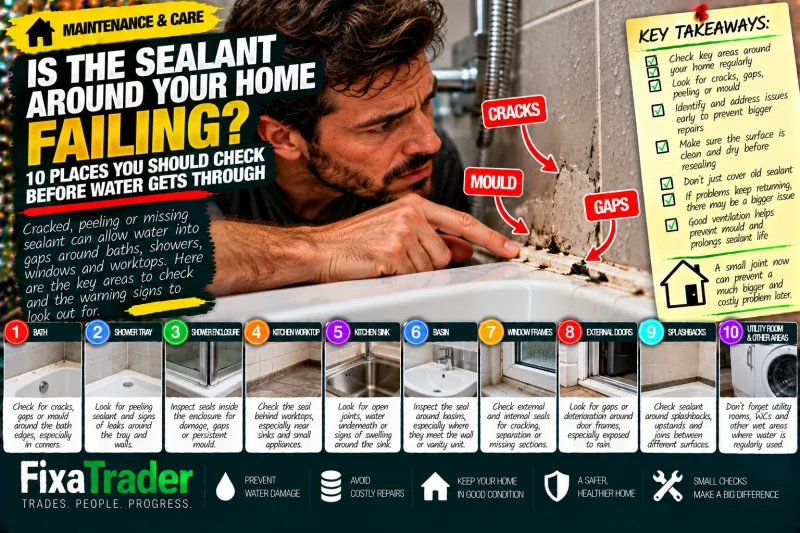
Sealant isn't particularly exciting, which is probably why it gets overlooked.
But small areas of failed or deteriorating sealant can allow moisture into places where it shouldn't be.
Bathrooms, kitchens, windows, doors and other areas exposed to water can all have sealant that eventually needs replacing.
Look for cracking, gaps, discolouration, peeling or areas where the seal has separated from the surface.
Replacing a small section of failed sealant is very different from dealing with the damage caused by persistent moisture getting behind it.4. Damp Prevention
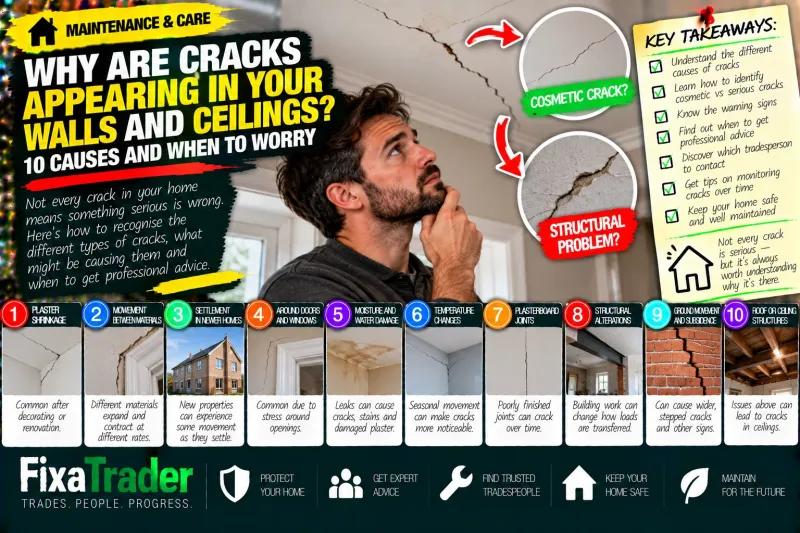
Damp is another problem that's much easier to address when it's identified early.
Signs can include musty smells, mould growth, peeling paint, discolouration or persistent condensation.
Not every damp problem has the same cause.
It could be related to ventilation, condensation, plumbing, external water penetration, roofing or another issue entirely.
That's why simply treating the visible symptom isn't always the answer.
If damp keeps returning, finding the underlying cause is usually more important than repeatedly covering up the affected area.5. Drainage
Most people don't think about drainage until something stops draining properly.
Blocked drains, standing water and poor surface drainage can become particularly noticeable after heavy rainfall.
Take note of areas where water consistently collects rather than draining away.
Around patios, driveways, gardens and the sides of buildings, persistent standing water can be a sign that drainage needs attention.
Again, the earlier an issue is identified, the more options there may be for addressing it before it becomes a much larger problem.6. Boiler Servicing
A boiler can seem perfectly fine right up until the day it isn't.
Regular servicing can help identify potential issues and gives homeowners an opportunity to have their heating system checked before the colder months arrive.
It can also be useful to avoid leaving maintenance until the point when you urgently need the heating to work.
For gas appliances, make sure any work requiring a registered gas professional is carried out by someone appropriately qualified and registered for the work.
A boiler is one of those household systems where preventative attention can be much less stressful than dealing with a failure in the middle of winter.7. Electrical Checks
Electrical problems aren't always obvious.
Old or damaged equipment, overloaded sockets, damaged cables and other issues can create risks that aren't necessarily visible during everyday use.
Homeowners shouldn't attempt electrical work themselves simply because a problem appears straightforward.
Instead, pay attention to warning signs such as burning smells, unusual buzzing, damaged sockets, repeated tripping or discolouration around electrical equipment.
If something doesn't seem right, getting it checked by a suitably qualified professional is usually the sensible approach.8. Exterior Woodwork
Fences, gates, timber cladding, decking and other exterior woodwork are constantly exposed to weather.
Paint and protective finishes eventually deteriorate, while moisture can contribute to rot and other damage.
The problem is that deterioration can be gradual.
A fence might look perfectly acceptable from a distance while individual posts or sections have already started to deteriorate.
Checking exterior timber periodically and dealing with damaged areas before they spread can extend its useful life and potentially avoid a much larger replacement job.9. Chimneys and Roofline Areas
Chimneys are another part of the home that's easy to forget.
They're exposed to wind, rain and temperature changes throughout the year, and components such as mortar joints, flashing and chimney pots can deteriorate over time.
If you notice loose materials, damaged masonry, staining or other visible changes around the chimney or roofline, it's worth getting the issue assessed.
As with roof maintenance, don't put yourself at risk trying to inspect inaccessible areas.
A professional can often identify problems that aren't obvious from ground level.10. Trees and Overgrown Vegetation
Trees can be a fantastic part of a garden, but they also need consideration as they grow.
Branches can eventually reach roofs, walls, fences and overhead services. Dense growth can also affect access, drainage and surrounding plants.
After storms, check for broken or damaged branches where it is safe to do so.
For larger trees or work involving significant branches, height or proximity to buildings and services, professional assessment is usually the safer option.
The important thing isn't necessarily to remove trees or heavily prune them.
It's to understand how they're developing and whether they're beginning to create problems for the property.Maintenance Doesn't Have to Mean Doing Everything at Once
One of the reasons homeowners put maintenance off is that the list can seem endless.
But preventative maintenance doesn't mean finding ten different contractors and carrying out every possible job immediately.
A better approach is to keep an eye on the areas of your property that are most exposed to weather, water, heat and general wear.
Some jobs might need attention annually.
Others might only need checking periodically.
And some problems will require a professional as soon as they're identified.
The important thing is simply to avoid waiting until something fails completely.
0 Comments
No comments yet — be the first to share your thoughts.