The 9 Small Home Problems You Should Fix Before They Become Expensive
Most expensive home repairs don't start out looking expensive. A small drip appears beneath the sink. A patch of paint starts peeling. One roof tile looks sligh...
Most expensive home repairs don't start out looking expensive.
A small drip appears beneath the sink.
A patch of paint starts peeling.
One roof tile looks slightly out of place.
The gutter overflows when it rains.
It's easy to notice these things and think:
“I'll deal with it eventually.”
And sometimes, that's fine.
Not every small problem is a disaster waiting to happen.
But homes are full of systems and materials that can deteriorate gradually. Water can find its way into places you can't see. Small gaps can allow moisture to cause damage over time. A minor fault can put additional strain on another part of a system.
The good news is that catching problems early can often make them simpler and cheaper to deal with.
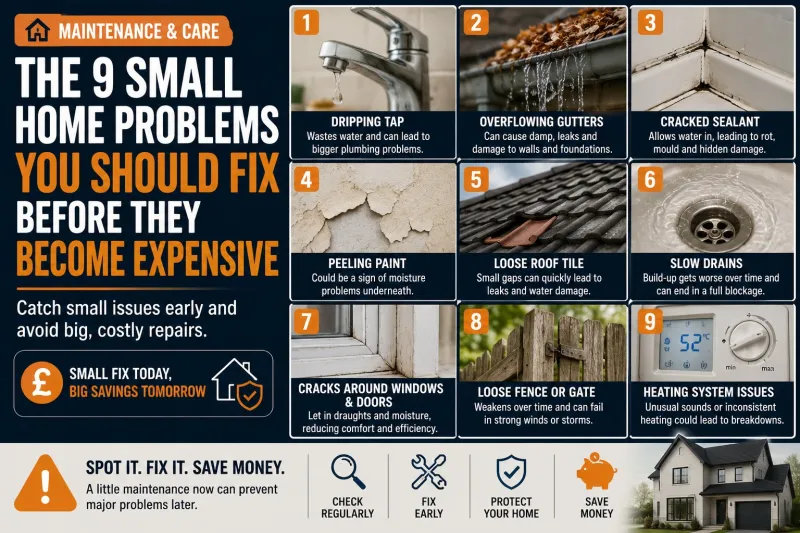
Here are nine small home problems worth paying attention to before they have the chance to become something bigger.1. A Dripping Tap
A dripping tap is easy to live with.
After a while, you may barely notice it.
But aside from wasting water, a persistent leak can be a sign that a component needs attention. Leaving plumbing problems indefinitely can also mean a minor issue has more time to develop.
The important distinction is between a simple, contained drip and water appearing somewhere it shouldn't.
If you notice water beneath a sink, around pipework or inside a cupboard, don't assume it's harmless simply because the amount seems small.
Check the area regularly and arrange a repair if the problem persists.
Small leaks are usually easier to deal with before they damage the surrounding materials.2. Overflowing Gutters
Gutters are designed to direct rainwater away from your property.
When they become blocked with leaves, moss and other debris, water can overflow rather than following the route it was intended to take.
That can lead to water repeatedly running down walls, around roof edges or into areas that experience unnecessary moisture.
You might only notice the problem during heavy rain.
That's why occasional visual checks can be useful, particularly after autumn or periods of bad weather.
If gutters are overflowing, the answer isn't always simply to clear them from a ladder yourself. Working at height carries its own risks, so consider whether the job can be safely inspected or whether professional help is more appropriate.3. Cracked or Missing Sealant
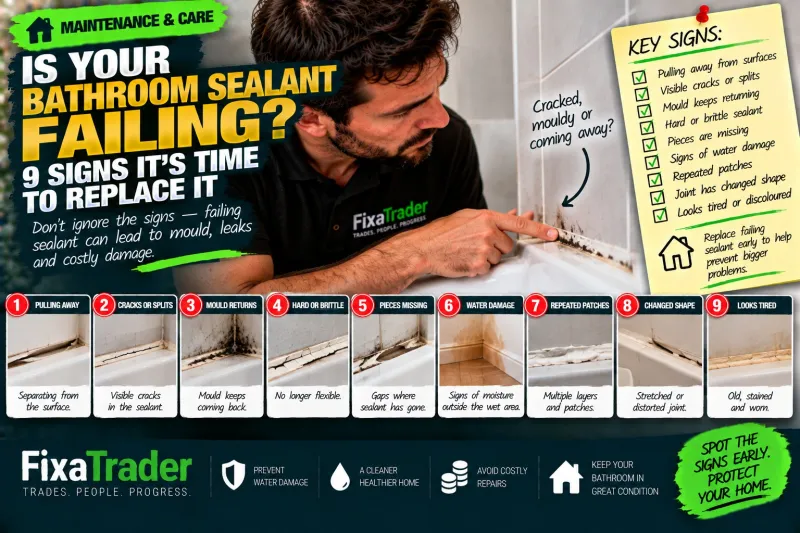
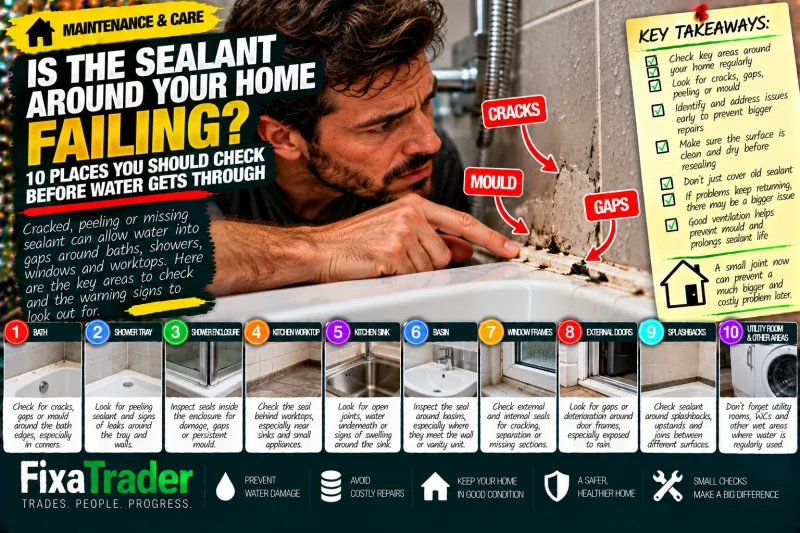
Sealant around baths, showers, sinks, windows and other areas can gradually deteriorate.
At first, a small crack or gap may look cosmetic.
But in areas exposed to regular moisture, gaps can allow water behind surfaces where it becomes much harder to see.
A bathroom, for example, may appear completely fine while water is slowly reaching the area behind a bath or shower.
By the time damp, mould or damage becomes visible elsewhere, the original problem may have existed for much longer than expected.
Checking sealant before it fails completely is a simple part of home maintenance that can help prevent unnecessary water damage.4. Peeling Paint or Discolouration
Paint doesn't always fail for the same reason.
Sometimes it's simply age.
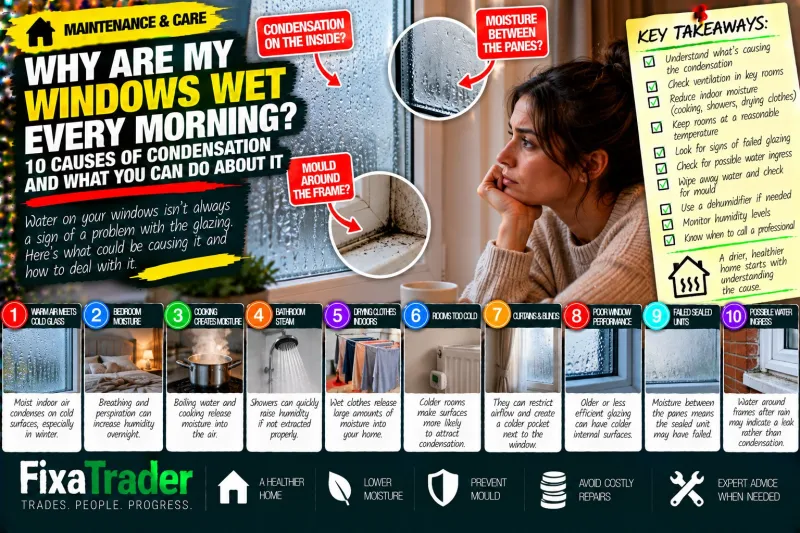
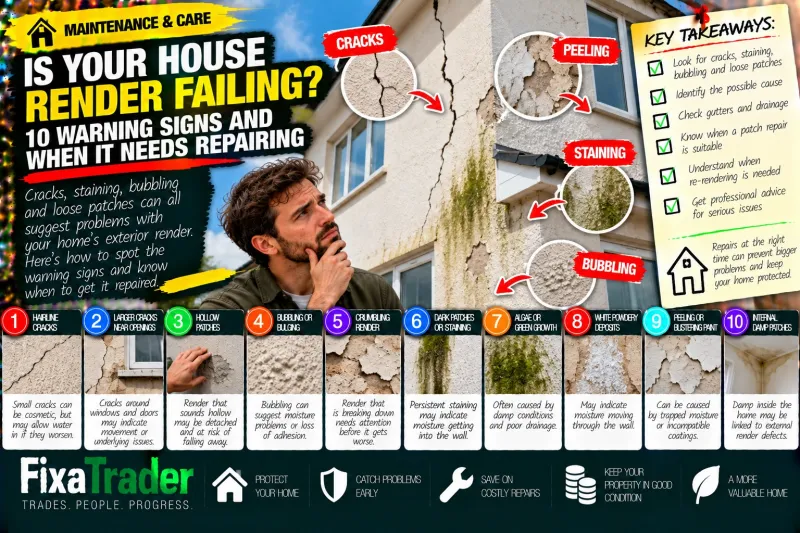
But peeling paint, bubbling surfaces or unusual discolouration can also be signs that moisture is affecting the material underneath.
Painting over the problem without understanding the cause may only hide it temporarily.
If the issue keeps returning, it's worth asking why.
Is there a leak?
Is condensation regularly forming?
Is moisture entering from outside?
Is there a problem with ventilation?
The surface is often showing you a symptom rather than the cause.5. A Loose Roof Tile or Damaged Flashing
You don't need to panic every time you notice something unusual on a roof.
But roof defects are rarely something to ignore indefinitely.
A loose tile, damaged flashing or other small defect can potentially create an opening for water to enter the building.
And once water gets beneath the outer layers of a roof, the damage may not remain visible from outside.
The safest approach is not to climb onto the roof for a closer look unless you have the appropriate experience and equipment.
If you're concerned, arrange an inspection by a suitable professional.
A small external repair can be far easier to deal with than internal water damage later.6. Slow Drains
A drain that empties slowly isn't always an emergency.
But if the problem is becoming progressively worse, it's worth paying attention.
Build-up inside pipework can gradually restrict water flow, and what begins as a slow-draining sink or shower can eventually become a complete blockage.
Recurring problems can also indicate that there is something else worth investigating.
Rather than waiting until water stops draining entirely, keep an eye on changes in how quickly fixtures empty.
The earlier a developing issue is identified, the more options there may be for dealing with it.7. Small Cracks Around Windows and Doors
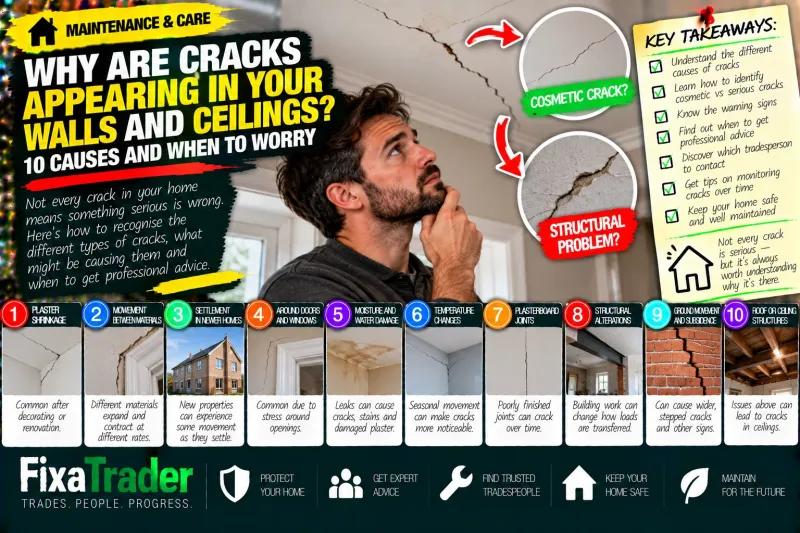
Small gaps and cracks around windows and doors can allow draughts and moisture to enter.
They may also affect how comfortable the property feels and how efficiently it can be heated.
Not every crack means there is a serious structural problem.
But gaps in external areas should be assessed based on where they are, how they are changing and whether there are signs of water penetration.
A small issue with a seal or finish can often be addressed before repeated exposure to weather causes more significant deterioration.8. A Fence or Gate That's Starting to Move
Outdoor timber and fixings are constantly exposed to weather.
A fence panel that is slightly loose today may become much more vulnerable during the next period of strong winds.
The same applies to gates, posts and other external structures.
Checking for loose fixings, movement and early signs of rot can give you the opportunity to deal with a problem before the entire structure fails.
This is particularly worth doing before autumn and winter weather arrives.
A little preventative work can sometimes avoid the cost of replacing something that could have been repaired earlier.9. A Boiler or Heating System That's Behaving Differently
Heating systems don't always fail suddenly.
Sometimes there are warning signs first.
Perhaps the system is taking longer to heat the property.
One radiator isn't warming properly.
The boiler is making a noise you haven't noticed before.
Pressure appears to be changing regularly.
Or the system simply isn't performing as consistently as it once did.
These issues don't automatically mean an emergency.
But changes in how a heating system behaves are worth monitoring rather than ignoring until a complete breakdown occurs.
Regular servicing and maintenance can also help identify certain issues before they interrupt your heating or hot water entirely.
For gas appliances, always use an appropriately qualified and registered professional for work that requires one.The Costliest Repairs Often Start Small
The common theme behind many home maintenance problems is simple:
Time matters.
A small issue isn't guaranteed to become a major one.
But if the problem involves water, moisture, heat, drainage or a structure exposed to the weather, leaving it unresolved gives the problem more opportunity to develop.
That doesn't mean homeowners need to panic and call someone out for every mark or minor imperfection.
The more sensible approach is to notice changes and ask whether the problem is:
Getting worse
Reappearing
Allowing water or moisture somewhere it shouldn't be
Affecting how part of the home functions
Creating a potential safety risk
If it is, dealing with it sooner may save you considerably more later.A Little Attention Can Go a Long Way
Looking after a home doesn't require inspecting every corner of the property every week.
But getting into the habit of noticing small changes can make a real difference.
Look beneath sinks occasionally.
Pay attention when gutters overflow.
Notice changes to paint and ceilings.
Check outdoor structures after bad weather.
Don't ignore recurring plumbing or heating issues simply because they're still working.
And when something does need professional attention, arranging it while the problem is still manageable can be one of the simplest ways to avoid a much bigger repair later.
The cheapest repair is often the one you make before the problem has the chance to become expensive.
Your home doesn't always give you a dramatic warning when something starts to go wrong.
Sometimes it starts with a drip, a crack, a stain or a small change that is easy to ignore.
0 Comments
No comments yet — be the first to share your thoughts.