7 Signs Your Home Has a Small Problem That Could Become an Expensive One
Most expensive home repairs don't begin with a disaster. They begin with something small. A stain on the ceiling. A dripping gutter. A crack that's slowly getti...
Most expensive home repairs don't begin with a disaster.
They begin with something small.
A stain on the ceiling.
A dripping gutter.
A crack that's slowly getting larger.
A radiator that isn't heating properly.
A patch of damp that appears and then seems to disappear.
It's easy to ignore these things, particularly when they aren't causing an immediate problem.
Life gets busy.
The house still functions.
And arranging someone to investigate a minor issue can feel unnecessary when there are always other things demanding your attention.
But small problems don't always stay small.
Sometimes, the difference between a relatively straightforward repair and an expensive project is simply how long the issue was left unaddressed.
That doesn't mean every crack, stain or unusual noise is a sign of a major problem.
Most aren't.
But there are certain changes around a home that are worth paying attention to.
Here are seven signs that a seemingly small issue may deserve a closer look.1. A Damp Patch That Keeps Coming Back
A damp patch can be easy to dismiss.
Perhaps it appeared after heavy rain.
Maybe it seems to dry out for a while.
Or you've painted over it and assumed the problem has gone away.
But if the same area repeatedly becomes damp, stained or discoloured, the underlying cause may still be present.
Possible sources can include problems involving:
Roofs
Gutters
Pipework
External walls
Windows
Condensation
Drainage
The important thing is not to assume the visible damp is the problem itself.
It's a symptom.
Painting over a stain may improve how the room looks temporarily, but it won't necessarily address why moisture is getting there in the first place.
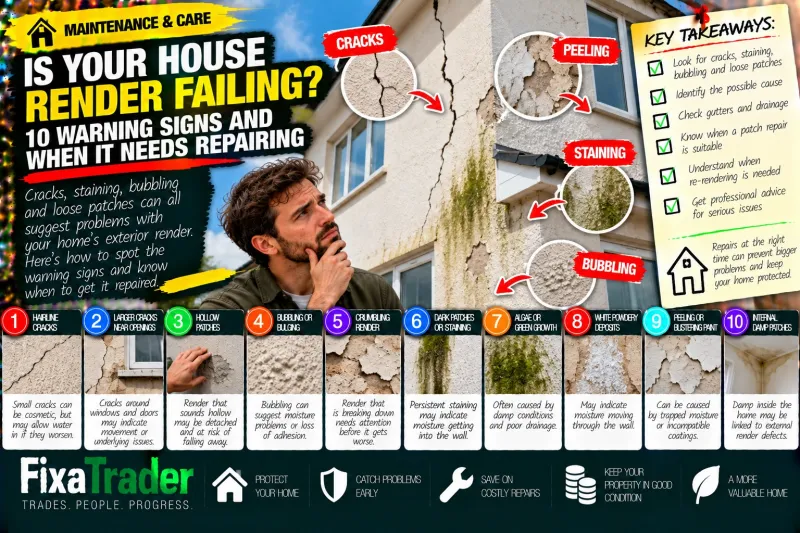
If the patch keeps returning, gets larger or is accompanied by peeling paint, mould or a persistent smell, it's worth investigating the cause.
The earlier a source of unwanted moisture is identified, the more likely you are to have options before it causes more extensive damage.2. Your Gutters Are Overflowing or Sagging
Gutters tend to get attention only when they become impossible to ignore.
Water is pouring over the edge.
A section is visibly sagging.
Something is hanging loose.
Or rainwater is running down the side of the house rather than through the drainage system.
But gutter problems can gradually affect other parts of a property.
Blocked or damaged gutters can allow water to go where it isn't supposed to.
That may affect walls, roof edges and the areas around the property.
Watch for:
Water overflowing during rainfall
Plants or visible debris in gutters
Sagging sections
Leaking joints
Water marks beneath guttering
Downpipes that appear blocked or disconnected
Regular maintenance may be far easier than dealing with the consequences of water repeatedly reaching parts of the building that weren't designed to handle it.3. A Small Roof Issue Becomes a Bigger Leak
Roof problems aren't always obvious.
You may notice a slipped tile.
Damaged flashing.
Loose material after strong winds.
A small stain in the loft.
Or an occasional sign of water after particularly heavy rain.
It can be tempting to wait and see whether it gets worse.
The problem is that water doesn't always stay close to where it enters.
A relatively small point of entry can allow moisture to travel and affect materials elsewhere.
By the time a ceiling is visibly damaged, the original problem may have been present for longer than you realise.
That doesn't mean every missing tile is an emergency.
But visible changes to a roof are worth taking seriously, particularly if they are followed by signs of water entering the property.
If you're unsure whether something needs attention, getting it assessed can be preferable to waiting until the evidence appears indoors.4. Cracks Are Changing Rather Than Staying the Same
Many homes develop cracks over time.
Not every crack indicates a serious structural problem.
Some are superficial and may simply affect finishes such as plaster or paint.
What matters is whether the crack is changing.
Pay attention if you notice that it is:
Becoming longer
Getting wider
Reappearing after repair
Appearing alongside other changes
Affecting doors or windows nearby
Accompanied by movement or distortion
Taking photographs over time can sometimes help you notice whether something is actually changing rather than relying on memory.
The key is not to panic over every mark on a wall.
It's to recognise that a changing problem deserves more attention than one that has remained unchanged for years.
If you have concerns about significant movement or structural issues, seek appropriate professional advice rather than attempting to hide the evidence with filler and paint.5. A Door or Window Suddenly Stops Closing Properly
A door that has always stuck slightly may simply need adjustment.
But if something that previously worked normally suddenly becomes difficult to open or close, it's worth noticing.
The same applies to windows.
Changes can sometimes result from relatively straightforward issues with hinges, frames or fittings.
But they can also be connected to movement, swelling caused by moisture or changes elsewhere in the property.
Ask yourself:
Has this always happened, or is it new?
A long-standing minor issue and a sudden change aren't necessarily the same thing.
If several doors or windows begin behaving differently at around the same time, or the problem is accompanied by visible cracking, it may be worth getting a professional opinion.6. Water Is Collecting Where It Shouldn't
After heavy rain, take a look around the outside of your home.
Does water consistently collect in the same place?
Does it sit against the property?
Are areas of the garden becoming persistently waterlogged?
Does water appear to flow towards the house rather than away from it?
Drainage problems can be easy to ignore during dry periods.
But repeated standing water can eventually affect paths, gardens and, depending on the circumstances, parts of the building itself.
Potential causes can vary significantly.
They may involve blocked drainage, damaged pipework, changes to the ground, poorly directed water or issues with gutters and downpipes.
The important thing is identifying the cause rather than simply dealing with the visible water each time it rains.7. Your Heating System Is Slowly Performing Worse
Heating problems don't always begin with a complete breakdown.
Sometimes the changes are gradual.
One radiator takes longer to warm up.
A room never feels quite as warm as it used to.
The boiler starts making unfamiliar noises.
Pressure needs attention more frequently.
Or you're gradually turning the thermostat higher to achieve the same level of comfort.
These changes don't automatically mean you need a new heating system.
But a gradual decline in performance is worth paying attention to.
Small issues can become more disruptive when they are left until the colder months, particularly when heating professionals are busiest.
If you've noticed a recurring change, investigating it before a complete failure gives you more time to understand the cause and consider your options.The Most Important Thing Is to Notice Change
Homes aren't static.
Materials age.
Weather takes its toll.
Systems experience wear.
Small maintenance jobs become necessary.
That's normal.
The goal isn't to inspect every inch of your home every week or assume that every imperfection is a disaster waiting to happen.
It's simply to notice when something changes.
A new stain.
A growing crack.
Water where there wasn't water before.
A gutter that has started overflowing.
A radiator that no longer heats properly.
A window that suddenly won't close as it should.
These things don't always mean a major repair is required.
But they can provide an opportunity to understand what is happening before the problem becomes more difficult—and potentially more expensive—to deal with.A Simple Habit Can Save You Trouble Later
Every few months, take a look around your home.
Inside and out.
You don't need a detailed inspection checklist.
Just pay attention.
Look at the roof from ground level.
Check whether gutters appear to be overflowing or damaged.
Notice changes to walls and ceilings.
Pay attention to unusual noises.
See whether doors and windows are working normally.
Check whether water is draining where it should.
And don't ignore the same small problem simply because you've learned to live with it.
You may find nothing at all.
That's good.
But occasionally, noticing something early can give you the chance to deal with a manageable repair before it develops into something much larger.
The most expensive problem in your home may not be the one you haven't found yet.
It could be the small one you've already noticed—but keep meaning to deal with later.
0 Comments
No comments yet — be the first to share your thoughts.