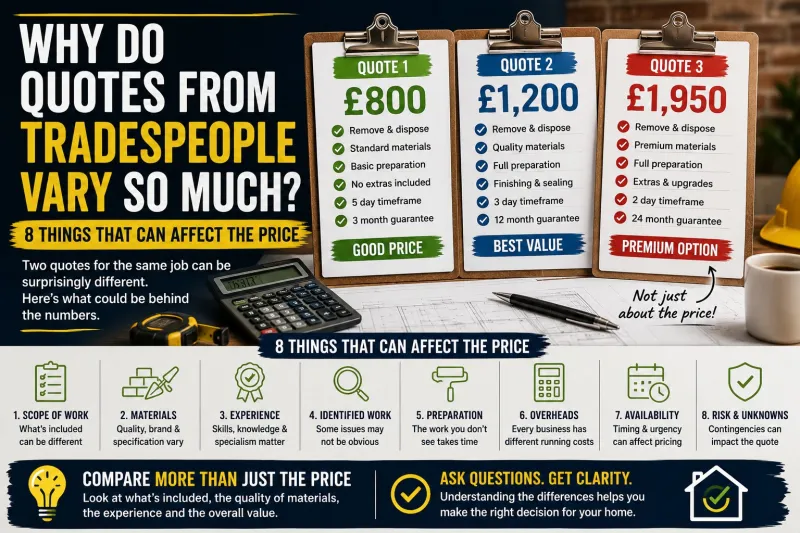
Why Do Quotes From Tradespeople Vary So Much? 8 Things That Can Affect the Price
You've contacted several tradespeople. You've explained the job. Perhaps they've visited the property. Then the quotes start arriving. One is £800. Another is £...
At first glance, it can be difficult to understand how the prices can be so different.
After all, aren't they quoting for the same job?
Sometimes, yes.
But often, the quotes aren't as directly comparable as they first appear.
Different tradespeople may have made different assumptions about the work. One quote may include materials that another has excluded. One may account for additional preparation, while another only covers the most straightforward version of the job.
Price matters.
But understanding what sits behind the price matters too.
Here are eight reasons quotes from tradespeople can vary significantly.1. The Scope of Work May Not Be Exactly the Same
This is one of the biggest reasons quotes can differ.
Two tradespeople may appear to be quoting for the same job, but their understanding of what needs to be done may not be identical.
For example, imagine you need a bathroom renovated.
One quote may include:
Removing the existing bathroom
Disposal of waste
Preparing walls and floors
Plumbing alterations
Tiling
Fitting the new suite
Finishing work
Another may cover only some of those items.
Neither price tells you much on its own.
You need to understand exactly what each quote includes.
This is why a detailed quote can be valuable. It gives you a clearer picture of the work being proposed and makes it easier to compare one option with another.
Before assuming one tradesperson is significantly more expensive, check whether they're actually pricing the same scope of work.2. Materials Can Make a Major Difference
Materials are not all equal.
A lower quote may use different products, fixtures or components from a higher one.
In some cases, one tradesperson may have included the cost of supplying materials while another expects the customer to provide them.
There may also be differences in:
Quality
Brand
Durability
Availability
Warranty
Specification
For certain projects, materials can represent a substantial part of the total cost.
That's why it's useful to ask whether they are included and, where relevant, what type or specification has been allowed for.
The goal isn't necessarily to choose the most expensive materials.
It's to make sure you understand what you're paying for.3. Experience and Specialism Can Affect the Price
Tradespeople don't all have the same experience.
Someone who regularly completes a particular type of specialist work may price differently from someone who only carries out that type of job occasionally.
Experience can affect:
How quickly work is completed
How accurately potential problems are identified
The quality of the finished work
How confidently a complex job can be planned
That doesn't mean a higher price automatically guarantees better work.
And it doesn't mean a newer business can't do an excellent job.
But experience and specialism can be legitimate factors behind different prices.
When comparing quotes, look at the whole picture.
Does the tradesperson have relevant experience?
Can they show examples of similar work?
Do they clearly understand the project you're asking them to complete?
These questions can be just as useful as comparing the final figure.4. One Tradesperson May Have Identified More Work
Sometimes a higher quote isn't because someone has simply added more profit.
They may have identified work that another tradesperson hasn't included.
Perhaps additional preparation is needed.
Maybe existing damage needs addressing.
There could be access issues, complications with the current installation or work required to bring part of the project up to an appropriate standard.
This doesn't automatically mean every additional item is necessary.
You should always feel comfortable asking why work has been included.
A good tradesperson should be able to explain their recommendation clearly.
But if one quote is substantially higher, ask:
What has been included here that isn't included in the other quotes?
That question alone can make comparisons much easier.5. Preparation and Finishing Work Take Time
Customers often focus on the visible part of a job.
The new bathroom.
The finished wall.
The repaired roof.
The newly painted room.
But a significant amount of work can happen before and after the part you actually see.
Preparation might involve:
Protecting surrounding areas
Removing old materials
Cleaning and preparing surfaces
Repairing underlying issues
Setting up access equipment
Moving furniture or equipment
Allowing appropriate drying or curing time
Finishing work may also take longer than expected.
Cleaning.
Sealing.
Adjusting.
Testing.
Making good surrounding areas.
One quote may account for this work in greater detail than another.
That can affect the price while also affecting the finished result.6. Overheads Are Different for Every Business
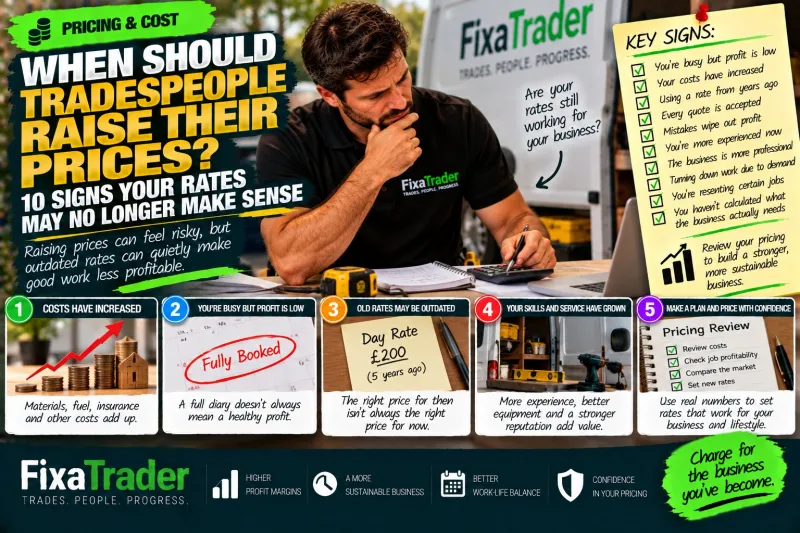
A tradesperson's price doesn't only pay for the time spent physically doing the job.
Running a business involves costs.
Depending on the trade and business, these can include:
Vehicles
Fuel
Tools and equipment
Insurance
Training
Qualifications
Premises or storage
Software
Administration
Waste disposal
Staff
Two businesses can therefore have very different operating costs.
This doesn't mean customers should simply accept any price without question.
But it does explain why there is rarely one universal "correct" price for a job.
A professional business has to price work in a way that allows it to continue operating, maintaining its equipment and delivering the service being promised.7. Availability Can Influence Pricing
Timing can also affect the price of work.
A tradesperson who is fully booked for several months may approach a new project differently from someone with immediate availability.
The urgency of the work can matter too.
An emergency call-out is not necessarily comparable to a planned job booked weeks in advance.
Material availability can also change.
Prices for certain products and materials can fluctuate, and unexpected shortages may affect what something costs to complete.
If timing is important to you, make sure this is discussed clearly before comparing quotes.
The cheapest option may not necessarily be available when you need the work done.8. Not Every Quote Allows for the Same Level of Risk
Some jobs are straightforward.
Others come with unknowns.
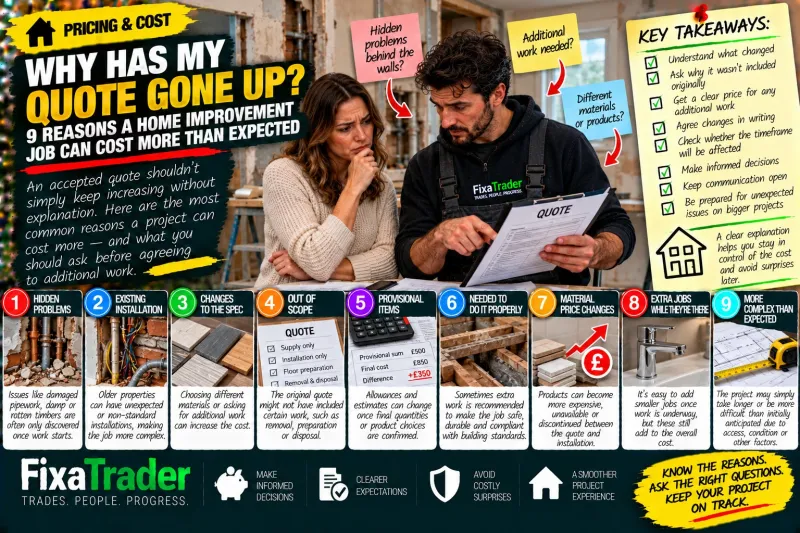
A tradesperson working on an older property, uncovering an existing installation or carrying out significant renovation work may need to account for risks that aren't immediately visible.
One business may include more contingency in its pricing.
Another may quote based only on what is currently visible and address additional issues separately if they arise.
Neither approach is automatically wrong.
But understanding how potential extra work will be handled is important.
Ask what happens if an unexpected problem is discovered.
Is there an allowance included?
Will additional work be quoted separately?
Are there circumstances in which the price could change?
Clear communication about this before work begins can prevent disagreements later.How Should You Compare Quotes?
The easiest mistake is to put the final prices side by side and choose the lowest number.
A better approach is to compare what each tradesperson is actually offering.
Look at:
The scope
What work is included?
What has been excluded?
Materials
Who is supplying them?
What specification has been allowed for?
Timescale
When can the work start, and how long is it expected to take?
Experience
Has the tradesperson completed similar work before?
Previous work
Can you see examples of comparable projects?
Reviews and reputation
What have previous customers said about working with them?
Insurance and relevant qualifications
Are appropriate details available for the type of work being carried out?
Payment terms
When are payments expected, and what do they relate to?
The aim isn't to turn choosing a tradesperson into a complicated spreadsheet exercise.
It's simply about making sure you're comparing like with like.Should You Always Choose the Cheapest Quote?
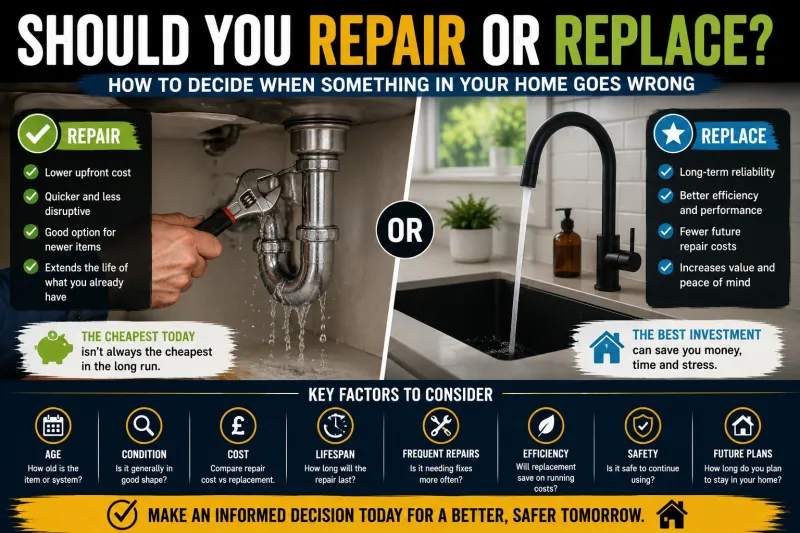
Not necessarily.
But you shouldn't automatically choose the most expensive one either.
The best quote is the one that gives you the clearest confidence that you understand:
What work will be done
Who will be doing it
What is included
What isn't included
How much it will cost
What happens if circumstances change
Sometimes, the cheapest quote genuinely represents the best value.
Sometimes, a slightly higher quote includes work or materials that make it the stronger overall option.
And occasionally, a very low quote may raise questions about what has been left out.
The key is to ask rather than assume.A Higher Quote Isn't Automatically Expensive
If one quote is significantly higher than another, don't be afraid to ask why.
A straightforward question can provide useful clarity:
“Can you talk me through what is included in your price?”
A good tradesperson should be comfortable explaining their quotation.
You don't need to challenge every item.
But you should understand what you're agreeing to before work begins.
Equally, if one quote is dramatically lower than all the others, it's reasonable to ask what assumptions have been made and whether everything you need is included.
A cheap price can be excellent value.
But only if it actually delivers what you need.Price Is Only One Part of the Decision
A quote represents more than a number.
Behind it may be different materials, preparation, experience, availability, overheads and assumptions about the project.
That's why comparing quotes properly can take a little more time.
But that time can be worthwhile.
The cheapest option isn't automatically poor.
The most expensive option isn't automatically best.
What matters is understanding the difference.
Don't just ask which quote costs less.
Ask what each quote actually gives you for your money.
Because the best value isn't always found at the bottom of the cheapest quote.
It's found in choosing the right work, from the right person, with a clear understanding of what you're paying for.
0 Comments
No comments yet — be the first to share your thoughts.