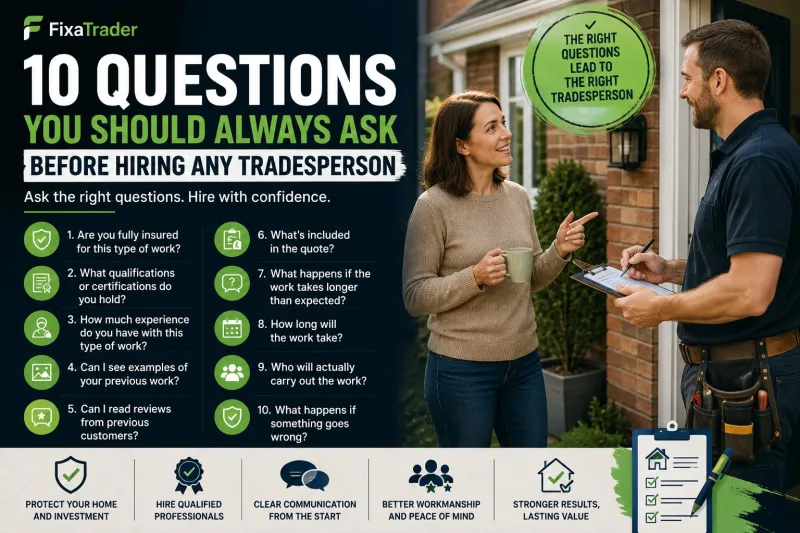
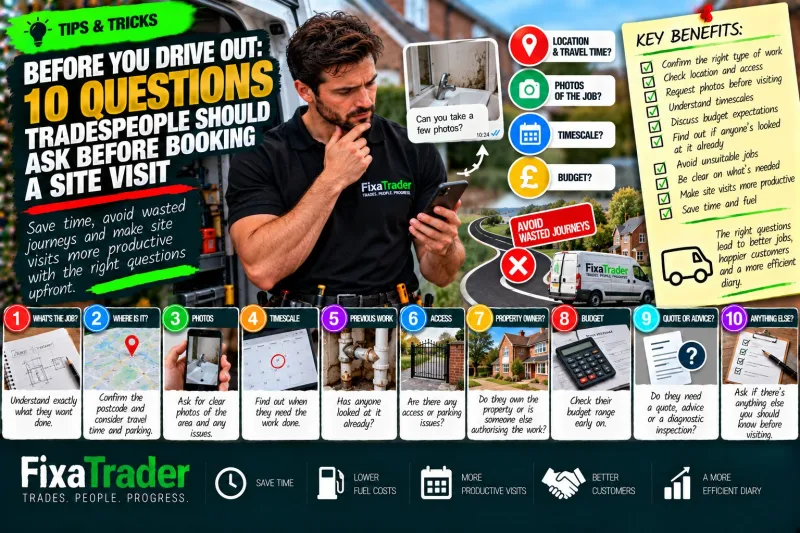
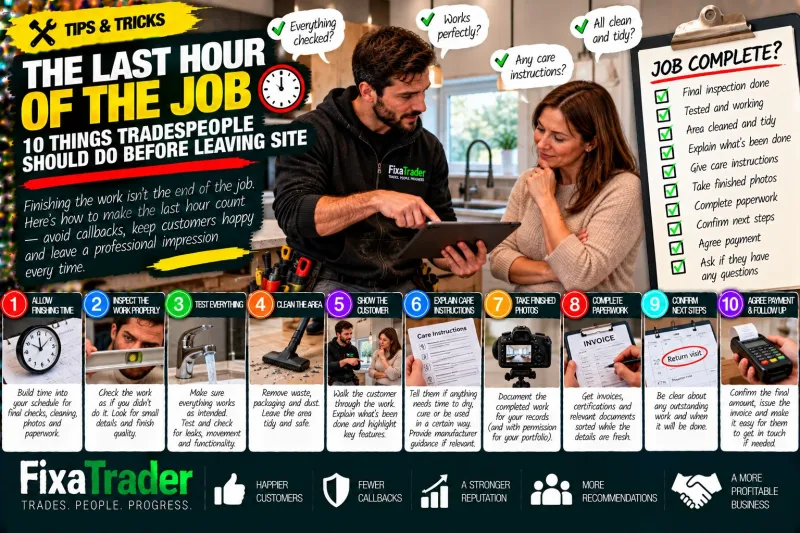
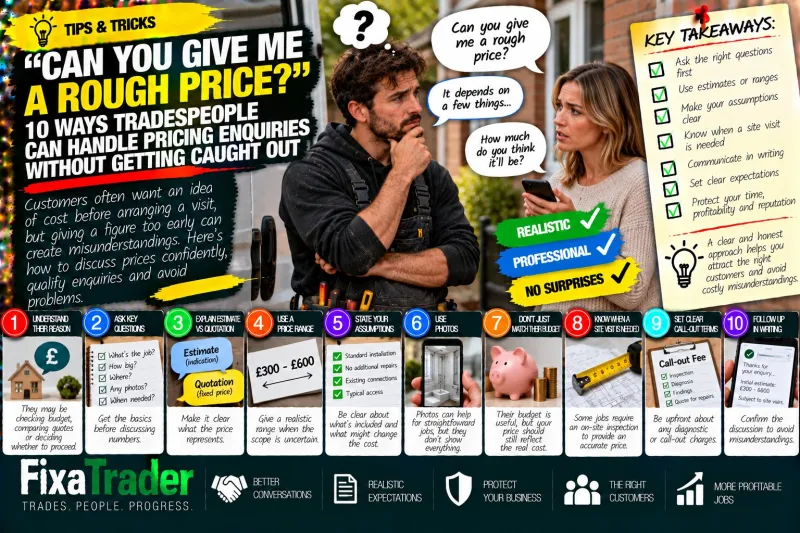
10 Questions You Should Always Ask Before Hiring Any Tradesperson
Finding a tradesperson can sometimes feel like a race against the clock. You've got a leaking pipe, a broken boiler, a garden that needs transforming or a roof...
Finding a tradesperson can sometimes feel like a race against the clock.
You've got a leaking pipe, a broken boiler, a garden that needs transforming or a roof that needs attention, and you want someone who can get the job done.
But choosing the first person who gives you a reasonable price isn't always the best approach.
A good tradesperson should be able to answer basic questions about their experience, qualifications, insurance, previous work and the job itself.
Before agreeing to anything, here are 10 questions worth asking1. Are You Fully Insured for This Type of Work?
Don't be afraid to ask about insurance.
Depending on the type of work being carried out, different forms of cover may be relevant, including public liability insurance and, where applicable, employers' liability insurance.
You don't necessarily need to understand every detail of an insurance policy, but you should be comfortable that the professional you're hiring has appropriate cover for the work they're undertaking.
If they can't clearly explain what they're covered for, that's worth considering before proceeding.2. What Qualifications or Certifications Do You Hold?
Qualifications aren't equally relevant to every trade, but where a particular job requires specialist knowledge or certification, it's reasonable to ask.
For example, some types of gas, electrical or specialist work have specific competency and certification requirements.
A reputable professional should be comfortable explaining what qualifications or registrations are relevant to the work they're proposing to carry out.3. How Much Experience Do You Have With This Type of Work?
Being experienced in a trade doesn't necessarily mean someone has extensive experience with your particular project.
Ask how frequently they undertake similar work.
A bathroom installation, a roof repair and a full garden transformation can all require very different experience even within the same broad industry.
The answer can help you understand whether you're dealing with someone who regularly handles your type of project.4. Can I See Examples of Your Previous Work?
One of the easiest ways to understand the quality of someone's work is to see it.
Ask whether they have photographs or examples of previous projects similar to yours.
For larger projects, this can be particularly useful.
You aren't just looking for impressive photographs. Look for work that resembles what you actually want completed.5. Can I Read Reviews From Previous Customers?
Reviews can provide useful context that you won't get from a quote alone.
Look for patterns rather than focusing on a single review.
Do customers regularly mention good communication?
Do they say the work was completed to a high standard?
Did the tradesperson arrive when expected?
Were there complaints about unexpected costs or unfinished work?
A consistent history of genuine customer feedback can provide useful reassurance.6. What's Included in the Quote?
A cheap quote isn't necessarily a cheap job.
Before comparing prices, make sure you understand what each quote actually includes.
Ask whether the price covers:
Labour
Materials
Waste removal
Preparation work
Finishing work
Any necessary equipment
VAT, where applicable
Two quotes can look very different simply because they include different things.
A detailed quote makes comparisons much easier.7. What Happens If the Work Takes Longer Than Expected?
Unexpected problems can happen on almost any project.
The important thing is understanding how they will be handled.
Ask what happens if additional work is discovered and whether you'll be contacted before extra costs are incurred.
You don't want to discover at the end of the project that the final bill is significantly higher than the figure you originally agreed.
Clear communication about variations can prevent difficult conversations later.8. How Long Will the Work Take?
Ask for an estimated timeframe before the work begins.
It doesn't have to be an exact promise, some projects naturally depend on weather, materials and unforeseen issues but you should have a reasonable idea of what to expect.
For larger projects, it can also be useful to understand what happens if there are delays.9. Who Will Actually Carry Out the Work?
This is particularly important if you're dealing with a larger business or contractor.
Ask whether the person providing the quote will personally carry out the work or whether other tradespeople or subcontractors will be involved.
That isn't necessarily a problem in fact, larger projects often require several professionals, but it's useful to know who will actually be working at your property.10. What Happens If Something Goes Wrong?
Hopefully everything goes smoothly.
But before work starts, it's worth understanding what happens if something needs correcting after completion.
Ask about guarantees or warranties where relevant, who you should contact with concerns and how issues are normally resolved.
A professional who is confident in their work should be able to explain their approach clearly.Don't Just Compare the Bottom Line
Price is important.
But it shouldn't necessarily be the only thing you compare.
Imagine you have three quotes for the same job.
One is significantly cheaper, but provides little information about what's included.
Another is slightly more expensive but comes with clear communication, relevant qualifications, appropriate insurance, strong reviews and examples of similar work.
The third sits somewhere in between.
The cheapest option might still be the right choice, but now you're making the decision with more information.
That's the important part.A Good Tradesperson Should Make You Feel Comfortable Asking Questions
You don't need to be an expert in the trade to make a sensible hiring decision.
Asking questions isn't being difficult. It's part of understanding what you're paying for.
A professional should be able to explain their experience, qualifications, insurance, pricing and approach without making you feel uncomfortable for asking.
And if someone is unwilling to answer reasonable questions before taking on the work, that can be useful information in itself.
Before you agree to the job, make sure you know who you're hiring, what you're paying for and what happens next.
The right questions won't guarantee a perfect project, but they can make it much easier to choose a professional you can trust.
0 Comments
No comments yet — be the first to share your thoughts.