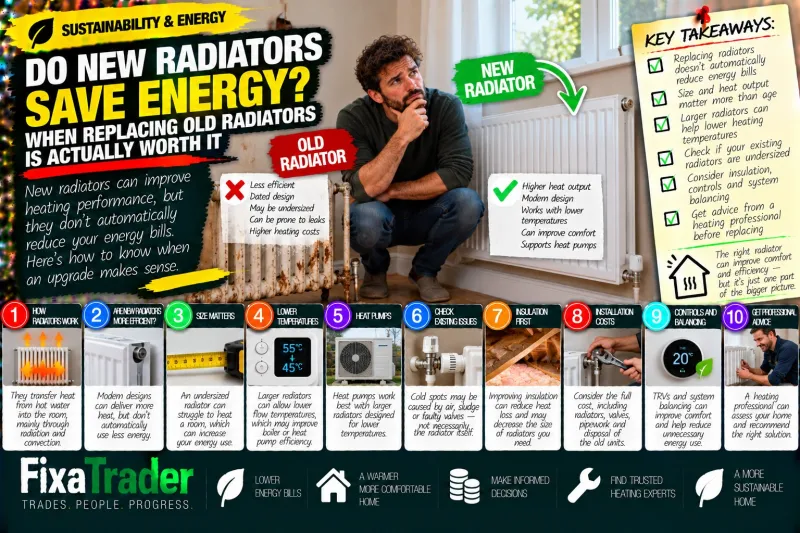
Do New Radiators Save Energy? When Replacing Old Radiators Is Actually Worth It
Your radiators have been in the house for years. Perhaps they're starting to look dated. Some take longer to heat up than others. One room never feels quite war...
And you've started wondering whether replacing them with newer models could reduce your heating bills.
It's a reasonable question.
After all, modern boilers, heat pumps and heating controls are often promoted as ways to improve energy efficiency.
Surely modern radiators must offer similar benefits?
Not necessarily.
Unlike a boiler or heat pump, a radiator doesn't generate heat. Its main job is to transfer heat from your heating system into the room.
That means replacing an old radiator with a new one of similar output won't automatically produce meaningful energy savings.
However, there are situations where upgrading radiators can improve comfort, support lower heating temperatures and help a heating system operate more efficiently.
The key is understanding whether your existing radiators are actually limiting your heating system's performance.
Here's what homeowners should know before deciding to replace them.1. Understand What a Radiator Actually Does
A radiator transfers heat from the hot water circulating through your central heating system into the surrounding room.
Despite the name, most domestic radiators transfer heat through a combination of radiation and convection.
As the radiator warms, it heats nearby air, which circulates around the room.
The amount of heat delivered depends on several factors, including:
The radiator's size and design.
The temperature of the water entering it.
The temperature difference between the radiator and the room.
The flow of water through the radiator.
Whether furniture or other objects restrict heat transfer.
A newer radiator may have a different heat output from an older model.
But that doesn't necessarily mean it uses less energy to deliver the same amount of heat.
If your home loses a certain amount of heat through its walls, windows, roof and ventilation, your heating system still needs to replace that lost heat to maintain the same indoor temperature.
A radiator upgrade doesn't eliminate the heat your home loses.2. Are Modern Radiators More Efficient Than Older Ones?
Modern radiators can offer improvements in design, heat output and responsiveness.
For example, some panel radiators use additional convector fins to increase the amount of heat transferred into a room.
A compact modern radiator may therefore deliver more heat than an older radiator of similar external dimensions.
However, this doesn't automatically translate into lower energy consumption.
If an older radiator already heats the room adequately at suitable water temperatures, replacing it with a newer equivalent may offer little direct energy benefit.
The main advantages might instead be appearance, improved heat distribution or easier maintenance.
The important comparison isn't simply old versus new. It's whether the radiator delivers the required heat under the conditions your system operates at.3. Why Radiator Size Matters More Than Age
One of the most common heating problems is an incorrectly sized radiator.
If a radiator is too small for the room, it may struggle to maintain the desired temperature during colder weather.
Homeowners sometimes respond by increasing the boiler temperature or leaving the heating running longer.
But the underlying issue may be insufficient radiator output.
A properly sized radiator should be selected based on the room's heat loss.
That calculation considers factors such as:
Room dimensions.
External walls.
Window sizes and performance.
Insulation levels.
Ventilation and air leakage.
Desired indoor temperature.
Heating system operating temperatures.
A radiator that was suitable decades ago may no longer be ideal if the heating system has changed.
Equally, improvements to insulation may mean an existing radiator is now larger than necessary.
A heating professional can calculate the required output rather than relying on the dimensions of the old radiator.4. Larger Radiators Can Help Heating Systems Run at Lower Temperatures
This is where radiator upgrades can make a genuine difference.
Radiators produce less heat when the temperature of the water flowing through them is reduced.
A radiator designed to provide adequate output at a high flow temperature may struggle when the system operates at a lower temperature.
Increasing the radiator's surface area can help compensate.
For example, a larger radiator may provide sufficient heat to maintain the room temperature while the heating system operates with cooler water.
This can be particularly beneficial for certain heating systems.
Condensing boilers can operate more efficiently when return-water temperatures are sufficiently low.
Heat pumps generally operate more efficiently when they don't have to produce unnecessarily high water temperatures.
However, the actual benefit depends on the system design and controls.
A larger radiator doesn't automatically save energy. It creates the possibility of using lower heating temperatures while maintaining comfort.5. What About Homes With Heat Pumps?
Radiator sizing is particularly important when installing an air-source or ground-source heat pump.
Heat pumps often achieve better efficiency when supplying water at lower temperatures than those commonly used in traditional high-temperature radiator systems.
Because radiator output falls as water temperature decreases, existing radiators may need to be assessed.
Some may already be large enough.
Others may need replacing with larger or higher-output models.
In certain rooms, alternative heat emitters may be appropriate.
But replacing every radiator isn't automatically necessary when installing a heat pump.
A competent heating designer should assess room-by-room heat loss and the output of the existing radiators at the proposed operating temperatures.
The aim is to design the complete heating system properly, not simply install the largest radiators available.6. Can Replacing Radiators Improve Boiler Efficiency?
Potentially, but the relationship is indirect.
Modern condensing boilers can recover additional heat from their combustion gases when operating under suitable conditions.
Lower return-water temperatures help support this process.
If larger radiators allow your home to remain comfortable with lower flow temperatures, that may improve the boiler's operating efficiency.
However, the result also depends on:
Boiler type and condition.
Heating controls.
System balancing.
Return-water temperature.
Insulation and heat loss.
How the heating is operated.
If the existing radiators already provide enough heat at lower temperatures, replacing them may be unnecessary.
Before investing in new radiators, it may be worth having the current system assessed and optimised.7. What If One Radiator Isn't Heating Properly?
A radiator that remains cold or only heats partially doesn't automatically need replacing.
Several other problems can cause poor performance.
These include:
Air trapped in the radiator.
Sludge or debris restricting circulation.
Incorrect valve settings.
A faulty thermostatic radiator valve.
Poor system balancing.
Circulation problems elsewhere in the heating system.
For example, a radiator that's warm at the top but significantly colder at the bottom may have restricted circulation, although temperature patterns alone don't provide a definitive diagnosis.
Likewise, a radiator that's cold at the top may contain trapped air.
Before purchasing a replacement, ask a heating professional to establish the cause.
A new radiator won't necessarily resolve an underlying circulation or control problem.8. Should You Replace Radiators That Are Rusting or Leaking?
Visible deterioration can be a stronger reason to consider replacement.
Corrosion may weaken a radiator and eventually lead to leaks.
However, not every visible rust mark means the radiator has reached the end of its life.
Surface corrosion on the exterior may be different from significant deterioration affecting the radiator body.
If water is leaking from the radiator itself, replacement may be necessary.
Leaks from valves or pipe connections may sometimes be repairable without replacing the entire radiator.
The appropriate solution depends on the source and severity of the problem.
If a radiator is actively leaking, take steps to limit water damage and arrange professional assistance.
Avoid attempting repairs to pressurised heating components unless you're competent to do so.9. Do Designer Radiators and Vertical Radiators Perform Differently?
Designer radiators can be attractive, particularly where wall space is limited.
Vertical models are often chosen for kitchens, hallways and modern living spaces.
But appearance shouldn't be the only consideration.
Different radiator designs can deliver very different heat outputs.
A tall, narrow radiator may look substantial while producing less heat than a conventional panel radiator occupying a wider wall.
Before buying, check the manufacturer's rated output.
Crucially, confirm the temperature conditions used for that rating.
Radiator outputs are commonly quoted at a particular temperature difference between the heating water and the room.
If your system operates at lower temperatures, the actual output will be lower than the headline rating.
Choose a radiator based on the heat the room needs, not simply its appearance or dimensions.10. When Is Replacing Old Radiators Actually Worth It?
There are several situations where replacement may be justified.
Consider upgrading when:
Existing radiators cannot provide sufficient heat at the intended system temperatures.
You're installing a heat pump and the heating design identifies undersized radiators.
You want to lower boiler flow temperatures but some rooms struggle to stay warm.
Radiators are significantly corroded or leaking.
Existing radiators are damaged or unsuitable for the room.
You're renovating and want a different layout or appearance.
However, if your radiators are in good condition, heat rooms adequately and work efficiently with your existing system, replacement may offer limited financial benefit.
Don't replace functioning radiators solely because they're old.Could Better Insulation Make More Difference?
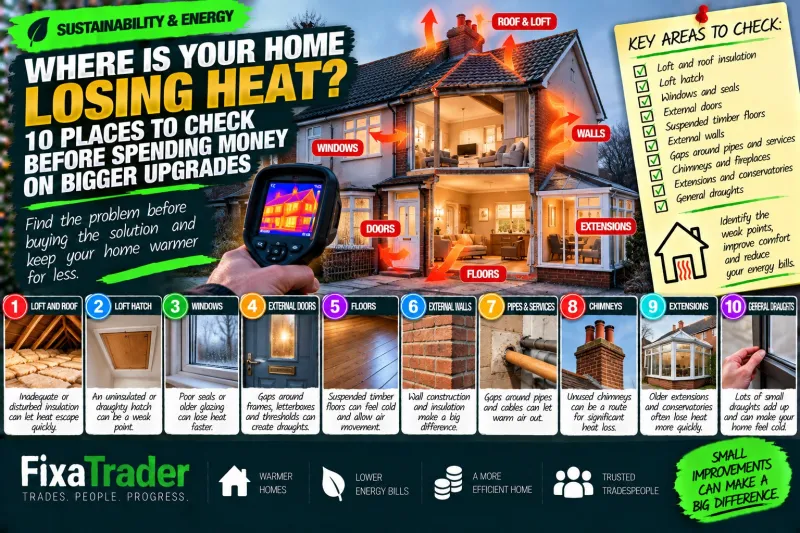
Before spending money on larger radiators, consider how much heat your home is losing.
Poor insulation, draughts and inefficient windows can increase the amount of heating required.
If you reduce heat loss, your existing radiators may become more than capable of maintaining comfortable temperatures.
For example, improving loft insulation or addressing significant draughts may reduce heating demand without changing the radiators.
The most appropriate improvements depend on the property.
Insulation and ventilation also need to be considered together to avoid creating moisture-related problems.
A whole-home approach can be more effective than replacing individual heating components without understanding the wider system.What About Thermostatic Radiator Valves?
Thermostatic radiator valves, commonly called TRVs, help regulate room temperature by adjusting the flow of heating water through individual radiators.
They can help prevent unnecessary overheating in rooms where they're appropriately installed and used.
However, they don't make the radiator itself inherently more efficient.
And they must be compatible with the heating system's control arrangement.
For example, fitting or adjusting TRVs without considering the system's main thermostat and hydraulic requirements can create problems.
If your radiators are otherwise functioning well, reviewing the controls may be a more sensible first step than replacing every unit.Should You Have Your Heating System Balanced?
Balancing helps distribute heating water appropriately between radiators.
Without proper balancing, some radiators may receive more flow than necessary while others struggle to heat adequately.
This can create uneven temperatures across the property.
A heating professional can assess whether balancing would improve performance.
It's particularly worth considering after radiators have been replaced or the heating system has been modified.
However, balancing won't compensate for every issue.
An undersized radiator, poor insulation or a circulation fault may still require separate attention.How Much Does Radiator Replacement Cost?
The cost varies considerably depending on the radiator, installation complexity and whether pipework needs altering.
A straightforward replacement using existing connections may be relatively simple.
Installing a larger or differently positioned radiator could involve additional plumbing, floor access, wall repairs and redecorating.
Costs may also increase if the heating system requires cleaning, balancing or other modifications.
When comparing quotations, ask whether they include:
The new radiator and valves.
Removal and disposal of the old radiator.
Pipework alterations.
System draining and refilling where necessary.
Appropriate inhibitor treatment.
Testing and balancing.
Making good affected surfaces.
A cheaper quotation may exclude work that another installer has included.
Always compare the full installation scope rather than the radiator price alone.Questions to Ask Before Replacing Your Radiators
Before committing to an upgrade, ask your heating professional:
Are my existing radiators actually undersized?
Has the room's heat loss been calculated?
Could the current system operate at lower temperatures without replacing them?
Would balancing or improved controls help?
What heat output will the new radiators provide at my system's operating temperatures?
Are any replacements necessary for a planned heat pump installation?
Will the upgrade require pipework changes?
What energy-saving benefit, if any, is realistically expected?
These questions can help distinguish a worthwhile heating improvement from a purely cosmetic replacement.The Bottom Line: New Radiators Don't Automatically Mean Lower Bills
Modern radiators can improve comfort and provide greater flexibility in how a heating system operates.
They may also support more efficient heating when properly sized for lower water temperatures.
But replacing an old radiator with a new equivalent doesn't automatically reduce the amount of energy your home needs.
The real opportunity often comes from improving how the entire heating system performs.
That may involve larger radiators, better controls, lower flow temperatures, system balancing or reducing heat loss through insulation.
Sometimes replacement is the right investment.
Sometimes the existing radiators are already perfectly adequate.
The smartest heating upgrade isn't necessarily buying new radiators — it's understanding what your home actually needs to stay warm efficiently.
0 Comments
No comments yet — be the first to share your thoughts.