10 Simple Ways to Make Your Home More Energy Efficient Without a Major Renovation
When people think about making their home more energy efficient, they often imagine a major project. New windows. Solar panels. A complete heating-system replac...
When people think about making their home more energy efficient, they often imagine a major project.
New windows.
Solar panels.
A complete heating-system replacement.
Extensive insulation work.
Those improvements can certainly make a difference in the right circumstances. But improving how efficiently your home uses energy doesn't always have to begin with a large renovation.
Sometimes, the first step is much simpler.
A home can lose heat through gaps you barely notice. Heating can be wasted because controls aren't being used effectively. Older lighting may consume more electricity than necessary. Small maintenance problems can gradually affect how comfortable and efficient a property feels.
The best improvements will always depend on the home itself.
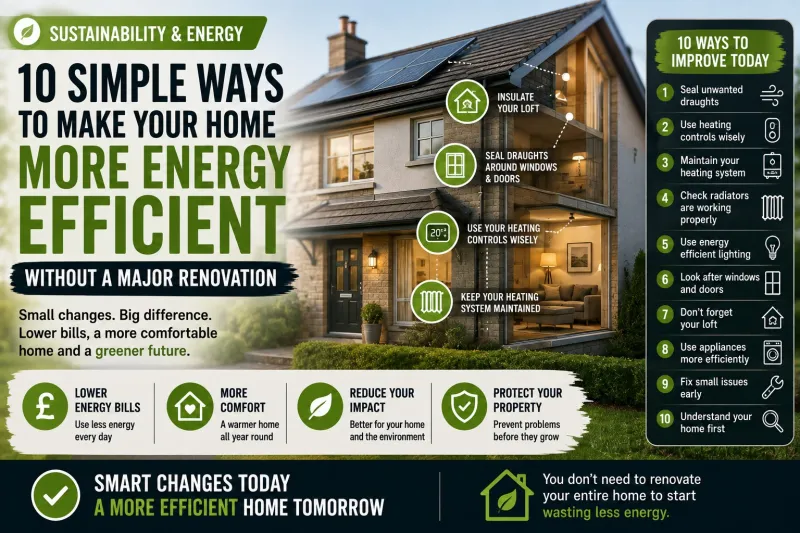
But here are 10 practical places to start before assuming you need a complete overhaul.1. Find and Deal With Unwanted Draughts
A small gap can make a surprisingly noticeable difference to how a room feels.
Check around:
Windows
External doors
Letterboxes
Pipe entry points
Loft hatches
Other obvious gaps leading outside
Not every draught should simply be sealed without thinking about ventilation.
Homes need appropriate ventilation, and some gaps or vents serve an important purpose.
The aim is to identify unwanted air leakage, not to block designed ventilation.
If you're unsure why an opening exists, it's better to understand its purpose before making changes.
But where unnecessary gaps are allowing cold air in, addressing them can be a relatively straightforward way to improve comfort.2. Check Whether Your Heating Controls Match How You Live
A heating system can only work efficiently if you're able to control it effectively.
Think about how your household actually uses the home.
Are you heating empty rooms unnecessarily?
Does the heating come on when nobody is there?
Are you manually changing settings every day because the schedule doesn't suit your routine?
Do you understand what your thermostat and heating controls are actually doing?
Sometimes, making better use of existing controls can be the easiest starting point.
You don't necessarily need the newest smart system to have more control over your heating.
But if your current controls are difficult to understand or no longer suit your lifestyle, reviewing them could be worthwhile.
A qualified heating professional can also advise on appropriate controls when work is being carried out on the wider system.3. Don't Ignore Radiators That Aren't Performing Properly
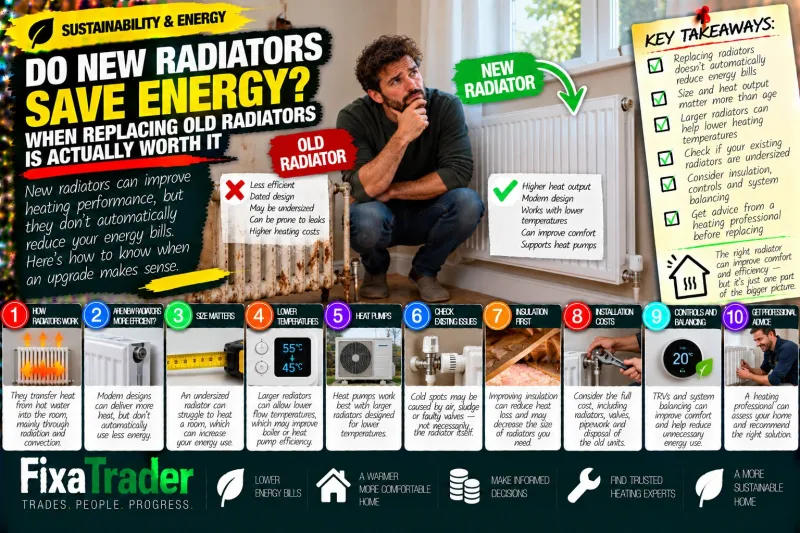
If some rooms feel comfortably warm while others consistently remain cold, turning the heating up may not be the best answer.
The problem could be affecting how efficiently heat is distributed around the property.
Pay attention to radiators that:
Stay cold at the bottom
Heat unevenly
Take much longer to warm up than others
Never seem to get properly hot
Are associated with recurring heating-system problems
The cause can vary.
It might involve the radiator itself, trapped air, system balance, circulation or another issue within the wider heating system.
Addressing the actual problem can be more effective than simply increasing the temperature and using more energy to compensate.4. Replace Older Light Bulbs Where Appropriate
Lighting is one of the easier areas to review.
If your home still uses older, less efficient bulbs in regularly used spaces, replacing them with suitable LED alternatives can reduce electricity consumption and may also reduce how often bulbs need replacing.
You don't need to change every fitting in the house overnight.
Start with lights that are used most frequently.
Think about:
Kitchens
Living rooms
Hallways
Bathrooms
Home offices
Outdoor security lighting
The key is choosing lighting that provides the right brightness and colour for the space.
Energy efficiency shouldn't mean making your home darker or less practical.5. Keep Your Boiler and Heating System Properly Maintained
An efficient heating system still needs appropriate maintenance.
If your boiler is becoming unreliable, making unusual noises or no longer performing as expected, ignoring the problem can leave you dealing with a bigger issue later.
Regular servicing can help identify certain problems before they become more disruptive.
If work involves a gas appliance, it should be carried out by an appropriately qualified and registered professional.
It's also worth remembering that the boiler is only one part of the system.
Radiators, controls and other components can all affect how effectively heat is delivered around the home.
A well-maintained system is generally easier to understand and manage than one that is repeatedly developing faults.6. Pay Attention to Windows and Doors
You don't necessarily need to replace every window to improve how your home feels.
Start by looking for obvious issues.
Are there noticeable draughts?
Are seals damaged or deteriorating?
Do doors close properly?
Are there visible gaps around frames?
Does condensation regularly appear in certain areas?
Some problems may be relatively straightforward to address.
Others could point towards a larger issue with the installation, glazing or condition of the property.
The important thing is not to assume that replacement is always the first answer.
Understanding the specific cause can help you decide whether maintenance, repair or a more substantial improvement is appropriate.7. Don't Forget About the Loft
Warm air rises, which makes the upper parts of a property particularly important when thinking about heat retention.
The condition and suitability of insulation in the loft can have a significant effect on how a home performs.
Before making changes, consider what is already there.
Has the insulation been disturbed?
Does it appear uneven?
Are there areas that may need professional assessment?
Is the loft being used for storage in a way that affects the insulation?
Insulation work should also take account of ventilation, moisture and the specific construction of the property.
More isn't automatically better if it creates other problems.
If you're planning a significant upgrade, getting appropriate advice for your home can help ensure the work is suitable.8. Use Appliances More Intentionally
Energy efficiency isn't only about changing the building.
The way appliances are used matters too.
Small habits can add up over time.
Consider whether you are:
Running washing machines or dishwashers when they aren't full
Using unnecessarily high-temperature settings
Leaving equipment running when it isn't needed
Replacing appliances without comparing their energy performance
Using old equipment that is no longer suitable for how you live
This doesn't mean you need to obsess over every watt of electricity.
The goal is simply to avoid obvious waste where practical.
Often, the easiest improvements are the ones that fit naturally into your existing routine.9. Fix Small Maintenance Problems Before They Get Worse
Energy efficiency and home maintenance are closely connected.
A damaged seal.
A gap around a window.
Deteriorating exterior woodwork.
A roof problem allowing moisture into the property.
A drainage issue affecting walls.
These problems don't all have the same effect on energy use.
But maintaining the external condition of a property can help protect the building and prevent smaller issues from developing into larger repairs.
The earlier you identify a problem, the more options you may have for dealing with it.
Regularly looking around your home and noticing changes can be one of the simplest forms of preventative maintenance.10. Understand Your Home Before Spending Money
This may be the most important step of all.
Don't assume that the biggest or most expensive improvement will automatically deliver the best result for your home.
Every property is different.
A large detached house will have different challenges from a modern flat.
An older property may need a different approach from a newer build.
The way a household uses heating, hot water and electricity also matters.
Before spending thousands of pounds, try to understand where the biggest opportunities actually are.
Ask questions.
Look for recurring problems.
Notice which rooms are uncomfortable.
Pay attention to when your heating is running.
Understand what work is being recommended and why.
The goal isn't simply to make your home more efficient in the abstract.
It's to make sensible improvements that solve real problems.Small Improvements Can Add Up
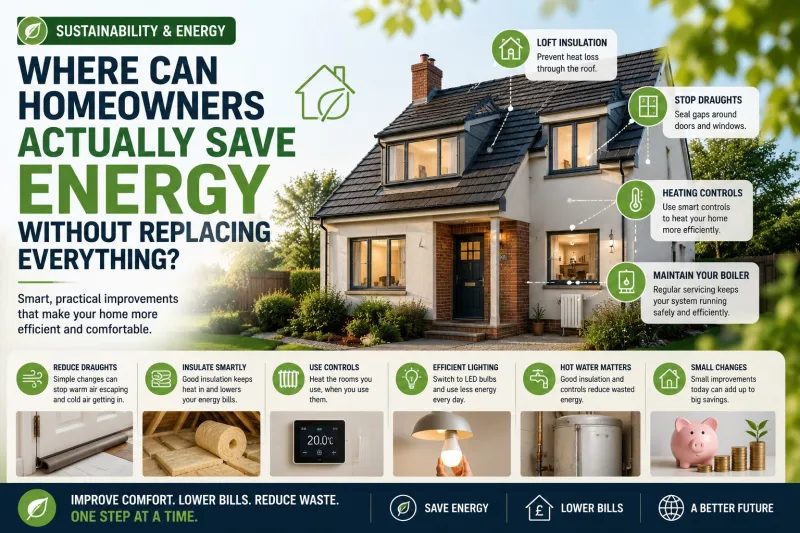
You don't have to transform an entire property in one project.
Energy efficiency can be improved gradually.
One small issue gets fixed.
Heating controls are better understood.
A draught is identified.
An underperforming radiator is investigated.
Older lighting is replaced.
A maintenance problem is dealt with before it becomes more serious.
Individually, these changes may seem relatively small.
Together, they can contribute to a home that feels more comfortable, wastes less energy and is easier to manage.Know When to Get Professional Advice
Some improvements are simple.
Others require specialist knowledge.
A good tradesperson shouldn't simply tell you to spend more money.
They should help you understand:
What the problem is
What options are available
Which work is genuinely necessary
What the likely benefits and limitations are
How the work fits into the rest of your home
Work involving gas appliances, electrical installations, structural changes or significant alterations to a building should be carried out by an appropriately qualified professional where required.
And even where professional work isn't legally required, getting the right advice before making a significant investment can help avoid expensive mistakes.Efficiency Doesn't Have to Start With a Major Project
It's easy to look at a list of expensive home improvements and feel that making a difference requires a huge budget.
It doesn't always.
Start by paying attention.
Find the obvious problems.
Maintain the systems you already have.
Understand how your home uses energy.
Make practical improvements where they genuinely make sense.
Then, if you're considering larger work in the future, you'll be in a much better position to understand where your money could have the greatest impact.
You don't need to renovate your entire home to start wasting less energy.
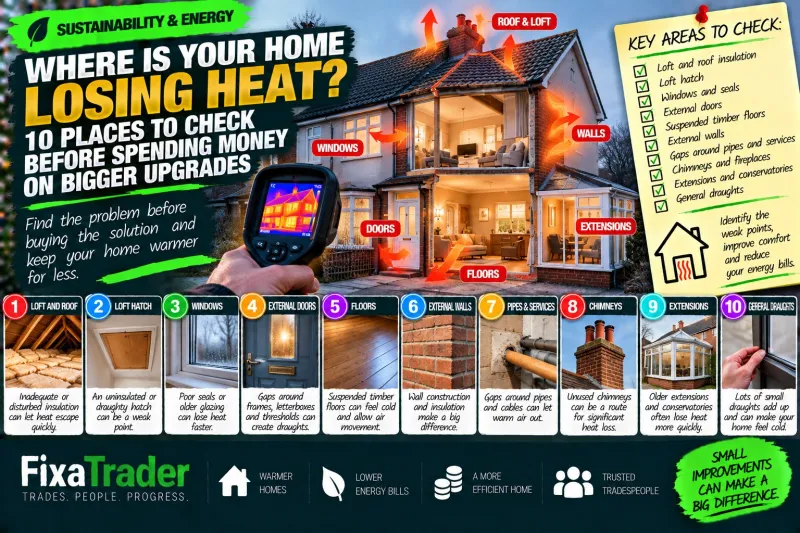
Sometimes, the most useful first improvement is simply finding out where your home is losing it.
0 Comments
No comments yet — be the first to share your thoughts.