Why the Cheapest Quote Isn't Always the Cheapest Job
When you need work done at home, getting more than one quote makes sense. You might receive three prices for what appears to be exactly the same job. One is £80...
When you need work done at home, getting more than one quote makes sense.
You might receive three prices for what appears to be exactly the same job.
One is £800.
Another is £1,100.
The third is £1,600.
The obvious question is:
Why would anyone choose the £1,600 quote?
Sometimes, the cheapest option genuinely is the best deal.
There is nothing automatically wrong with a lower price.
But comparing quotes purely by looking at the final number can be misleading.
Because two quotes for the "same job" may not actually include the same work, materials, preparation, guarantees or level of service.
The cheapest quote is only the cheapest job if everything else is genuinely equal.
And often, it isn't.Are You Comparing Like for Like?
Before choosing a tradesperson, look beyond the total price.
Ask what each quote actually includes.
For example:
Are materials included?
Are the same materials being proposed?
Is preparation work included?
Is waste removal included?
Are there potential extras that haven't been accounted for?
Is the scope of work clearly explained?
Does one quote include work that another has excluded?
A lower quote may simply cover less.
Imagine two decorators quoting to repaint the same room.
One quote includes filling cracks, sanding surfaces, preparing the walls and applying multiple coats.
The other simply says:
“Paint room — £500.”
The second quote might be cheaper.
But without knowing what preparation and materials are included, you don't yet know whether you're comparing the same job.The Price of Preparation Is Often Invisible
One reason quotes can vary significantly is the amount of preparation required.
Good preparation takes time.
And because customers usually see the finished result rather than the work underneath it, it's easy to underestimate how important that preparation can be.
A wall may need filling and sanding before painting.
Existing materials may need removing before new work can begin.
Surfaces may need cleaning, repairing or protecting.
Measurements may need to be checked.
Underlying problems may need to be addressed before the visible part of the job can be completed.
None of this necessarily makes for an exciting photograph when the work is finished.
But it can have a significant effect on the quality and longevity of the result.Materials Aren't Always Equal
Two tradespeople can quote different prices partly because they are planning to use different materials.
That doesn't automatically mean the more expensive material is always necessary.
And it doesn't mean cheaper materials are automatically poor quality.
The important thing is understanding what has been specified.
A quote that simply lists a total price without explaining the proposed materials can make it difficult to understand what you're paying for.
Where materials are important to the project, don't be afraid to ask.
What exactly is being supplied?
Why has this product been recommended?
Are there different options available?
A professional should be able to explain the reasoning in a way you understand.Experience Can Affect the Price
Tradespeople don't all have the same level of experience.
Someone who has spent years specialising in a particular type of work may be able to identify potential problems before they become expensive surprises.
They may work more efficiently.
They may have specialist equipment.
They may understand the relevant requirements and standards.
And they may have a long history of completed work that allows you to see the quality they deliver.
That experience can be reflected in the price.
This doesn't mean the most experienced person is automatically right for every job.
But when comparing quotes, it is worth considering what each business brings beyond the basic labour itself.A Cheap Job Can Become Expensive to Fix
The biggest risk of choosing purely on price is having to pay for the work twice.
If something has been done poorly, the eventual cost may include:
Paying someone to correct or remove the original work.
Paying for materials again.
Paying for any additional damage caused by the problem.
Paying for the work to finally be completed properly.
Suddenly, the cheapest original quote may no longer feel like the cheapest option.
This doesn't mean expensive work can never go wrong.
Price isn't a guarantee of quality.
The point is simply that the initial cost shouldn't be the only factor in the decision.Look at Previous Work
One of the most useful things you can do before hiring a tradesperson is look for evidence of their work.
Depending on the type of project, that might include:
Photos of previous jobs
Detailed project posts
Customer reviews
Qualifications or registrations where relevant
Experience with similar work
Recommendations from previous customers
Try to look for work that is genuinely comparable to your own project.
A tradesperson may be excellent at one type of job but have less experience with another.
The goal isn't to find someone with the biggest collection of photos.
It's to build confidence that they understand the work you need done.Communication Has Value Too
Price is important.
But communication can become equally important once work has started.
Do they explain what they're quoting for?
Do they answer questions clearly?
Have they identified assumptions or possible issues?
Do they tell you when something may change?
Are you confident you understand what will happen next?
Good communication doesn't guarantee perfect work.
But poor communication can make even a relatively small project unnecessarily stressful.
A quote is often your first real indication of how a business approaches the job.
If everything is vague before work begins, it can be worth asking whether you have enough clarity to make an informed decision.Ask About What Happens if Something Changes
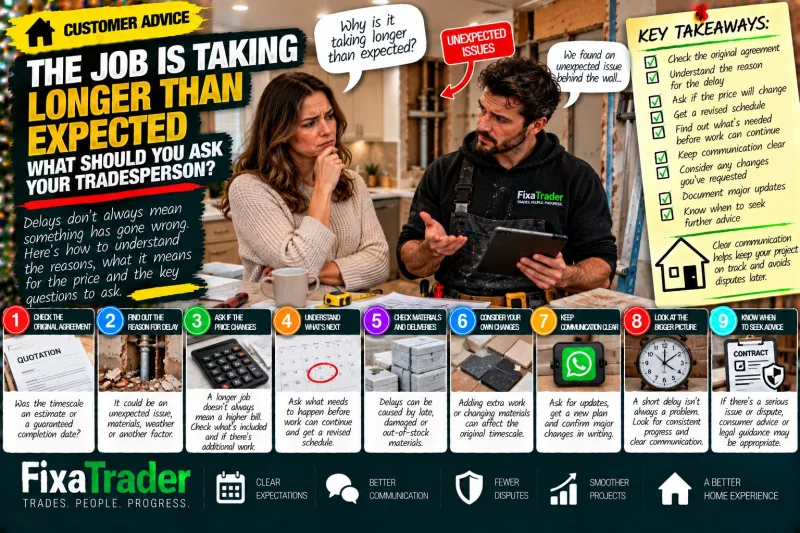
Not every project goes exactly as planned.
Once work begins, hidden issues can sometimes be discovered.
That could mean additional work is required.
The important thing is understanding how those situations will be handled.
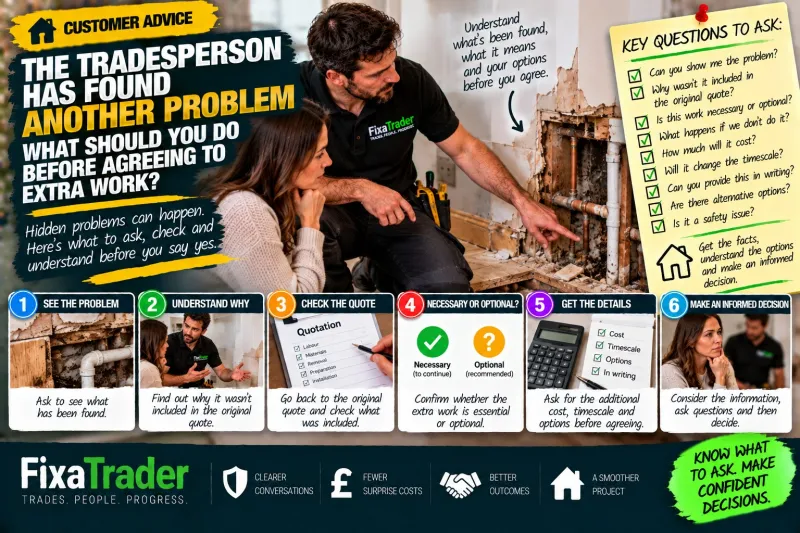
Before accepting a quote, it can be useful to ask:
What happens if you discover an unexpected problem?
Will you discuss any additional costs before carrying out extra work?
Are there any assumptions in this quote that could affect the final price?
A good answer doesn't necessarily mean there will never be additional costs.
It means you understand the process if circumstances change.The Most Expensive Quote Isn't Automatically the Best Either
There is another side to this.
Just because one quote is the highest doesn't automatically make it the best.
You should still ask the same questions.
What is included?
Why does it cost more?
Are you paying for genuinely additional value, better materials or a more comprehensive scope?
Or is the price simply higher?
The aim isn't to avoid cheap quotes or automatically choose expensive ones.
It's to understand what you are actually buying.Look for Value, Not Just a Number
The best quote for your project may not be the cheapest or the most expensive.
It may be the one that gives you the greatest confidence that:
The scope of work is clear
The right materials will be used
The person carrying out the work understands the job
Relevant qualifications or registrations are in place where required
Previous work gives you confidence in the expected quality
Communication has been professional
You understand how changes and unexpected issues will be handled
That's value.
And value isn't always represented by the lowest number at the bottom of a quotation.A Quote Is More Than a Price
When comparing tradespeople, the price is important.
Nobody should pretend otherwise.
But a quotation is really a summary of how someone plans to deliver the work.
The total reflects their time, materials, experience, overheads and the scope of what they believe is required.
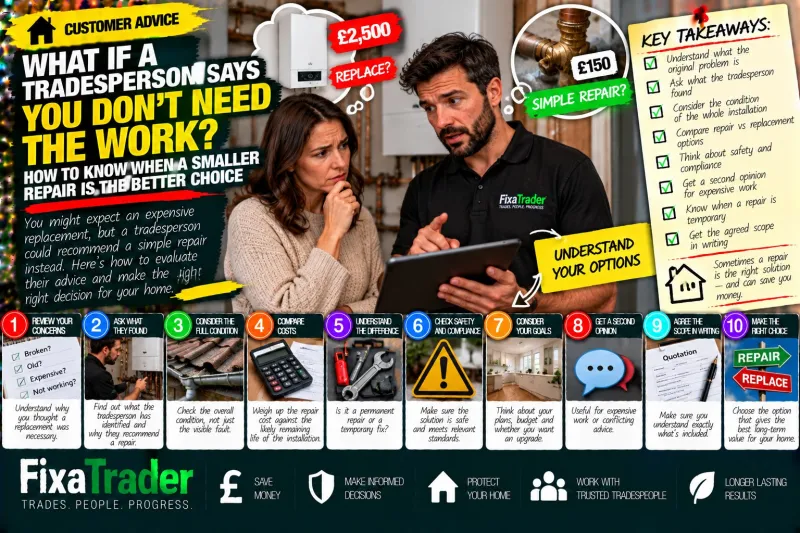
If one quote is significantly cheaper than the others, don't automatically assume you've found a bargain.
Ask why.
The answer may be completely reasonable.
Perhaps that business has lower overheads.
Perhaps they can complete the work more efficiently.
Perhaps they have identified a simpler solution.
Or perhaps something important has been left out.
You won't know until you look beyond the number.
The goal isn't to find the cheapest tradesperson.
It's to find the right person to do the job properly at a price you understand and are comfortable paying.
0 Comments
No comments yet — be the first to share your thoughts.